Start with the final half hour
When planning a dinner, imagine the half hour before everyone sits down. What must be heated? What needs a burner, oven shelf, knife or pair of hands? A menu can look simple on paper yet become difficult if every dish needs finishing at once. Working backward from serving time reveals those conflicts before you shop.
Choose one dish that deserves your attention at the end, then let the rest of the menu support it. If you want to finish a pan sauce, for example, serve a starter that is already plated and sides that only need warming. If the main course needs no active cooking, you might have room to dress a salad just before serving. Make-ahead cooking works best when it reduces simultaneous tasks, not merely when it moves chopping to an earlier day.
Give each course a different job
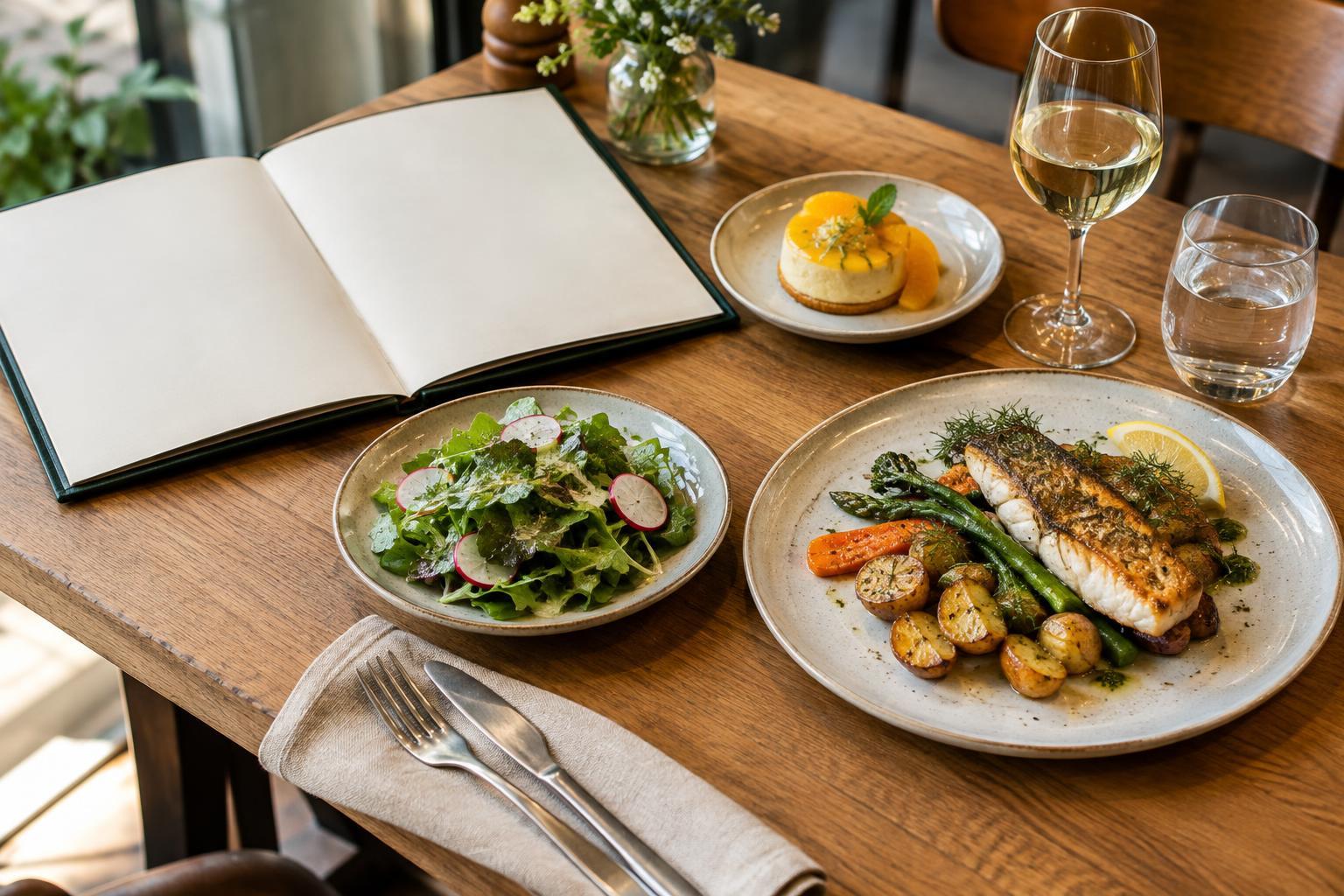
An easy starter can be set out without interrupting conversation: marinated vegetables, a bean spread with bread, or a small plate of sliced fruit and cheese. Keep portions modest so the first course welcomes guests rather than delays the meal. Prepare its serving dish and utensils in advance, including anything that should be added at the table.
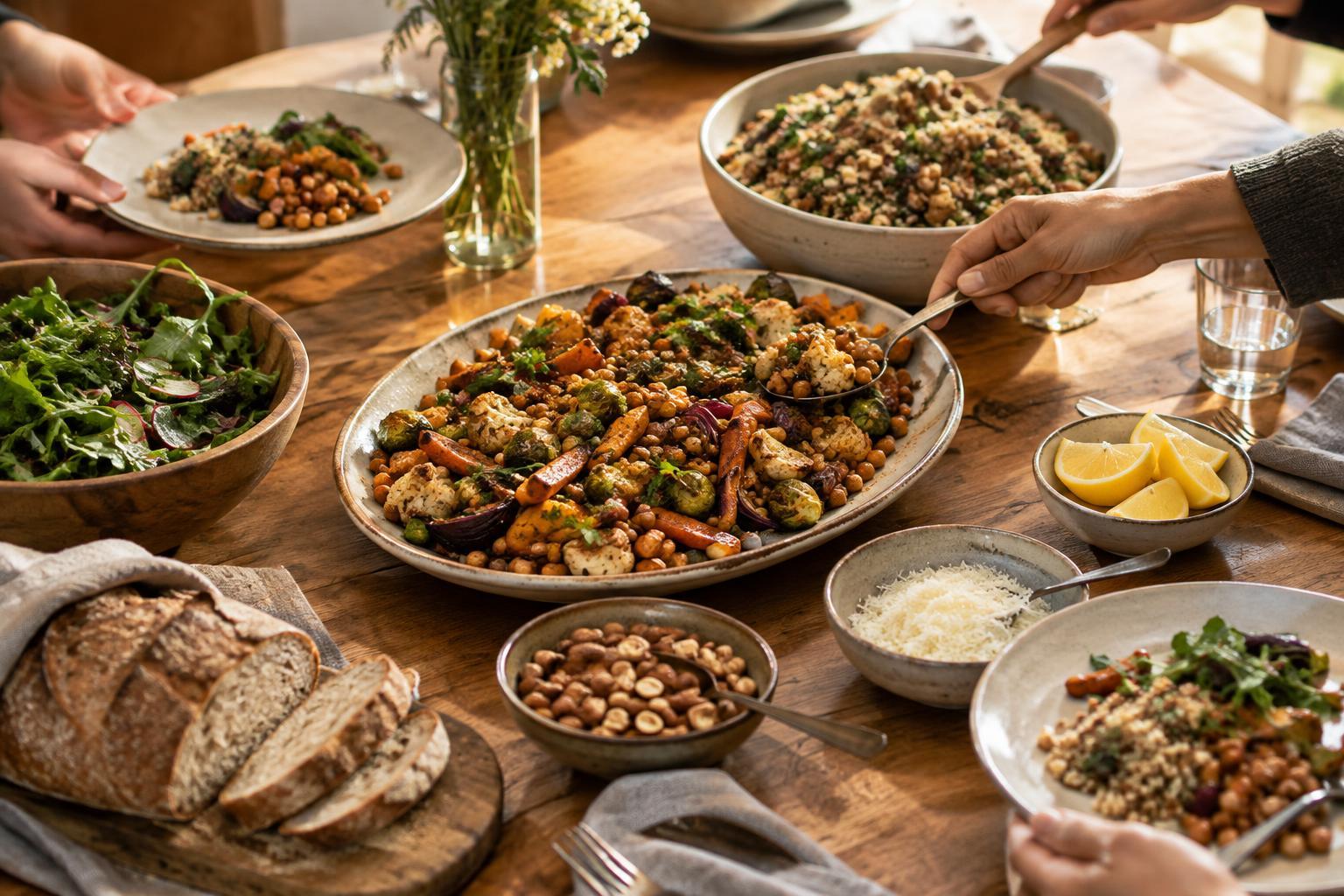
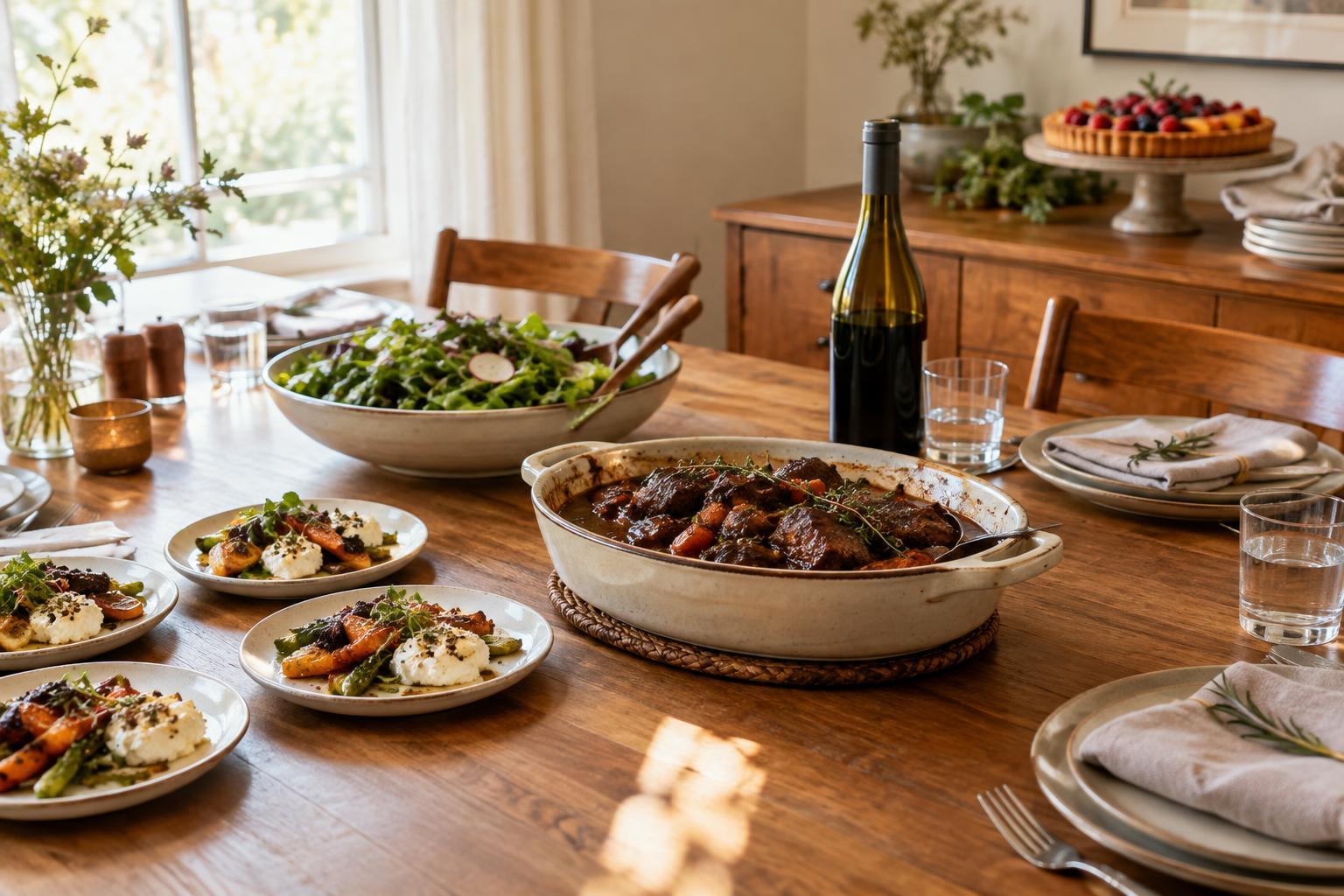
For the main course, look for food that holds or reheats gracefully, such as a braise, a baked pasta dish or a substantial vegetable stew. Pair it with sides that do not compete for the same equipment. A room-temperature grain salad and a pot of greens may be easier to coordinate than two dishes that both need a hot oven just as the main comes out.
Dessert is an opportunity to remove a decision from the evening. A chilled pudding, baked fruit or a cake that tastes good at room temperature can wait until people are ready. If it needs a finishing touch, make that touch small: spoon on yogurt, add fresh fruit or pour coffee. The goal is not to avoid all final touches, but to choose ones that feel pleasant rather than urgent.
Check the pairings as well as the schedule
A practical menu still needs contrast. If the main is rich and soft, bring in something crisp, acidic or fresh. A tangy slaw, herbs or a lemon-dressed salad can make a slow-cooked dish feel lively. If the main is bright and light, a warm grain or roasted vegetable may give the meal a satisfying center. Repeating one ingredient across courses can create a sense of connection, but repeating the same texture throughout can make dinner feel flat.
Apply the same thinking to drinks without making the choice complicated. Have water available, and consider a sparkling or still nonalcoholic option that suits the food. Something tart can balance a rich menu; a gentler drink may suit a spicy one. Place glasses and drinks where guests can help themselves so pouring does not become another task at the stove.
Write a short holding and heating plan
Before you commit to a menu, note where each dish will wait: refrigerated, covered at room temperature when appropriate, or ready to reheat. Check that containers fit in the refrigerator and that serving dishes fit on the table. Keep perishable food properly chilled until it is needed, and reheat cooked dishes thoroughly. A dish that is delicious in advance is only useful if you can store and serve it safely.
Next, assign every hot dish an appliance and a turn. The oven might reheat the main while a side warms on the stove; a room-temperature salad needs neither. Allow time for the oven to heat and for a large dish to warm through. If a recipe calls for a crisp topping, keep it separate until reheating is nearly done so it retains its texture.
A written plan need not be elaborate. List what you will do ahead, what you will do before guests arrive and what remains at serving time. If the last list is longer than you can comfortably manage, change a dish rather than hoping the evening will somehow provide extra hands.
Leave space for hospitality
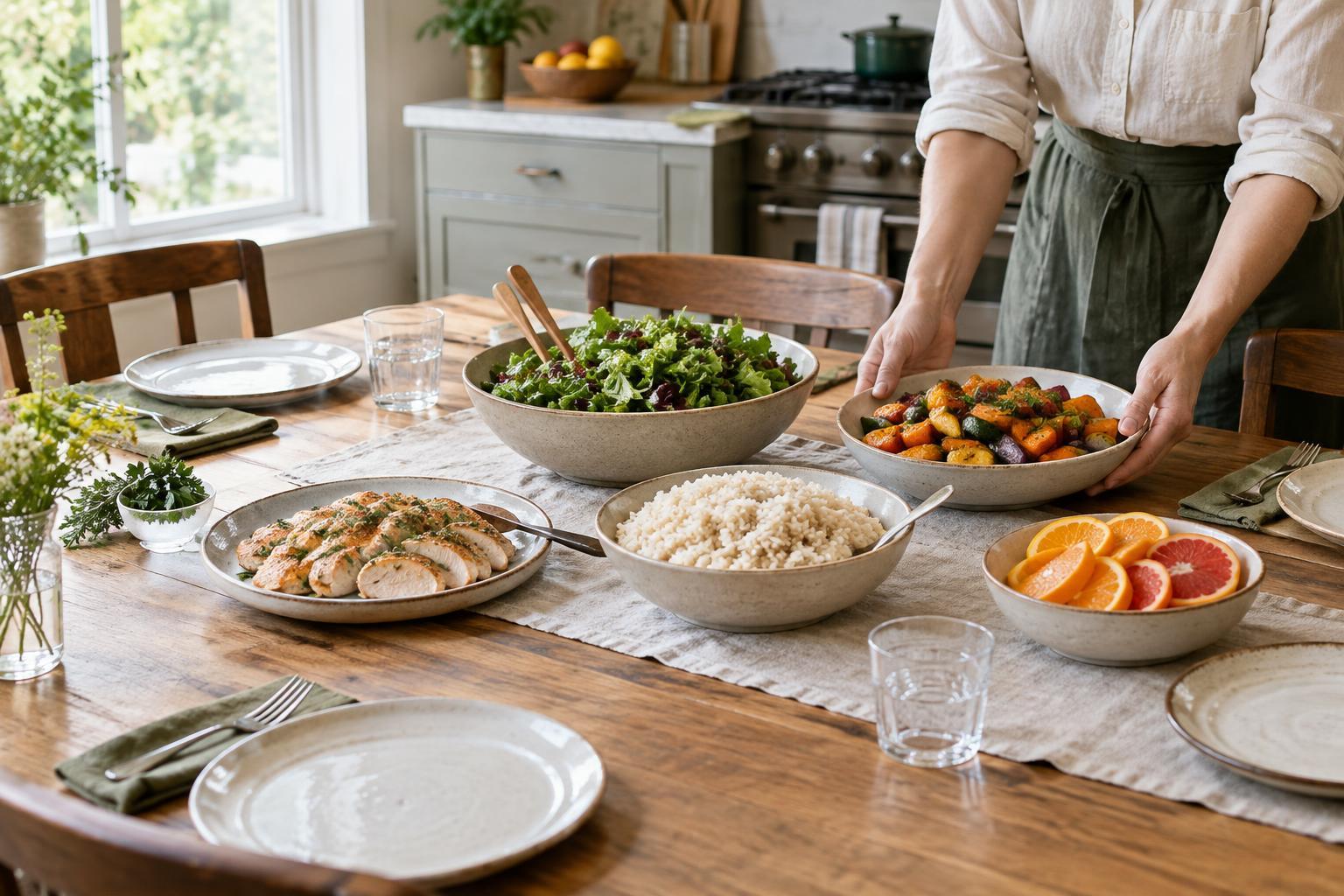
Set the table, find serving spoons and clear a landing place for finished food before cooking begins. These small preparations prevent a hot dish from waiting while you search for a trivet. Put any garnishes in a visible place, or skip them if they add more work than pleasure.
The most useful test of a make-ahead menu is whether you can step away from the kitchen when someone arrives. A few minutes of reheating or dressing a salad can be part of a welcoming evening. Several dishes demanding immediate attention cannot. Plan for a little flexibility in serving time, and choose food that remains inviting if conversation runs longer than expected.