Start with the dish, not the tea
A useful tea pairing begins with a question: what does the dish need? A rich plate may welcome a brisk, lightly astringent tea that refreshes the palate. A delicate dish may need a quieter cup that will not cover its flavors. You can also look for an echo, matching the toasted notes of roasted vegetables with a roasted tea, or the floral scent of a dessert with a gently aromatic infusion.
Consider weight as well as flavor. A light green tea can disappear beside a heavily spiced stew, while a strong black tea may overwhelm a simply dressed cucumber salad. These are starting points rather than rules. Taste a sip after a bite, and notice whether the food and tea still seem distinct. If one flattens the other, try a lighter brew or a different style.
Pairing tea with savory food
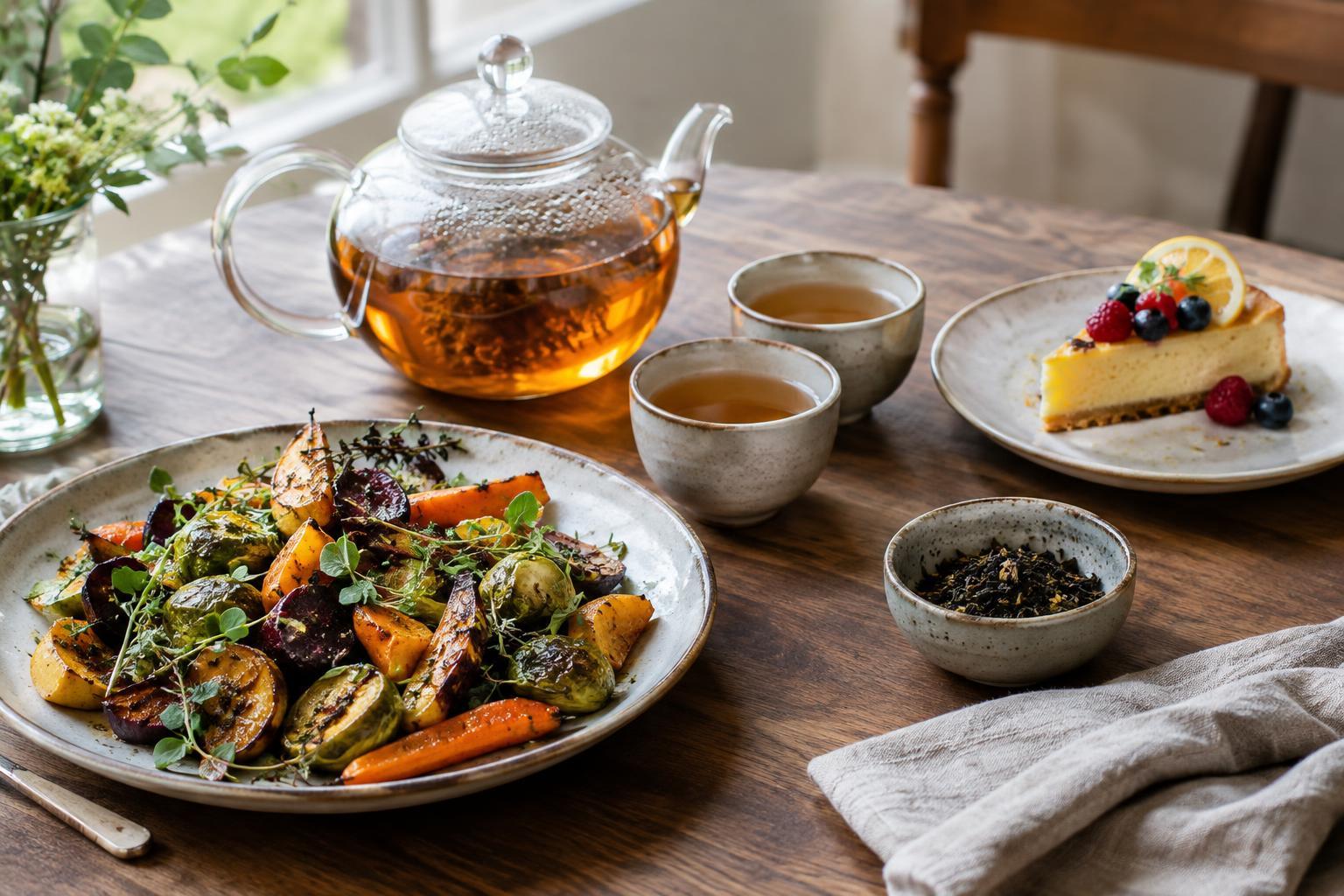
Green tea is a flexible place to start with vegetables, fish and fresh herbs. Its grassy or vegetal character can sit comfortably beside steamed greens, rice bowls and dishes finished with lemon. For a meal built around roasted mushrooms, squash or grains, try an oolong with warm, toasted notes. Those shared flavors can make the pairing feel connected without requiring the tea to taste exactly like the food.
Black tea often has enough presence for savory pastries, grilled ingredients and dishes with deeply browned edges. A plain, brisk cup can also provide contrast to creamy sauces. If the food is spicy, however, a very strong, astringent brew may make the heat feel harsher to some palates. Try a rounder, softer tea or brew it a little lighter. With boldly seasoned food, the aim is not always to match its intensity; sometimes the most welcome pairing is a calm sip between bites.
Let dessert sweetness set the pace
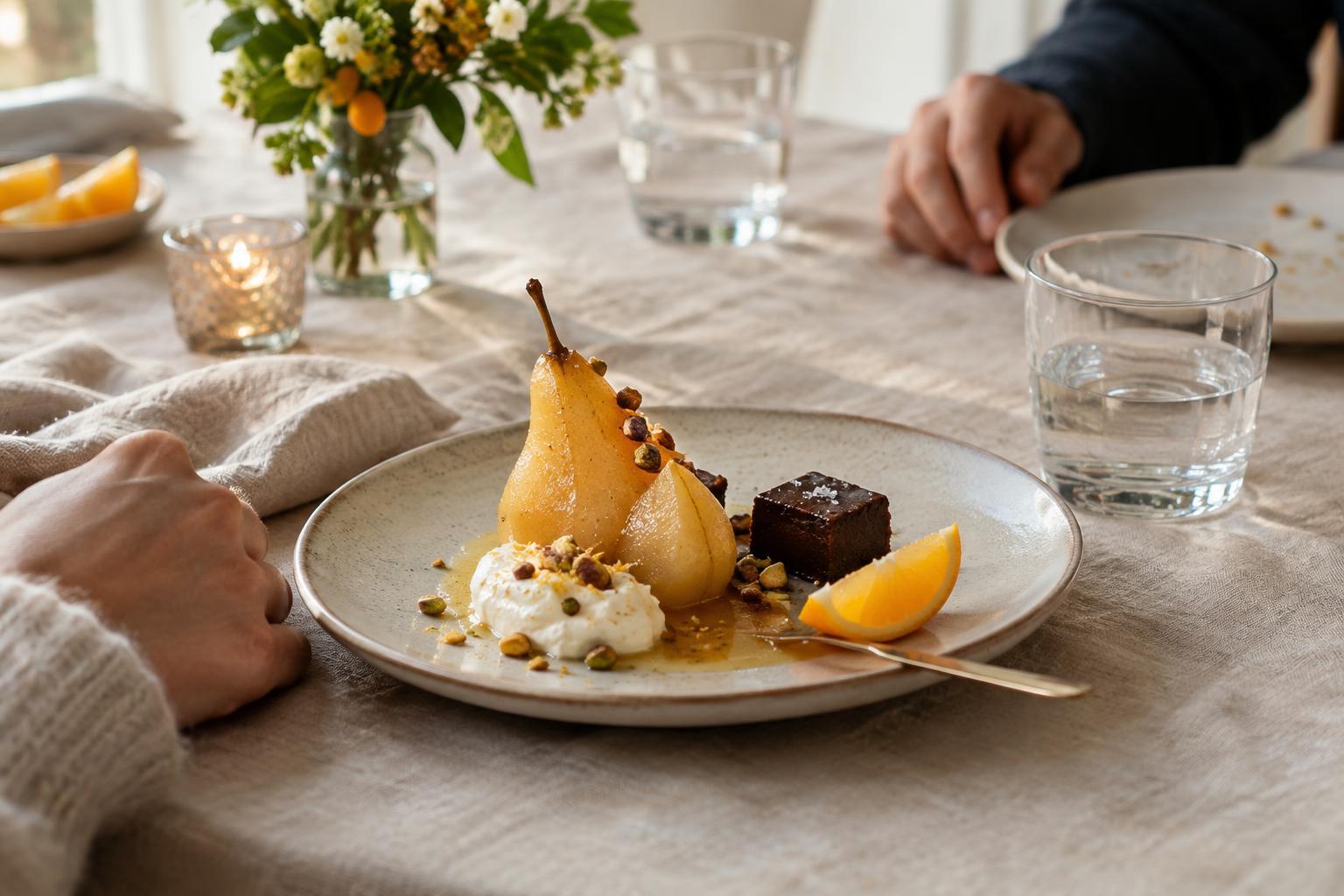
Dessert changes the way tea tastes. A sweet bite can make an unsweetened, strongly brewed tea seem more bitter or dry, so begin with a gentler cup than you might choose on its own. With fruit desserts, consider a fragrant tea that leaves room for the fruit: a floral oolong with baked pears, for example, or a lightly brewed black tea with a berry tart. Herbal infusions can work well too, especially when their fruit or flower notes are not so pronounced that they compete with the plate.
Chocolate, caramel and nut desserts can support a fuller tea. A malty black tea may stand up to chocolate cake, while a roasted oolong can complement a nut tart. For a very sweet dessert, look for contrast as well as similarity: a clean, unsweetened cup can provide a welcome pause. Serve tea alongside a small bite and adjust from there rather than assuming the pairing will behave the same way throughout a large slice.
Brew for the pairing you want
The same tea can play different roles depending on how it is brewed. A shorter or lighter brew may let subtle food flavors lead; a stronger cup can hold its place beside a richer dish. Follow the tea’s package guidance as a starting point, then adjust the amount of tea or steeping time to your taste. If a cup seems harsh, changing the brew may help more than changing the entire menu.
Temperature matters at the table, too. Very hot tea can make it harder to notice delicate aromas, so give it a moment to cool before judging a pairing. If serving tea over ice, account for dilution and taste it with the food once chilled. Milk, sugar, citrus and other additions can reshape a pairing; try the tea plain first, then add what makes the combination more enjoyable.
Build a simple tea-friendly menu
You do not need a different tea for every course. For a casual meal, choose one versatile cup and serve it from savory food through dessert. A mellow oolong, for instance, might accompany roasted vegetables and grains, then continue alongside a fruit or nut pastry. If you want a change between courses, make it purposeful: move from a lighter tea with the main dish to a rounder, more aromatic cup with dessert.
Offer water as well, and let guests decide whether they want tea with every bite. Pairing works best as an invitation to notice flavor, not a test with one correct answer. Start with a small pot, taste the combination, and remember what you liked. Over a few meals, those observations become more useful than any rigid list of foods and teas.