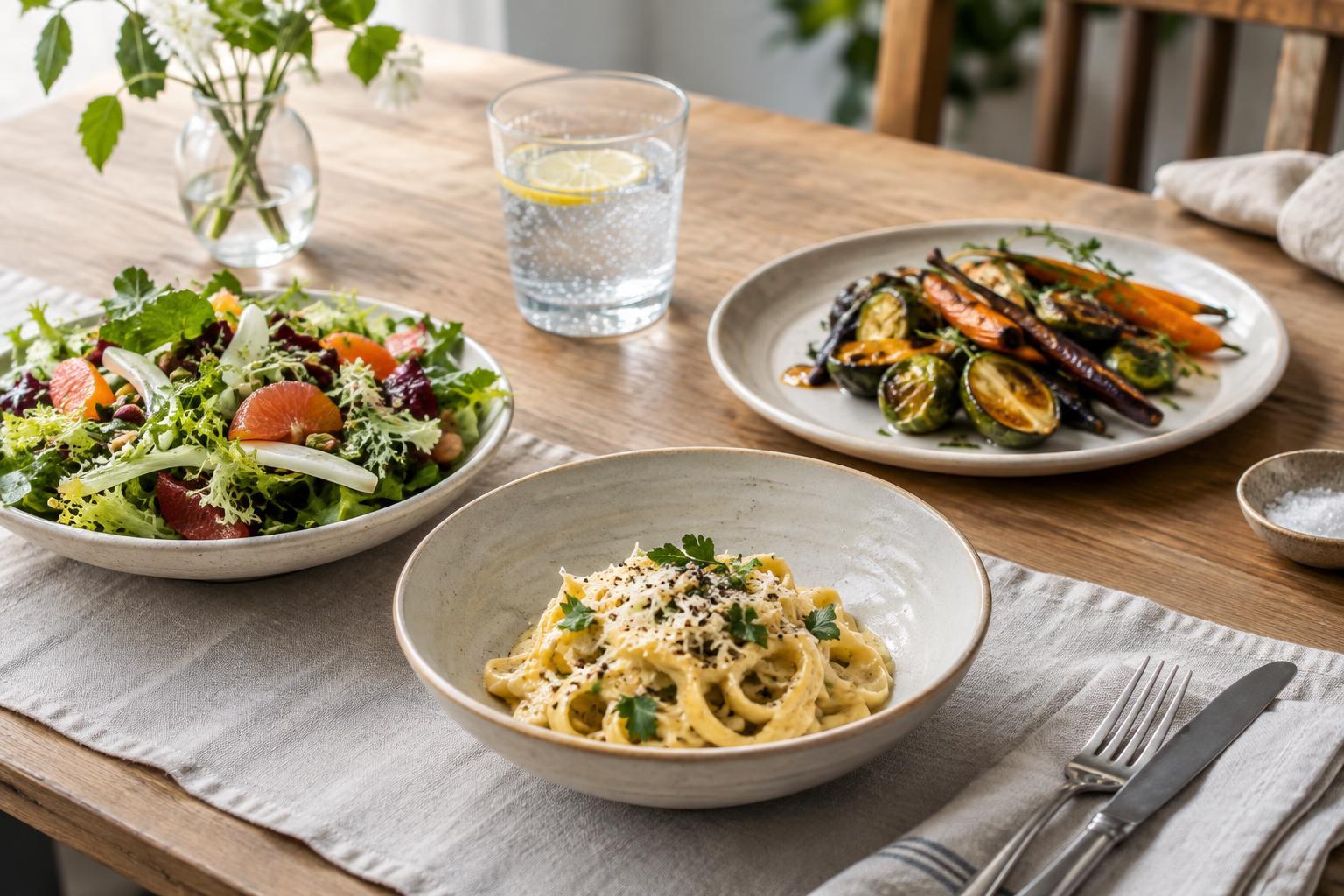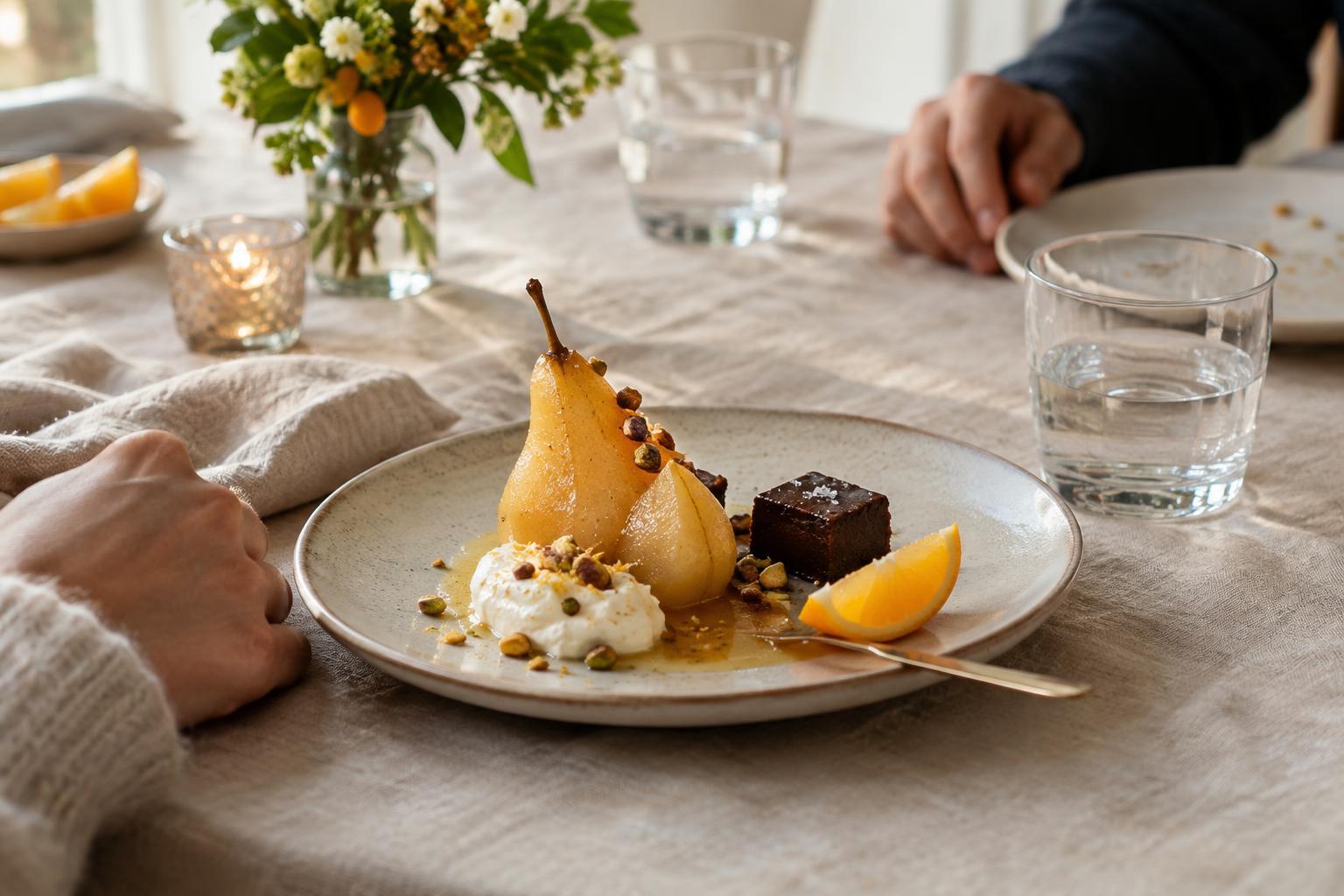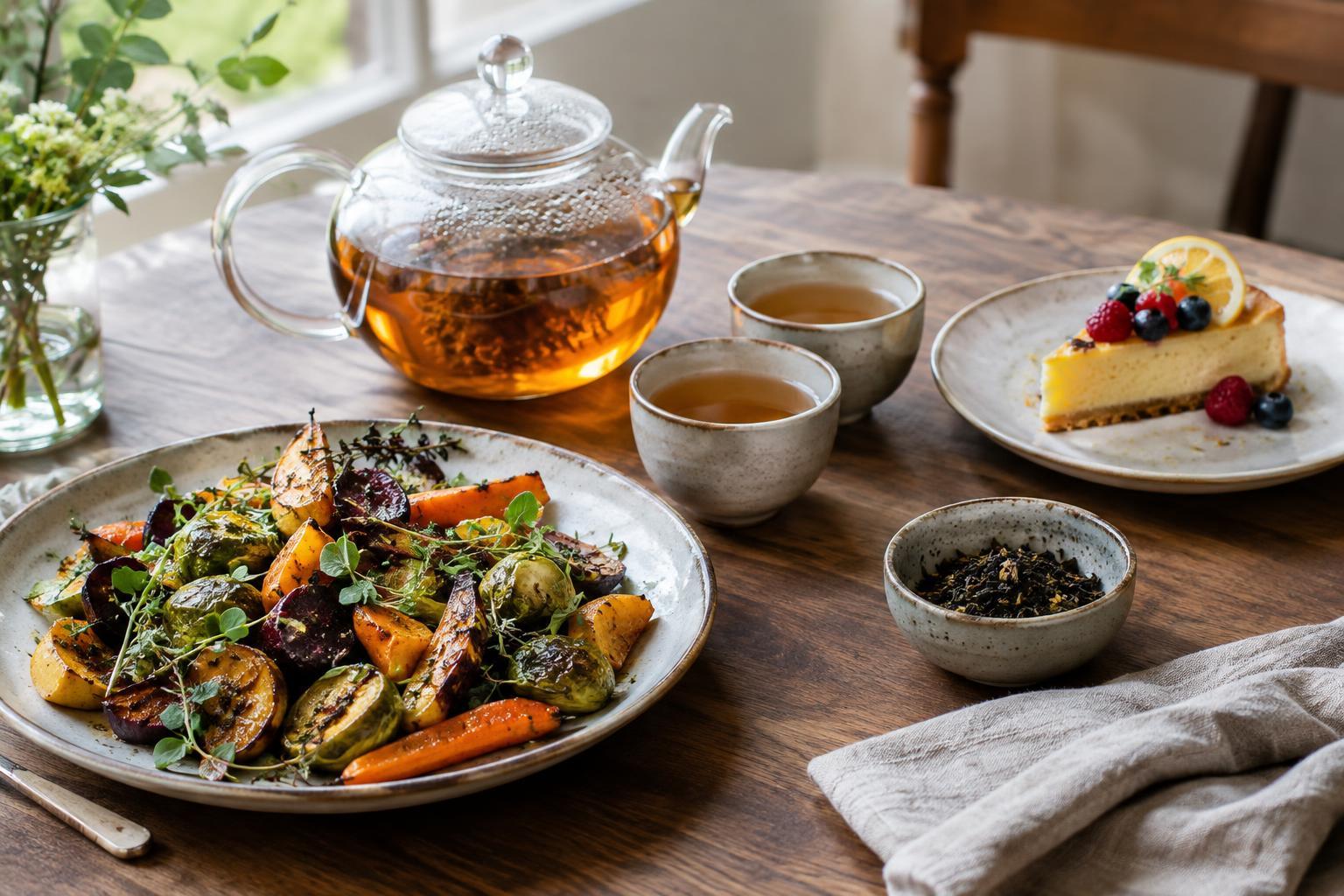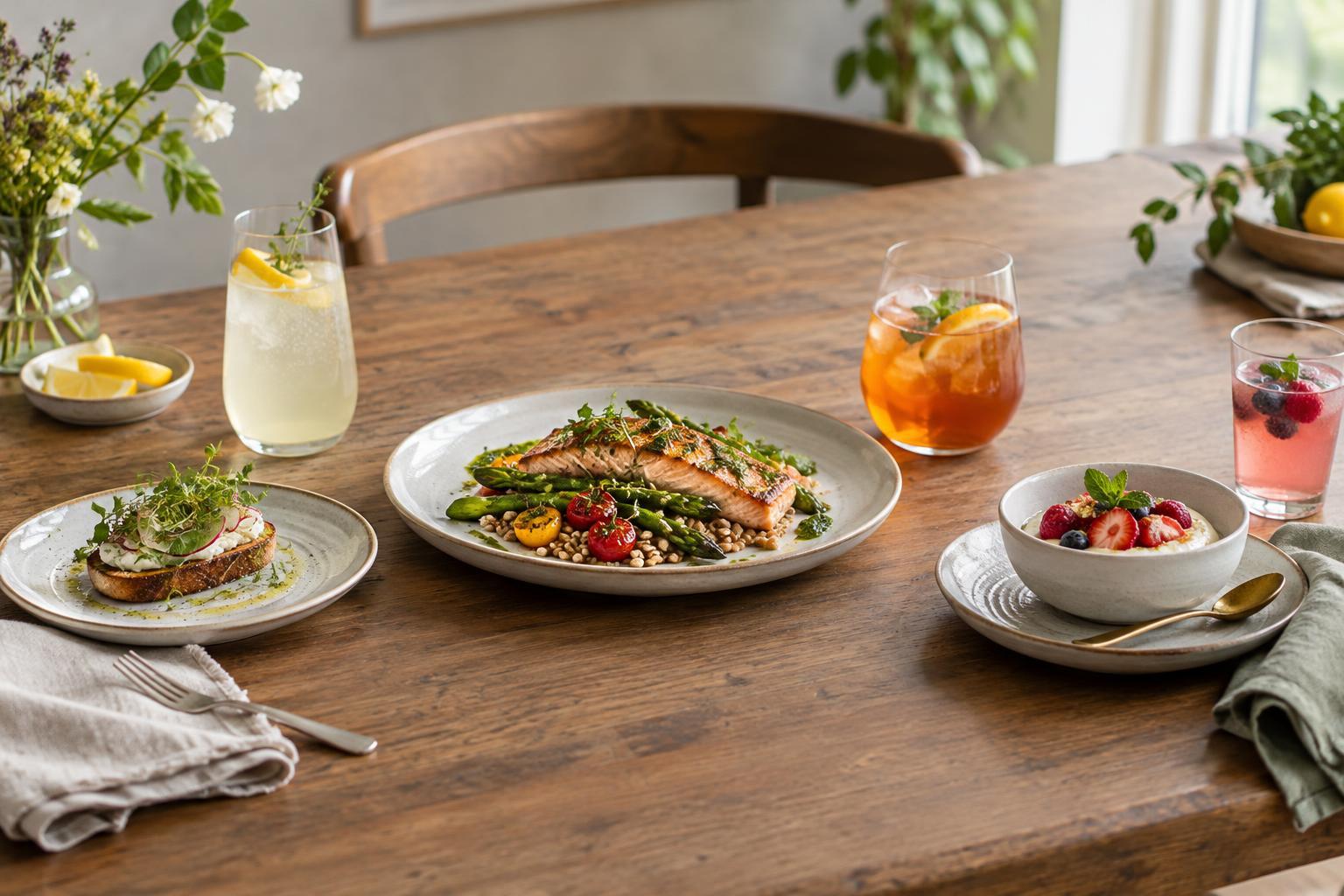
Start with the meal, not the drink
A full-meal pairing should make each course more enjoyable while giving the drinks a sense of progression. Before choosing anything to pour, write down the menu and note what stands out in each dish: richness, acidity, spice, sweetness, herbs, or a roasted flavor. Then decide whether the drink should echo that quality or provide a useful contrast. A bright drink can lift a rich dish; an aromatic one can pick up herbs already on the plate.
You do not need a different drink for every course. Two well-chosen pours and water may serve a meal better than a long lineup of elaborate mixtures. Think of the sequence as an arc: something light and welcoming at the start, a drink with enough presence for the main course, and a gentler or sweeter finish. Keep water available throughout, especially when serving drinks with strong flavors.
Use a few reliable pairing tools
Acidity is one of the most useful tools. Citrus, verjuice, tart fruit, and shrubs can refresh the palate alongside fried foods, creamy sauces, or cheese. The drink should still be pleasant on its own; if it tastes sharply sour, dilute it or soften it with a little sweetness. With already acidic dishes, such as a tomato salad, try matching their brightness rather than making the drink dramatically sharper.
Sweetness needs similar care. A sweet drink can make a savory course feel dull, but a small amount of sweetness can balance chili heat or bitterness. For dessert, aim for a drink that is not noticeably less sweet than the food, or choose a contrasting option such as unsweetened coffee with a rich chocolate dessert. Texture also matters: bubbles can bring energy to a light starter, while a still, fuller-bodied drink may sit more comfortably beside a substantial main.
Finally, consider aroma. Cucumber, mint, rosemary, ginger, toasted spices, and brewed tea can give a drink character without relying on sugar. Use one or two clear flavors rather than combining everything on the shelf. A recognizable connection to the dish—such as ginger beside a ginger-scented sauce—often feels more intentional than a complicated drink with no link to the plate.
Build a sample three-course sequence
For a starter of crisp vegetables with a creamy dip, begin with chilled cucumber and mint water finished with a squeeze of lemon. It is light enough not to crowd the first bites, while its freshness offers a contrast to the dip. If the starter is fried instead, add sparkling water for a livelier texture and a little more lemon for balance.
Suppose the main course is roast chicken with herbs and potatoes. Try a lightly brewed, chilled black tea with a splash of tart apple juice and soda water. The tea brings depth, the apple adds modest sweetness and acidity, and the bubbles keep the combination from feeling heavy. For guests avoiding caffeine, use a caffeine-free herbal infusion with a similarly gentle flavor, adjusting the apple and soda until neither takes over. With a spicy main course, ease back on tartness and consider a cooling yogurt-based drink instead.
For a fruit crumble at the end of the meal, pour a small cup of warm rooibos with orange peel. Its rounded, fragrant character suits a baked dessert without requiring another sweet drink. If dessert is especially rich, offer plain coffee or a lightly brewed tea as an alternative. These are examples, not fixed rules: tasting a sip alongside a bite will tell you more than any pairing formula.
Pay attention to temperature and portion size
Temperature can change how a pairing feels. An icy drink may be appealing with a salty snack but distracting beside a warm, delicate dish. Conversely, a warm infusion can make the final course feel unhurried. If you serve several cold drinks, vary their texture or intensity so the meal does not become a succession of similar fizzy pours.
Keep portions modest when offering more than one pairing. A small glass lets guests enjoy the intended combination without feeling obliged to finish a large drink before the next course arrives. Put a pitcher of plain water on the table so everyone can choose their own pace. It is also helpful to tell guests what is in each drink, particularly when it contains tea, spices, or an ingredient they may wish to avoid.
Make the plan easy to serve
Most of the work can happen before anyone sits down. Brew and chill tea, wash herbs, prepare citrus, and mix any still bases in advance. Hold sparkling ingredients separately and add them just before pouring so the drinks keep their lift. Taste each finished drink at its intended serving temperature; cold can mute sweetness and aroma, so a mixture that seemed balanced earlier may need a small adjustment.
For a relaxed meal, choose drinks that share a few ingredients without tasting identical. Citrus might brighten the welcome pour and appear again as orange peel with dessert, creating a quiet thread through the menu. The goal is not to imitate an alcoholic pairing. It is to give each course a drink that belongs beside it—and to make the whole meal feel considered without making service complicated.