Start with the browned bits
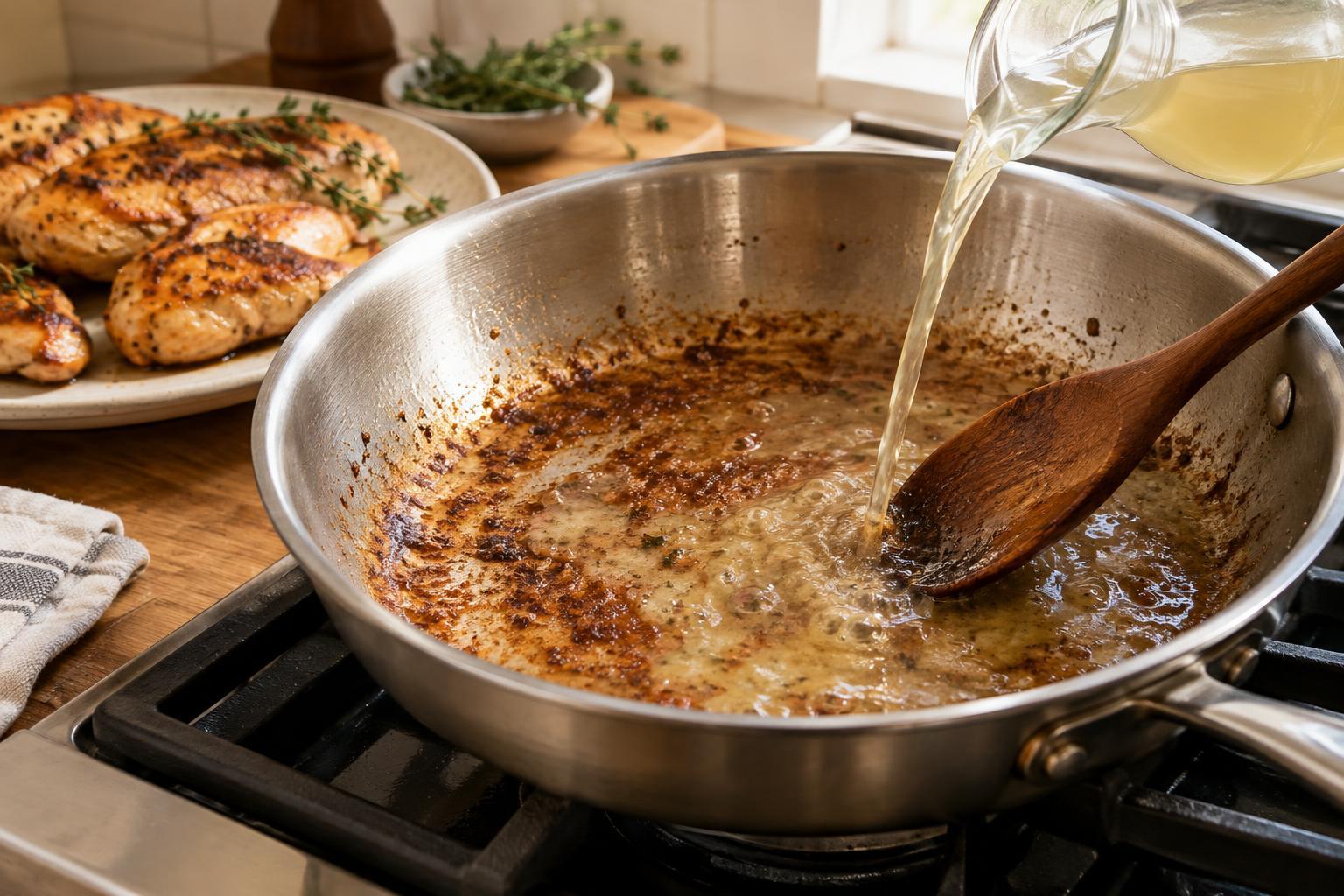
After you sear mushrooms, chicken, pork or other ingredients, look at the bottom of the pan before washing it. The golden-to-deep-brown patches stuck there are often called fond. They form as juices and other food components brown against the hot surface. Deglazing means adding liquid to loosen those bits so their flavor becomes part of a sauce.
Color matters. Brown residue can lend a savory, roasted taste; blackened residue may make the sauce bitter. If the pan smells scorched, wipe out the burned material rather than trying to rescue it with liquid. A stainless-steel or other uncoated pan makes the fond easy to see. A nonstick pan can still make a sauce, but food usually leaves less behind.
Make room and manage the heat
Move the cooked food to a plate before making the sauce. If it needs more cooking, return it to the pan later. Pour off excess fat, leaving a thin coating and any appealing browned bits. If you want to add finely chopped shallot, garlic or another aromatic, soften it briefly in that coating before adding liquid. Keep an eye on garlic in particular: it can darken quickly.
Lower the heat if the pan is smoking, and give it a moment to settle. Then add a modest splash of liquid, enough to wet the bottom of the pan. Use a wooden spoon or heat-safe spatula to scrape gently as the liquid bubbles. The fond should release and tint the liquid. Avoid pouring into a pan of smoking-hot fat, which can splatter; add liquid gradually and keep your hands clear of the steam.
Choose a liquid that fits the dish
Stock or broth is a flexible starting point because it adds body without steering the sauce too sharply. Water also works, especially when the pan holds plenty of flavorful residue. Wine can bring acidity, while a little cider or citrus juice can brighten a rich dish. You can combine liquids: use a small amount of something tart to lift the fond, then add stock or water for enough volume to simmer.
Think about what is already in the pan. Mushrooms may suit stock and a little thyme; browned chicken may welcome stock and lemon. If you use wine, let it simmer so its sharper taste mellows before deciding what else the sauce needs. Choose a nonalcoholic liquid when you prefer one. Deglazing is a way to carry flavor from the pan into the sauce, not a rule that calls for a particular ingredient.
Reduce, then finish
Once the browned bits have dissolved, let the liquid simmer until it tastes more concentrated and lightly coats a spoon. A wide pan reduces liquid quickly, so watch the level rather than relying on a fixed time. If the sauce becomes too strong or nearly disappears, add another splash of water or stock. Taste before salting: the food, fond and any prepared broth may already provide enough seasoning.
For a smoother, rounder sauce, turn down the heat and swirl in a small piece of cold butter just before serving. Butter is optional; a drizzle of olive oil can also soften sharp edges. Add delicate herbs near the end so they stay fresh-tasting. If juices have collected on the plate with the cooked food, stir them into the pan and bring the sauce back to a gentle simmer.
Adjust the sauce to the plate
A good pan sauce should complement the main ingredient rather than hide it. Spoon a little over the food and taste the combination. If it seems flat, a few drops of lemon juice or vinegar may help. If it tastes too acidic, more stock, a little butter or another short simmer may bring it into balance. If it is too salty, dilute it with unsalted liquid and reduce only as much as needed.
The same sequence works with many weeknight meals: brown the food, set it aside, loosen the fond, reduce the liquid and taste. Once that sequence feels familiar, the pan itself can guide your choices. Its browned bits suggest how much flavor you have to work with, while the dish tells you whether the finished sauce should be light and bright or rich and savory.