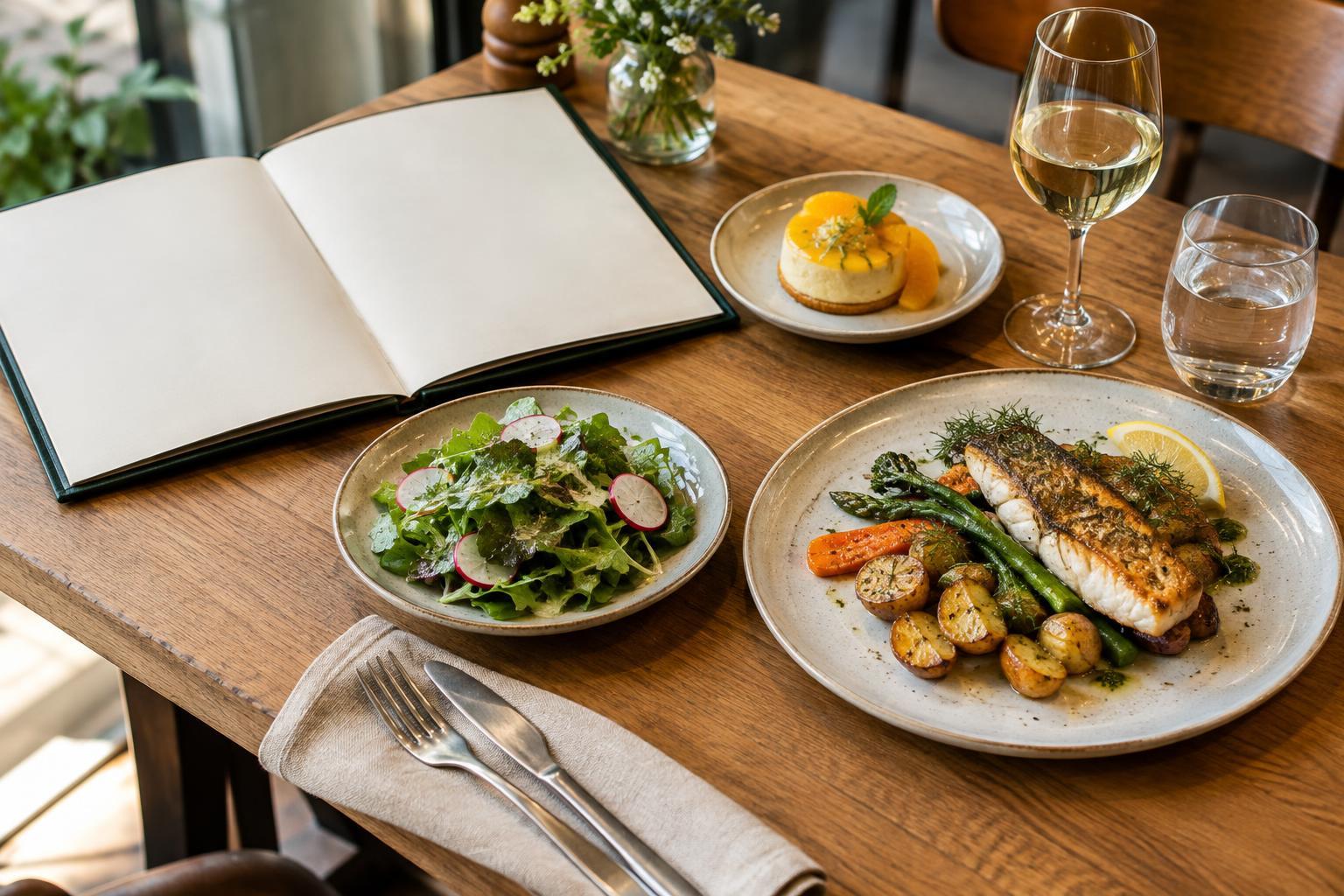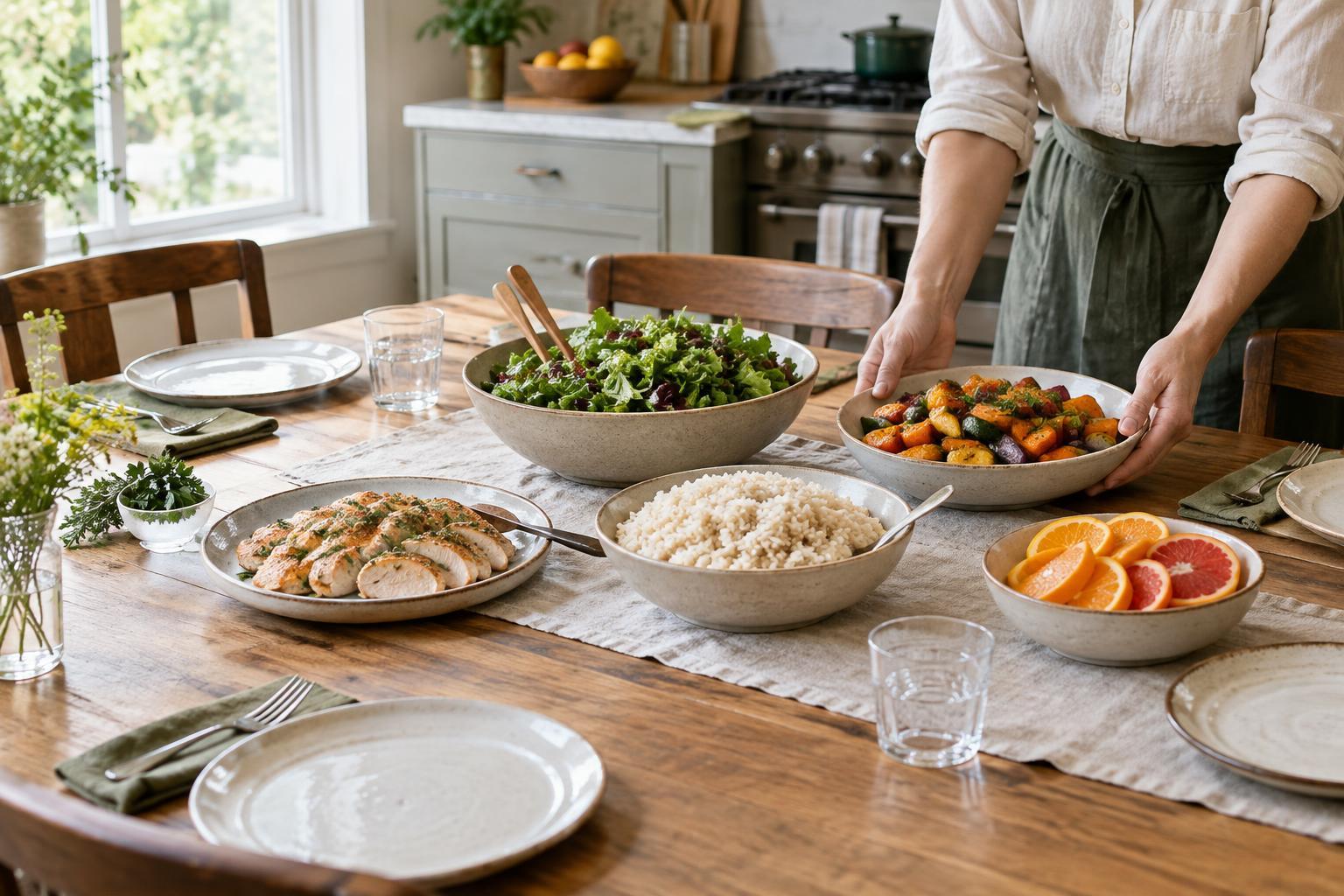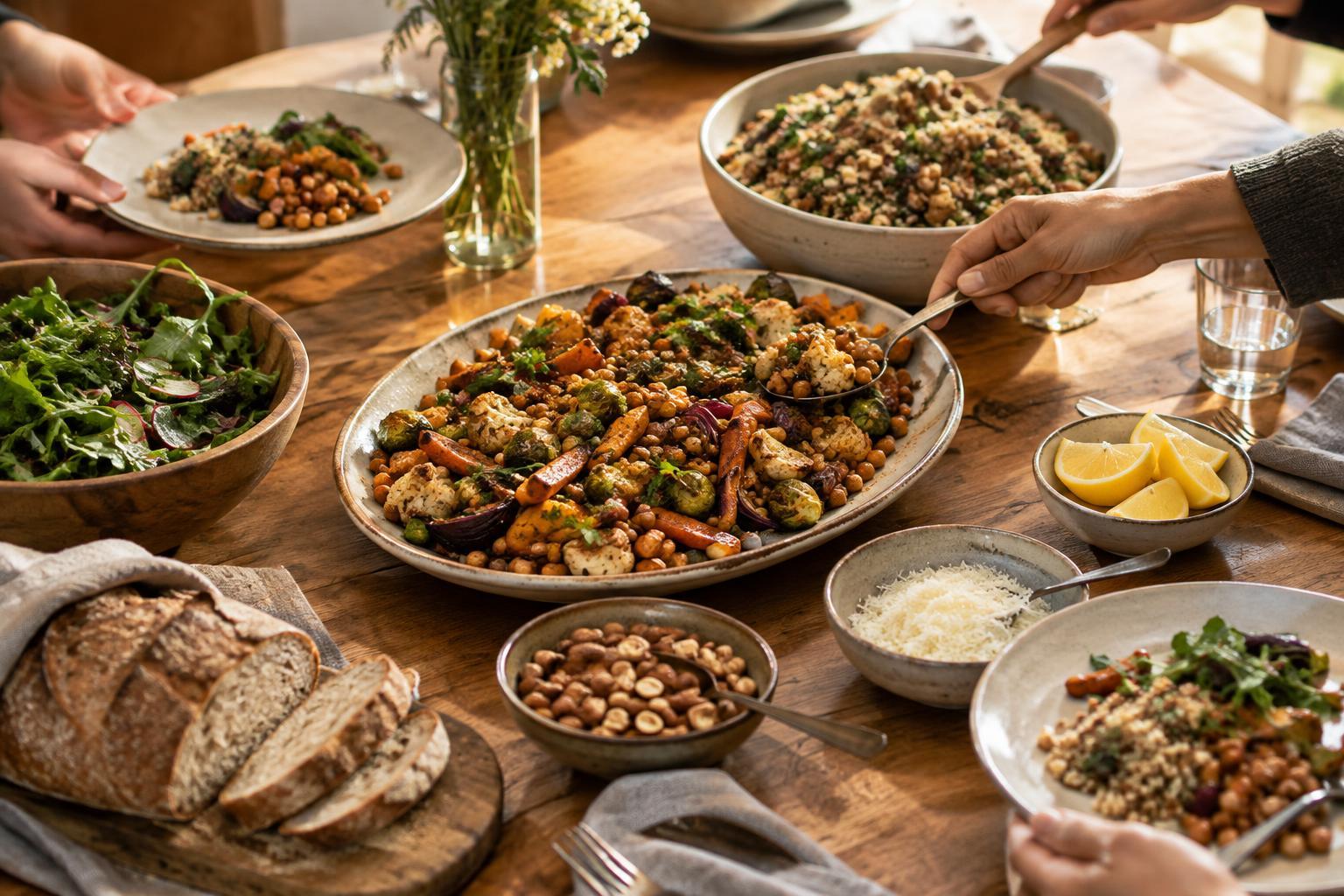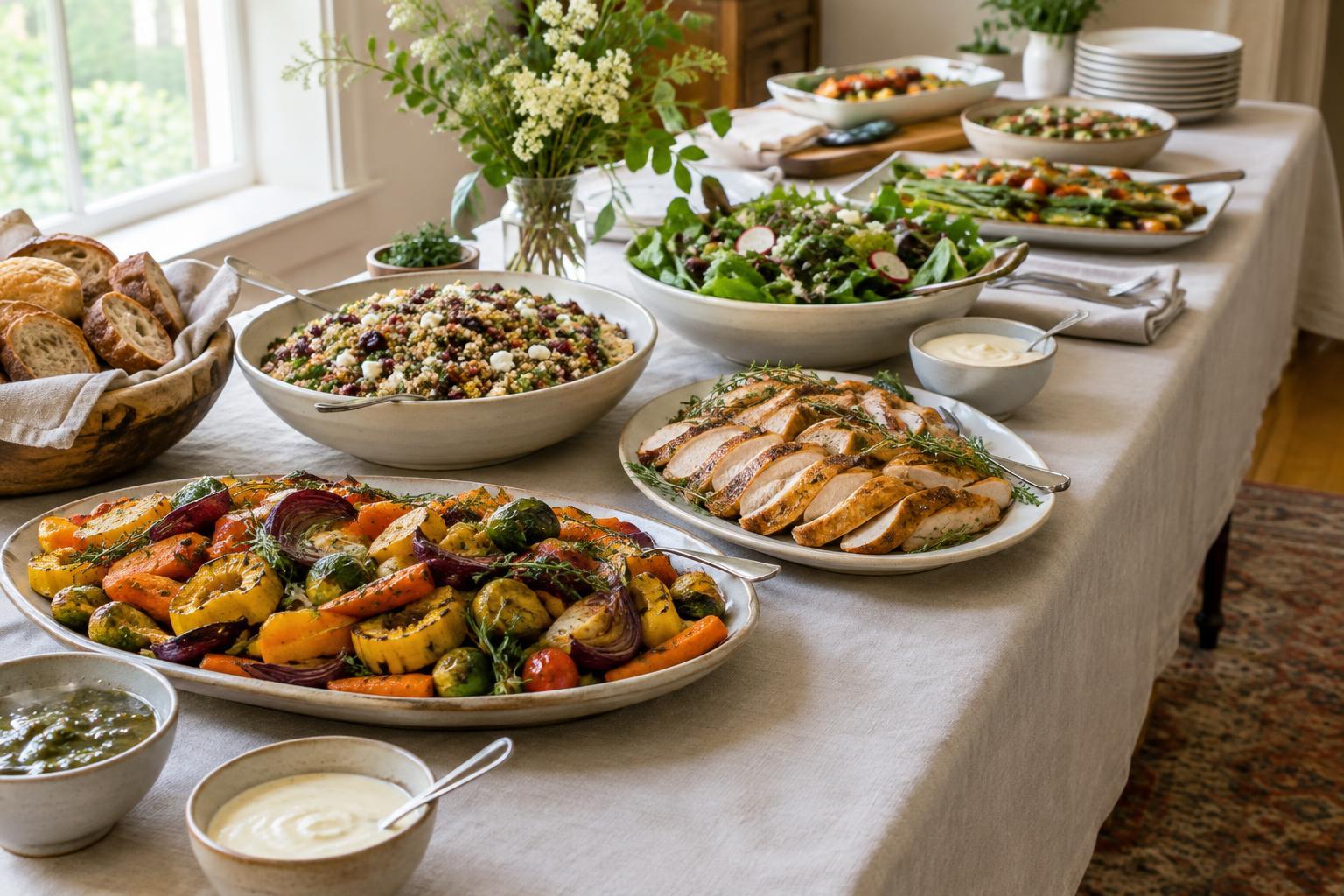
Start with the full service window
A buffet looks its best just before guests arrive, but the better planning question is how it will look halfway through service. A delicate salad may wilt, crisp toppings may soften, and a sauce may thicken as it sits. Before choosing dishes, picture the pace of the gathering: Will everyone eat at once, or will people come through in waves? How much space is available for serving and for keeping backup dishes ready?
Build the menu around foods that remain pleasant after a short wait, then add a few elements that can be finished or replaced close to serving time. Roasted vegetables, sturdy grain salads, braised dishes and sliced breads often give a buffet a dependable base. Fragile greens, crunchy garnishes and dressings can still have a place, but they work better when added in small amounts as needed rather than set out all at once.
Give each dish a clear job
A satisfying buffet offers contrast without asking guests to navigate too many near-identical choices. Start with one or two substantial dishes, then choose sides that bring something different: a fresh or acidic element alongside a rich main, a soft dish beside something with crunch, and at least one option that feels complete for guests who skip the main protein. Repeating an ingredient can make the menu feel connected, but varying its preparation keeps the plate interesting.
Consider how the dishes will sit together on a plate. A saucy main and several creamy sides may taste good individually yet blur together when served. A crisp slaw, pickled vegetables or a lemony bean salad can give guests a way to balance richer foods. Serve sauces and dressings separately when practical, especially if guests may have different preferences or if the sauce would quickly change a dish’s texture.
Choose formats that are easy to serve and refresh
The best buffet dishes are not only appealing to eat; they are easy to portion. Cut vegetables into pieces that can be lifted with serving utensils, slice larger items before they reach the table, and avoid constructions that collapse after the first few guests help themselves. A composed platter can be beautiful, but it should still look intentional once part of it is gone.
Plan replenishment while writing the menu. A shallow platter refreshed from the kitchen can look more inviting than a large vessel left to dwindle. Keep backup components separate where possible, then assemble or dress them shortly before they go out. For foods that need temperature control, use suitable equipment and follow applicable food-safety guidance; an attractive display is not a substitute for safe holding and handling.
Arrange the table around the guest’s experience
Menu design continues at the table. Place plates at the start, followed by dishes in an order that makes sense on a plate: substantial items, sides and finishing touches. Keep utensils with their dishes and leave enough room to set down a plate while serving. If a popular dish is difficult to reach or a dressing bottle blocks the line, guests may hesitate and the buffet can become crowded.
Clear labels make the meal easier to navigate. Name the dish plainly and identify notable ingredients where helpful, particularly those guests may want to avoid. Put garnishes and sauces next to the foods they complement without assuming everyone will want them. If space allows, move drinks and desserts away from the main serving line so guests can return for them without interrupting others.
Finish with a simple service plan
Before the gathering, write a short sequence: what can be prepared ahead, what must be finished just before guests arrive, and what will need attention during service. Assign clean serving utensils and a place for used ones. Keep a small reserve of garnishes, bread and other quick-to-replace items rather than putting every portion on display immediately.
Once service begins, a quick look at the table can tell you more than an elaborate plan. Refresh a platter before it looks picked over, wipe drips, and replace a tired garnish instead of adding more on top. When the menu is built for that kind of upkeep, the buffet stays welcoming without requiring constant intervention—and guests arriving later can enjoy a meal that feels considered, not leftover.