Start with the whole meal, not three separate recipes
The simplest way to build a three-course menu is to decide what you want guests to remember, then plan around it. If the main course is a slow-cooked dish with a rich sauce, let it be the center of the meal. If a seasonal fruit dessert is the occasion, give it room to shine. One clear anchor makes the other choices easier and helps you avoid serving three dishes that compete for attention.
Write down the opening course, main course and dessert on one page before shopping. Read them as a sequence: Is every dish creamy? Does the same spice appear in each course? Will guests be full before the main arrives? Balance does not require a new ingredient or cooking style at every turn. It means offering enough change in flavor, texture and weight to keep the meal enjoyable from first bite to last.
Use the first course to set the pace
An opening course should welcome people to the table without doing the work of the main. A small salad with a bright dressing, a cup of vegetable soup or a few slices of roasted vegetables can establish the mood of the meal. Keep the portion modest, particularly if a substantial main follows. A starter that leaves guests curious is more useful than one that leaves them full.
Think about contrast as well as appetite. Before a savory braise, try crisp greens or a lightly dressed vegetable. Before a delicate fish or vegetable main, a simple soup can add warmth without overwhelming what comes next. Acidity, herbs and crunchy elements often make an effective opening because they bring energy to the plate. There is no need to use all three: choose the quality that best complements your main course.
Give the main course a clear center and useful sides
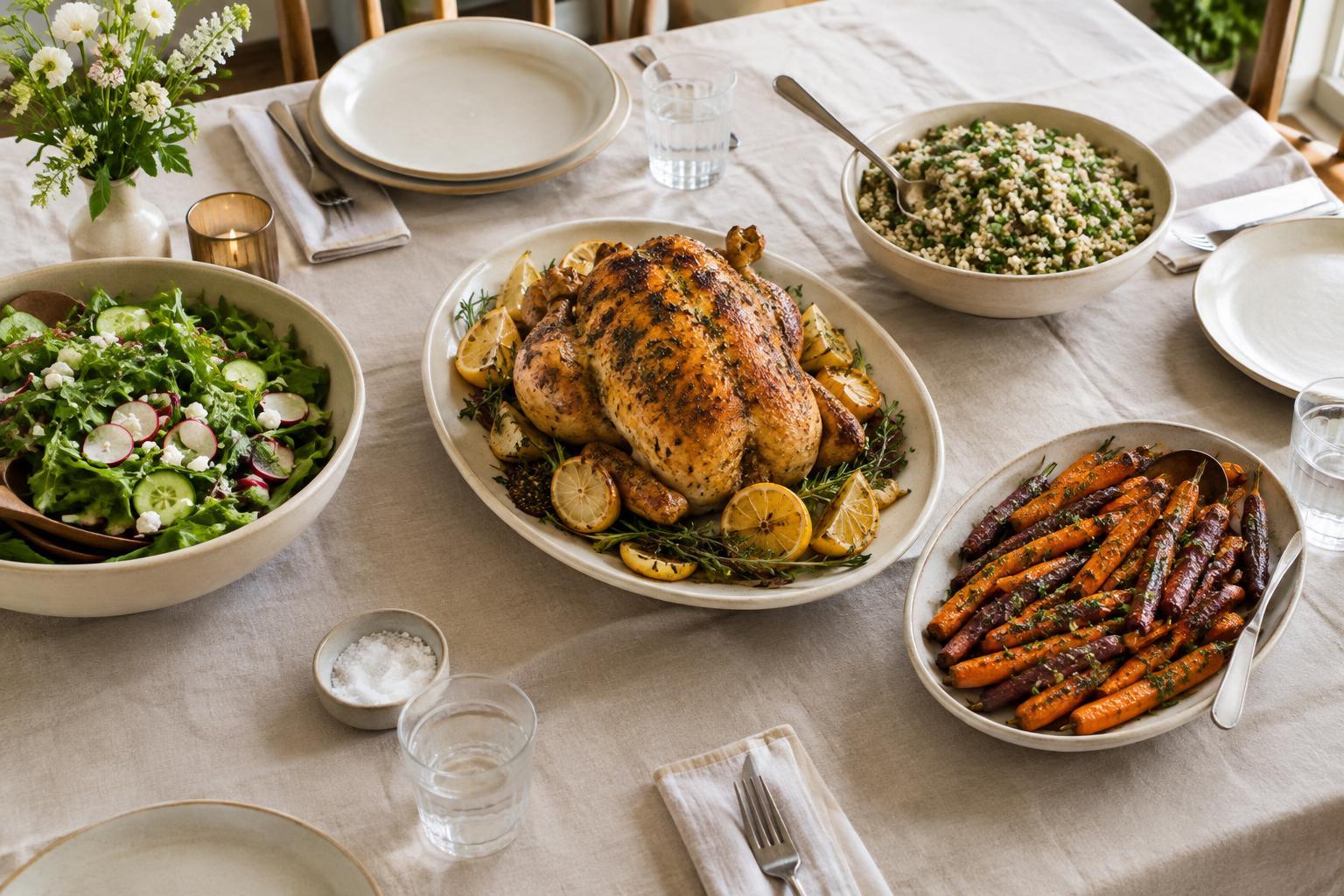
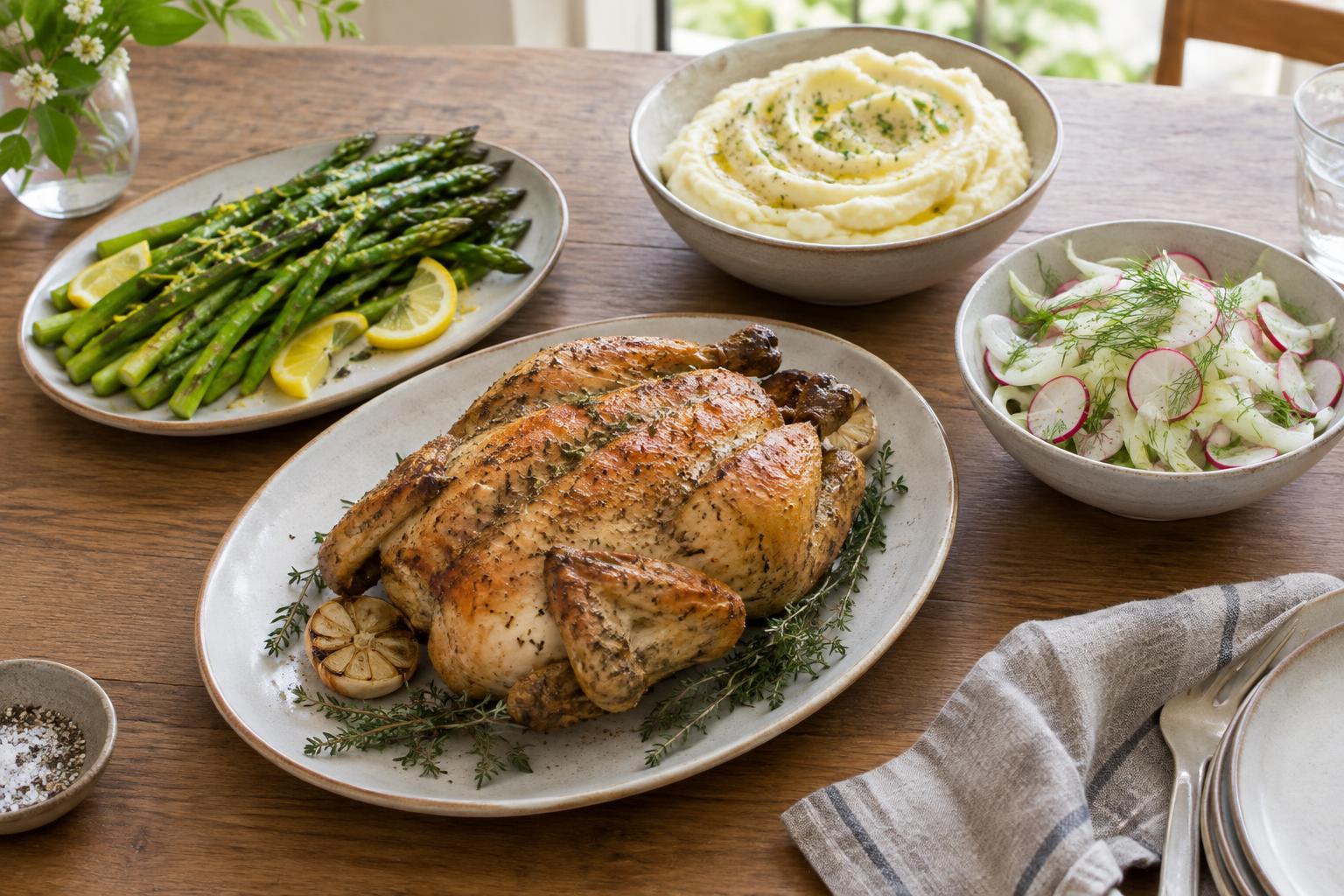
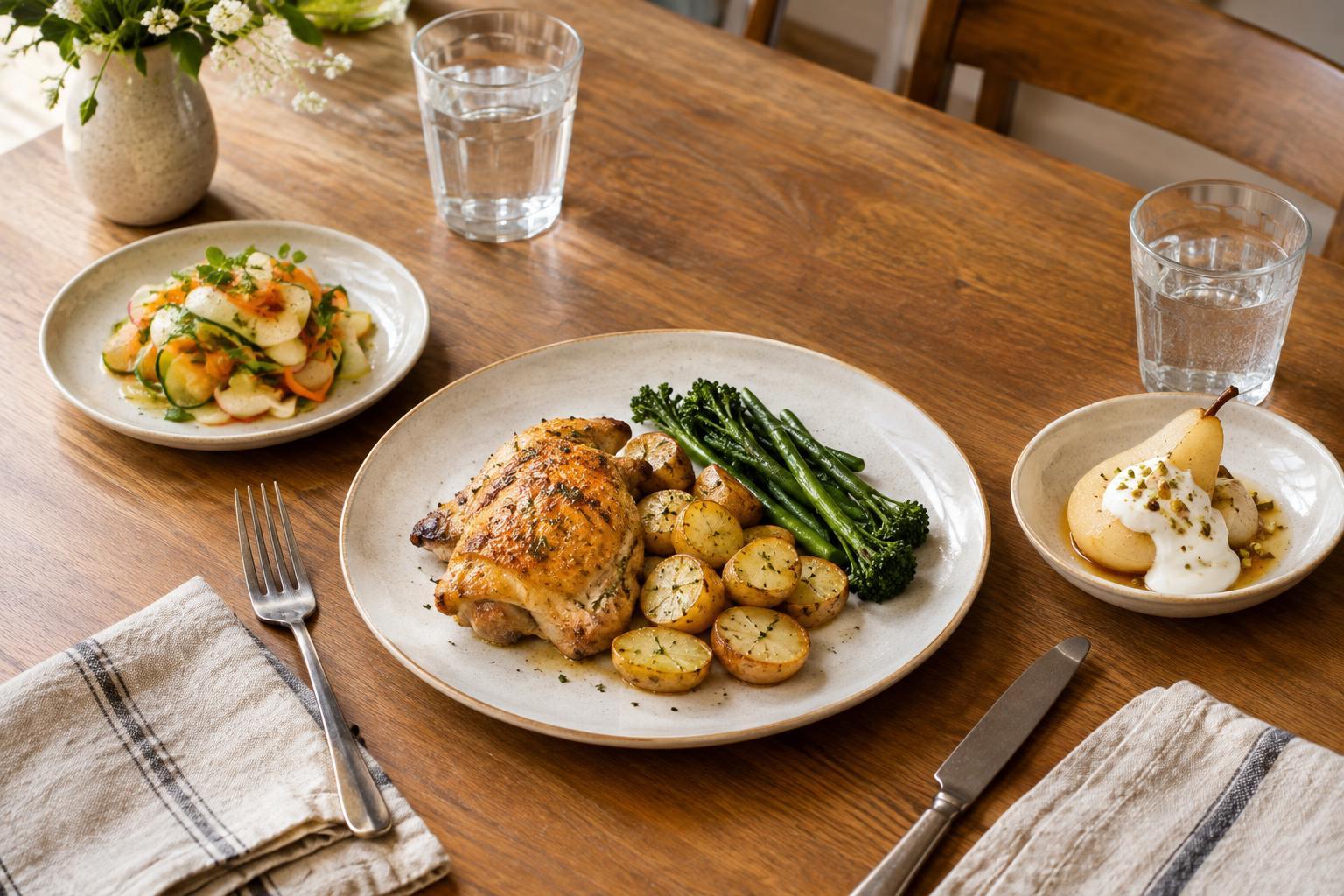
A main course feels complete when its components have distinct jobs. Choose a central dish, such as roast chicken, baked squash or a bean stew, then add sides that supply what it lacks. A soft, savory stew might benefit from a crisp salad. A simply cooked centerpiece may need a sauce, a vegetable and a satisfying starch. Resist adding sides merely because there is space on the table; each one should contribute flavor, texture or substance.
Preparation matters as much as the plate itself. A menu built from three dishes that demand last-minute attention can pull the host away from the table. Look for one main component that can rest, stay warm or be finished with a brief final step. Prepare a dressing, sauce or side ahead if it holds well. When choosing among equally appealing dishes, the one that lets you serve dinner calmly may be the better fit.
Choose a dessert that finishes rather than repeats
Dessert does not have to be light, but it should make sense after what came before. Following a rich main, fruit with a spoonful of cream, a citrus dessert or a small portion of sorbet can offer a refreshing change. After a lighter dinner, a baked pudding or a slice of cake may feel more welcome. Portion size is another way to create balance: a few satisfying bites can be enough after a generous meal.
Notice repeated sensations across the menu. A creamy soup, a cream-based main and a custard dessert may each be appealing alone, yet together they offer little variation. Change at least one course to introduce crunch, freshness or a cleaner finish. You can also connect courses gently through a seasonal ingredient or shared herb, but avoid making every dish taste alike. Cohesion is a thread, not a requirement to repeat the same flavor.
Check the menu from the guest’s point of view
Before committing, consider what everyone at the table can eat and enjoy. Ask about dietary needs in advance, and make sure any alternative feels like part of the dinner rather than an afterthought. A main built around vegetables, grains or legumes can be a thoughtful choice for a mixed group. Clear, simple dishes also make it easier for guests to know what is being served.
Drinks can support the menu without becoming another complicated course. Offer water throughout, then choose beverages that suit the overall progression. A crisp, refreshing drink can work well with a bright starter; something with more body may suit a hearty main. A small coffee, tea or other preferred drink can accompany dessert. Alcohol is optional, and a considered nonalcoholic choice deserves the same attention as any other pairing.
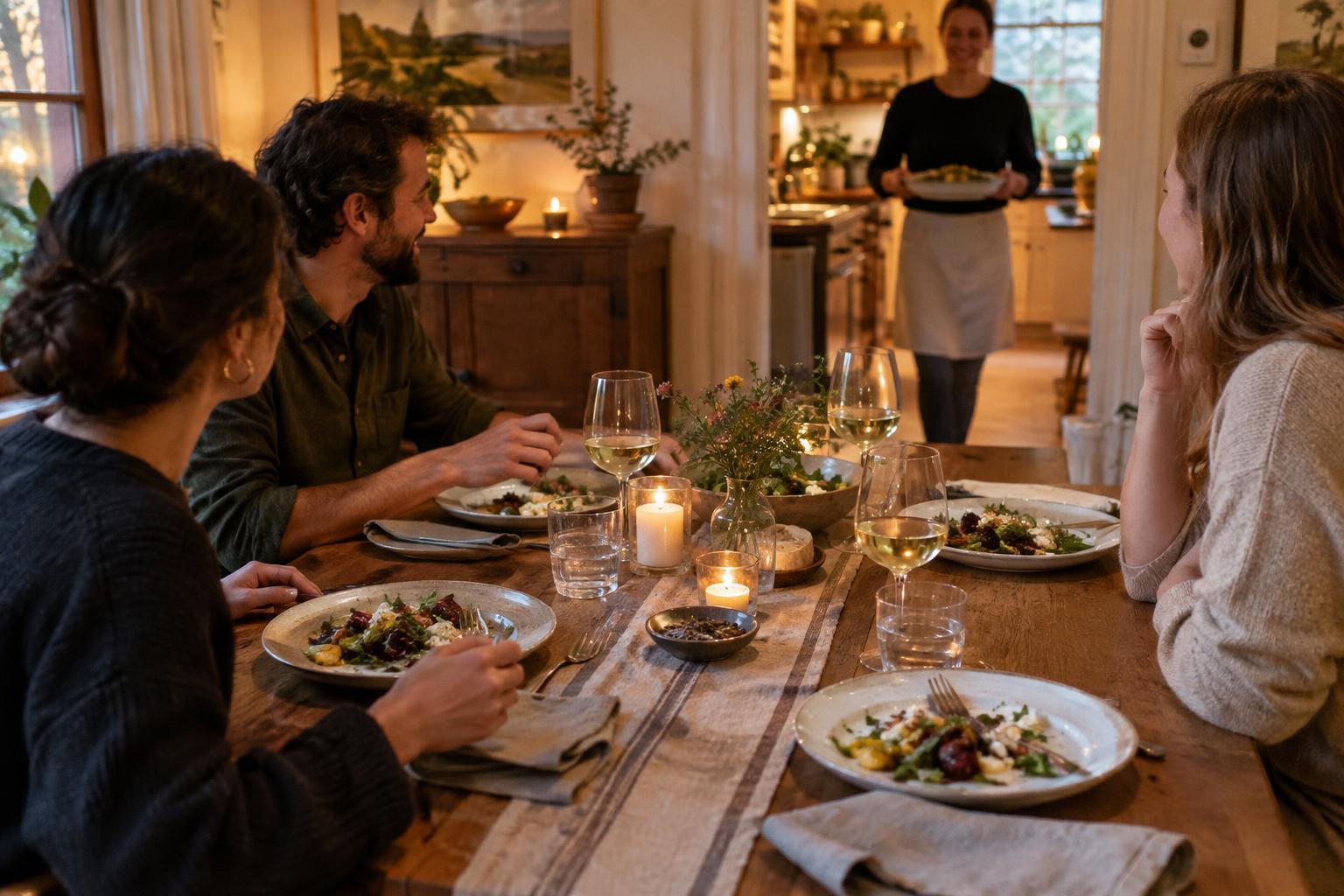
Finally, picture the evening in real time. What can be made before guests arrive? Which dish needs the oven just as another is meant to be served? Allow a little space between courses for clearing plates and conversation. A balanced menu is not only about matching flavors. It is a meal whose portions, preparation and rhythm allow everyone, including the host, to enjoy it.