Two teams, one service
Restaurants often describe their work in two broad areas. Front of house, or FOH, includes the people and spaces guests usually encounter: the entrance, dining room, bar and service counter. Back of house, or BOH, generally refers to the kitchen, dish area, storage spaces and the people who keep food production moving. The terms describe a division of work, not a ranking of importance.
The boundary is useful, but it is not absolute. In a small café, one person might take an order, make a drink and bring it to the table. In a larger restaurant, those tasks may belong to separate roles. Titles and responsibilities vary by business, service style and shift, so the clearest way to understand the teams is to follow what happens during a meal.
Front of house: guiding the guest experience
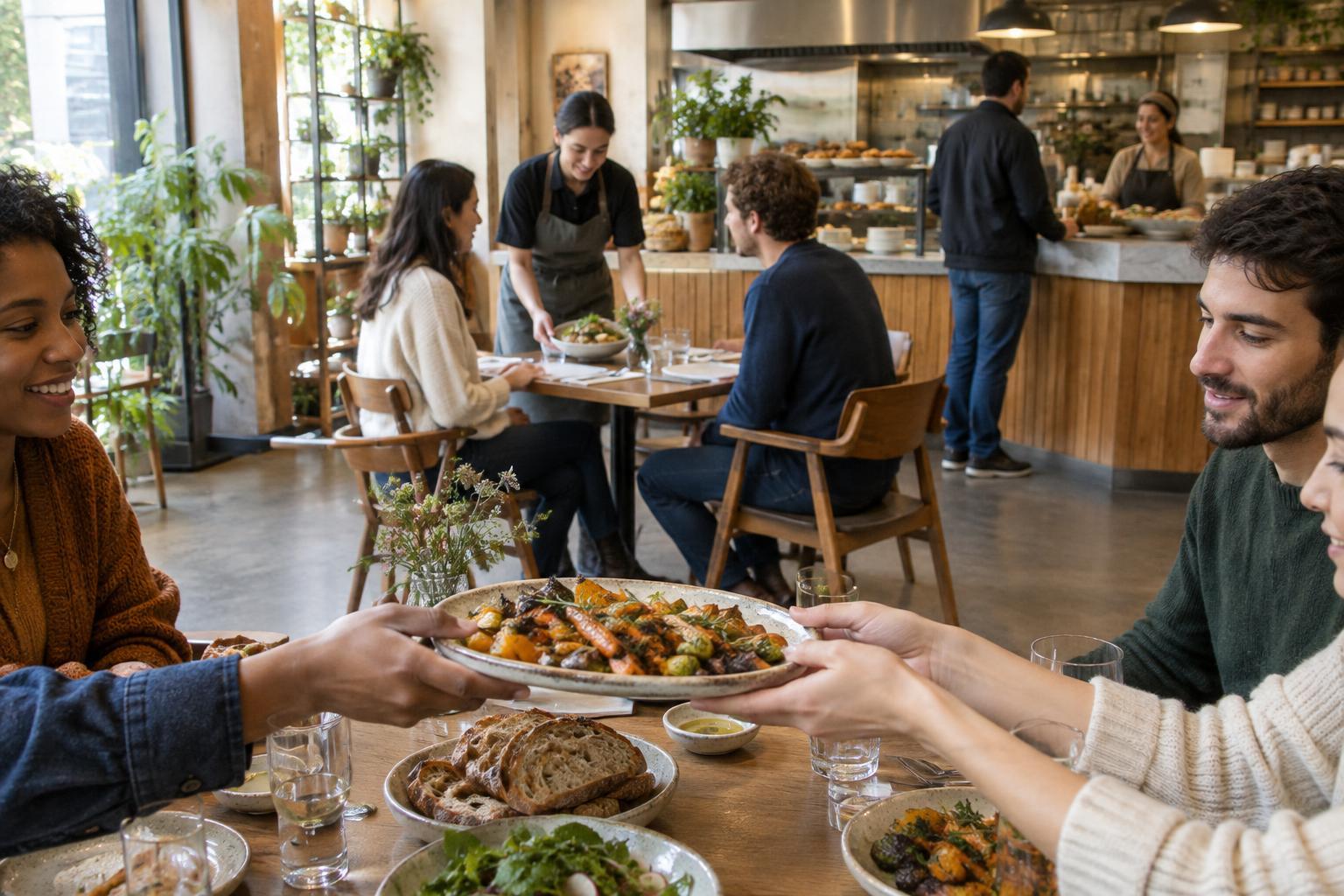
Front-of-house work begins before a guest sits down. A host may greet arrivals, manage the wait, organize seating and communicate table availability to the rest of the team. Servers explain the menu, take orders, answer questions they can address accurately, deliver food and drinks, and check whether guests need anything else. In counter-service settings, some of those duties happen at a register rather than at a table.
Other FOH roles may focus on particular parts of service. Bartenders prepare drinks and may serve guests seated at a bar. Bussers clear and reset tables, replenish supplies and help keep the dining room ready. Food runners carry completed dishes from the kitchen and help them reach the right guests promptly. A dining-room manager or shift lead may coordinate staffing, respond to service problems and keep the pace of the room manageable.
Good FOH service is more than friendliness. It requires careful listening and clear communication. If a guest asks about an ingredient or mentions a dietary restriction, the team needs to pass that information along and confirm what the kitchen can actually accommodate rather than guessing.
Back of house: preparing food and keeping the kitchen working
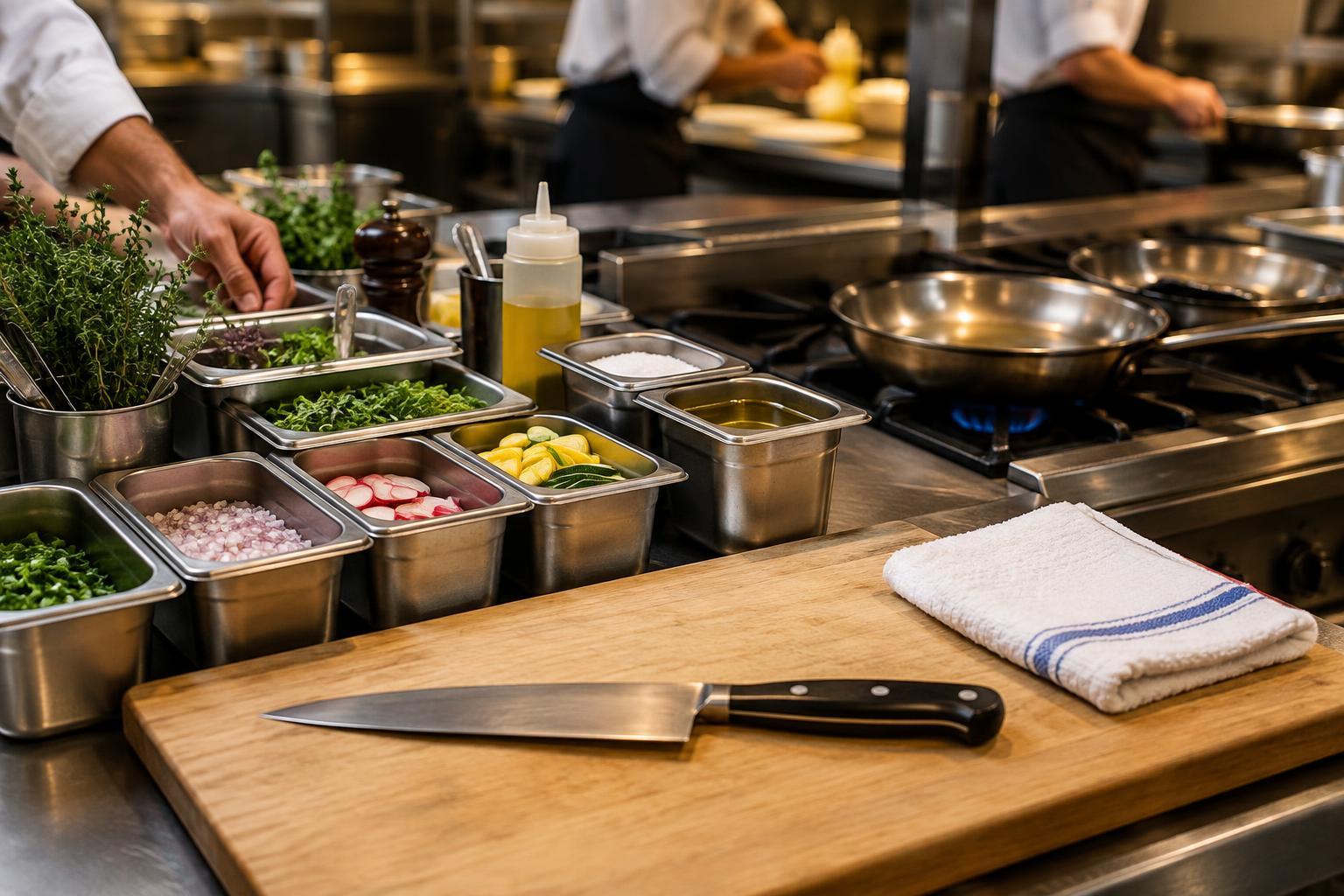
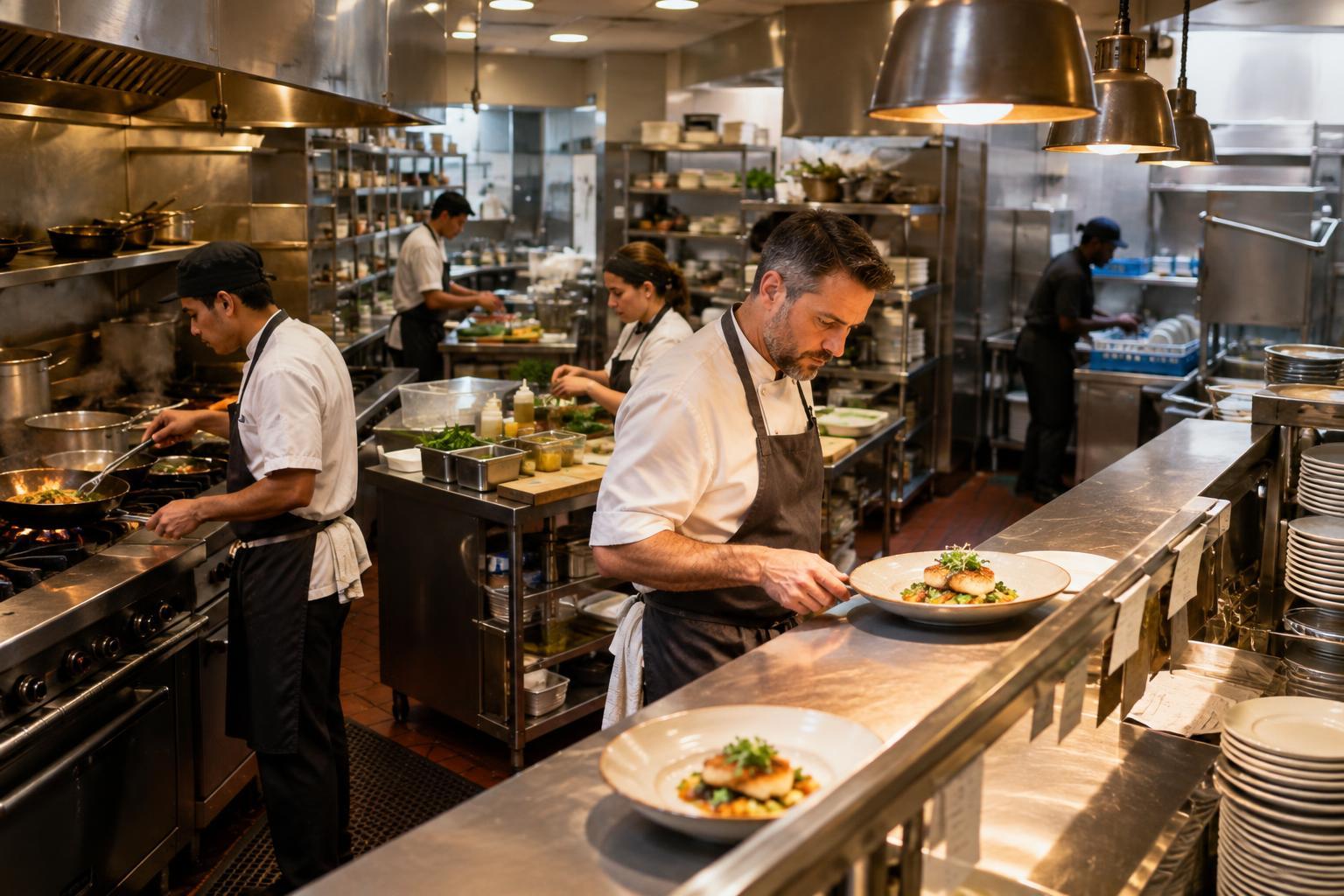
Back-of-house staff turn orders into finished dishes. Prep cooks wash, cut, portion and prepare ingredients so the kitchen is ready for service. Line cooks work at stations that may be organized around tasks such as sautéing, grilling or assembling cold dishes. A chef, kitchen manager or lead cook may plan production, oversee quality and coordinate the team; the exact title and scope depend on the restaurant.
Not every essential BOH role involves cooking a plate. Dishwashers clean dishes, utensils and equipment, helping the kitchen maintain a steady supply of what it needs. Staff may also receive deliveries, store ingredients, label prepared items and clean work areas. These jobs support both food preparation and an orderly workspace.
During service, timing matters as much as individual preparation. Several components of a table’s order may need to be ready together. An expediter, sometimes called an expo, may organize incoming orders, check completed plates and coordinate when dishes leave the kitchen. Depending on the restaurant, this position may sit at the boundary between FOH and BOH.
How an order moves between the teams
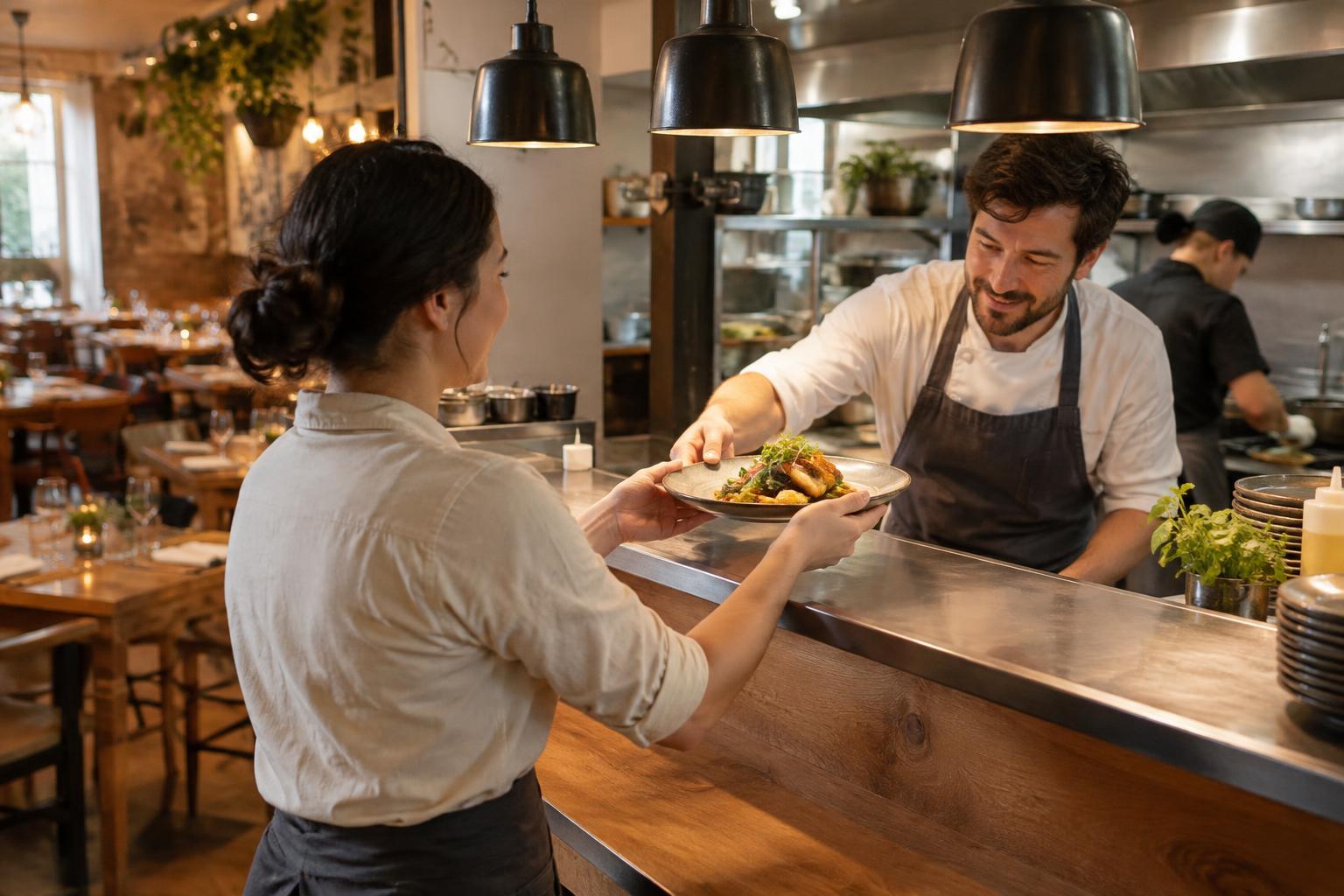
Imagine a table ordering two main dishes, one with a requested change. The server records the order and makes the request clear to the kitchen. Kitchen staff review what is possible, prepare the dishes and coordinate their timing. Before the food goes out, an expediter or another team member may check that the plates match the order. A runner or server delivers them, and the FOH team follows up with the guests.
That sequence depends on small exchanges of information. If an ingredient is unavailable, the kitchen needs to tell FOH before another guest orders it. If a table is not ready for its next course, FOH needs a way to communicate that to BOH. When a concern comes back from the dining room, both teams need a clear account of the issue so they can respond. Problems are easier to solve when the handoff is specific and respectful, rather than rushed or based on assumptions.
Why the distinction matters to diners
Understanding FOH and BOH makes the work behind a meal more visible. The person who answers a menu question may need to check with someone who prepared the dish. The person carrying a plate may not be the person who cooked it. A clean glass and a timely reset are part of the experience, even if those tasks draw little attention.
Neither side can deliver a complete service alone. FOH connects the restaurant’s work to its guests; BOH prepares the food and maintains the systems that let it be served. Their responsibilities differ, but the most successful handoffs treat the meal as a shared effort from the first greeting to the final cleared table.