What drying changes
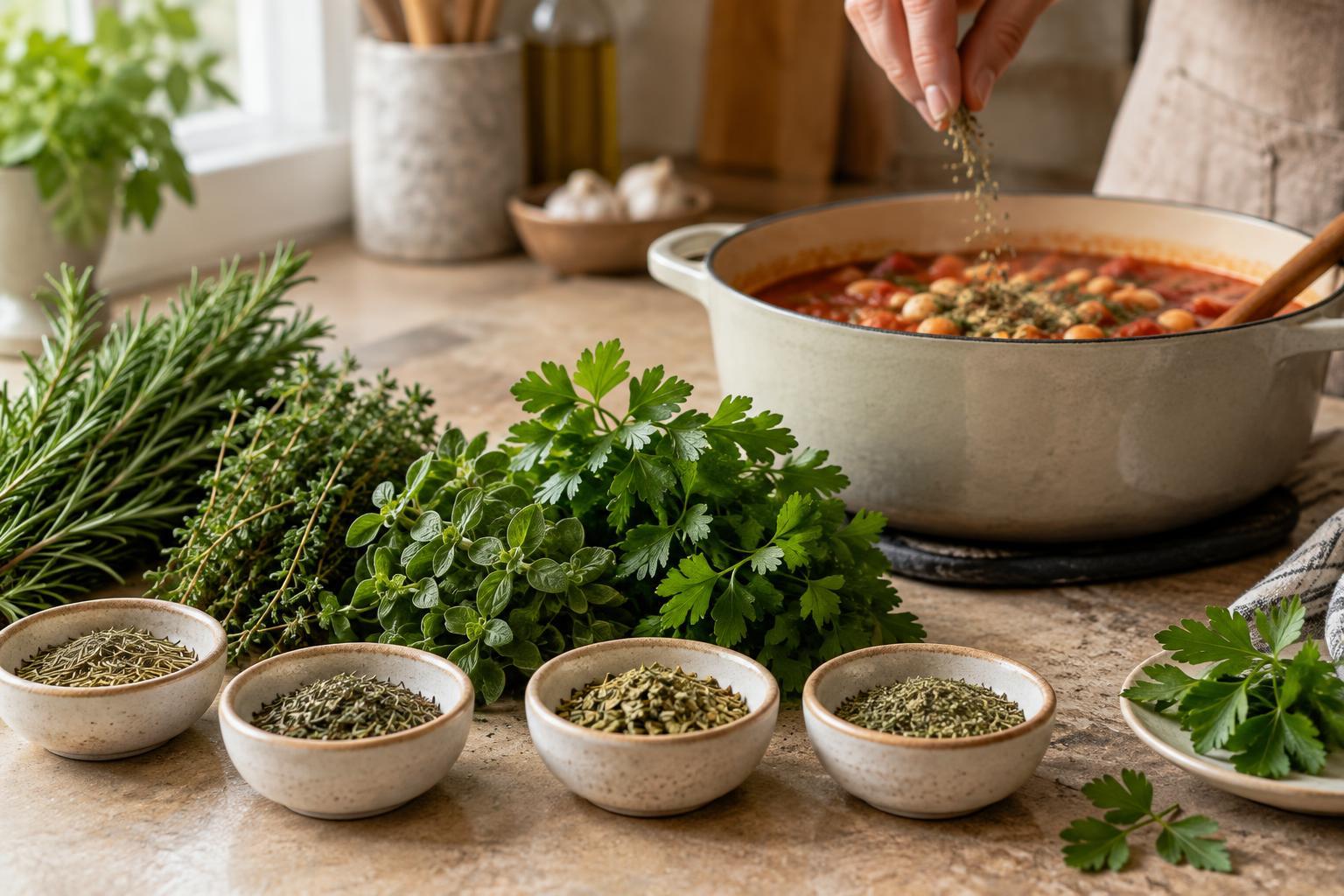
Fresh herbs bring more than flavor. Their leaves contain water, so they can add a cool, leafy quality and a soft texture to a dish. Chop fresh parsley over warm beans, for example, and it remains distinct from the beans beneath it. Dried herbs have lost most of that water. Their leaves crumble into food more readily, giving sauces, soups, and stews an herbal flavor without the same fresh texture.
Drying does not simply make every herb a stronger version of itself. Some aromas fade during drying, while others remain noticeable or seem more prominent once the leaves are concentrated. Storage matters, too: a recently opened jar may smell lively, while an old one may contribute little. Before adding a dried herb, rub a small pinch between your fingers and smell it. That quick check is more useful than assuming every jar has the same strength.
Choose the herb for the job
Tender herbs such as parsley, cilantro, dill, and basil are often chosen for the freshness they bring. Their leaves work well in uncooked dressings, herb sauces, salads, and finishes for cooked dishes. Drying can change those qualities considerably. Dried basil, for instance, can season a tomato sauce, but it will not give a salad the soft leaves or bright impression of fresh basil.
Other herbs adapt especially well to drying. Oregano and thyme can provide clear seasoning in a simmered dish, while dried rosemary can work when used sparingly and given time to soften. That does not make fresh versions interchangeable in every setting. Fresh thyme leaves might be a gentle finishing touch on roasted vegetables; dried thyme is more likely to blend into their seasoning. Think about whether you want the herb to stand out as an ingredient or settle into the background.
Add herbs at the right moment
Dried herbs usually benefit from time and moisture. Add them early enough for the leaves to soften and their flavor to spread through a soup, braise, or sauce. In a quick pan dish, you can stir them into warm oil or butter before adding liquid, but keep the heat moderate and move on promptly; small dried leaves can scorch. Crushing larger pieces in your palm as you add them can help distribute them more evenly.
Fresh herbs often shine near the end of cooking. Stir tender chopped leaves into a finished sauce, or scatter them over a plate just before serving, so their aroma and color remain apparent. Sturdier fresh sprigs, such as thyme or rosemary, can instead go into a pot early and be removed before serving. These are starting points, not rigid rules: fresh basil can flavor a long-cooked sauce, but saving some for the end gives you a different layer of flavor.
Substitute with your senses, not just a ratio
A common starting point is one teaspoon of dried leaves for one tablespoon of chopped fresh leaves. It is only a rough guide. The cut of the leaves, the age of the dried herb, and the role of the herb in the recipe all affect the result. If the herb is a background seasoning in a cooked dish, start with less than you think you need, let it cook briefly, then taste and adjust.
When fresh herbs form a major part of a dish, substitution takes more thought. A herb-heavy salad or a spoonable green sauce needs the bulk and texture of fresh leaves; dried herbs cannot supply those. You might use a small amount of dried herb to suggest the flavor, then build the dish around other fresh ingredients, rather than trying to replace every spoonful. Conversely, when using fresh herbs in place of dried ones, add enough to make their presence noticeable and consider adding them later.
Keep both useful
Dried herbs are convenient for dishes that start in the pantry. Keep them closed, away from heat and strong light, and check their aroma before relying on them. If a jar smells faint or dusty, adding more may not improve the dish as much as choosing a fresher seasoning would. Buying amounts you can use while they still smell appealing helps avoid a crowded shelf of flavorless jars.
Fresh herbs call for a different plan: buy them with a few meals in mind and use their leaves while they look and smell good. A handful left from one recipe can lift an omelet, dress a bowl of grains, or finish a pot of soup. Keeping fresh and dried herbs is not a matter of choosing a winner. Each gives you a different way to shape a dish, from a quiet herbal foundation to a vivid final touch.