What the method changes
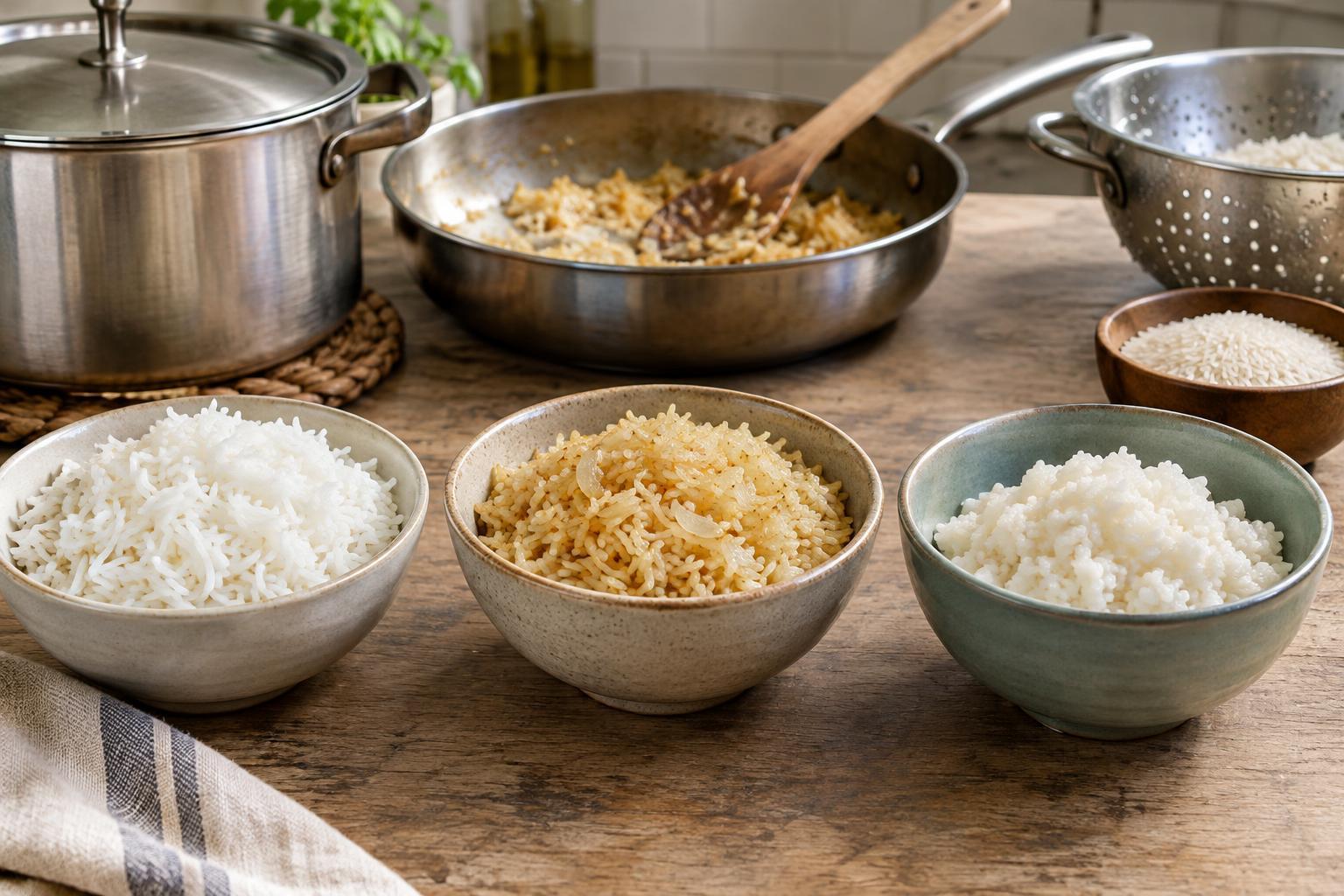
The main difference between rice-cooking methods is how the grains meet liquid. In the absorption method, a measured amount of water cooks into the rice. In pilaf, the grains are usually warmed in fat with aromatics before a measured amount of liquid is added. In the boiling method, rice cooks in abundant water that is drained away. All three can make good rice, but they offer different levels of control over seasoning and texture.
The rice itself matters just as much. A short-grain rice generally behaves differently from a long-grain rice, and brown rice usually takes longer than white because its outer bran layer remains intact. Package directions are a useful starting point for liquid and time. Whichever method you choose, use a pot large enough to prevent foaming over, and check the rice itself rather than relying on a timer alone.
Absorption: a dependable everyday method
For absorption cooking, combine rice with a measured amount of water and, if you like, salt. Bring it to a simmer, cover, then reduce the heat so the liquid cooks away gently. When the rice is tender and no free water remains, take the pot off the heat and let it stand, covered, before fluffing. That rest gives moisture time to distribute through the pot.
A tight-fitting lid and steady, low heat are helpful here. Repeatedly lifting the lid releases steam, while vigorous boiling can leave the bottom dry before the top is cooked. If the rice is still firm but the pot is dry, add a small splash of water and continue cooking over low heat. If it is wet but tender, leave it uncovered briefly so some moisture can escape.
Absorption is a practical choice when you want a simple side dish or a base for a bowl. Rinsing can remove loose surface starch from many types of rice, which may help grains remain more distinct; it is not necessary for every dish or rice product, so check the package when in doubt.
Pilaf: build flavor before the simmer
Pilaf begins with a step that absorption cooking does not require: warming the rice in a little fat, often alongside onion or another aromatic. Stir the grains gently until they are evenly coated, then add measured water or stock, cover, and simmer until tender. A covered rest at the end helps here, too.
That first step makes pilaf useful when the rice is meant to be a composed part of the meal rather than a neutral backdrop. Toasting can add a subtle nutty note, while the cooking liquid and aromatics carry flavor throughout the dish. Add-ins such as herbs, cooked vegetables or toasted nuts can be folded in after cooking so their textures stay recognizable.
Pilaf still depends on the right amount of liquid for the rice you are using. Fat and aromatics do not compensate for too little water, and a heavy hand with stock or salty additions can overwhelm the finished dish. Start with a familiar rice, follow its liquid guidance, and adjust in later batches to suit your pot and preferred texture.
Boiling: cook, taste and drain
The boiling method treats rice more like pasta. Bring a generous pot of water to a boil, add the rice, and cook until a sampled grain is tender. Drain it well in a fine-mesh sieve. Because the water is not meant to be fully absorbed, you do not need to measure it as precisely, and tasting gives you a direct way to judge doneness.
This approach can be especially convenient when cooking an unfamiliar rice or when you want to avoid guessing how much water a particular pot will retain. It also means that flavors added to the boiling water may be lost when the rice is drained. For a drier finish, return the drained rice to the warm, empty pot, cover it briefly, then fluff. Drain promptly once it is done so the grains do not keep softening in hot water.
Choose by the dish, then refine
Use absorption for an uncomplicated pot of rice, pilaf when you want aromatics and cooking liquid to shape the dish, and boiling when easy tasting and draining appeal to you. If separate grains are important, handle cooked rice gently and avoid stirring it constantly as it cooks. If you want a softer result, make small adjustments to liquid or cooking time on the next batch rather than changing everything at once.
A good method is one you can repeat. Notice the rice variety, pot, heat level and resting time that produce a texture you like. Those few details will help you make a more useful adjustment next time than any single rule meant to cover every kind of rice.