The sound of a room changes the meal
A restaurant can look inviting and serve thoughtful food, yet feel tiring if conversation takes too much effort. When guests must lean forward, repeat themselves or raise their voices, the meal asks for attention that might otherwise go to the company and the food. Sound is part of hospitality because it helps determine whether people can settle in.
Comfort is not the same as silence. The clink of glasses, a greeting at the door and the low murmur of other tables can make a room feel alive. The question is whether those sounds remain in the background or compete with the person across the table. A lively room may suit a quick dinner with friends, while a quieter one may better support a long conversation. Neither atmosphere is inherently better; what matters is whether the sound fits the experience the restaurant offers.
Why some dining rooms feel louder than others
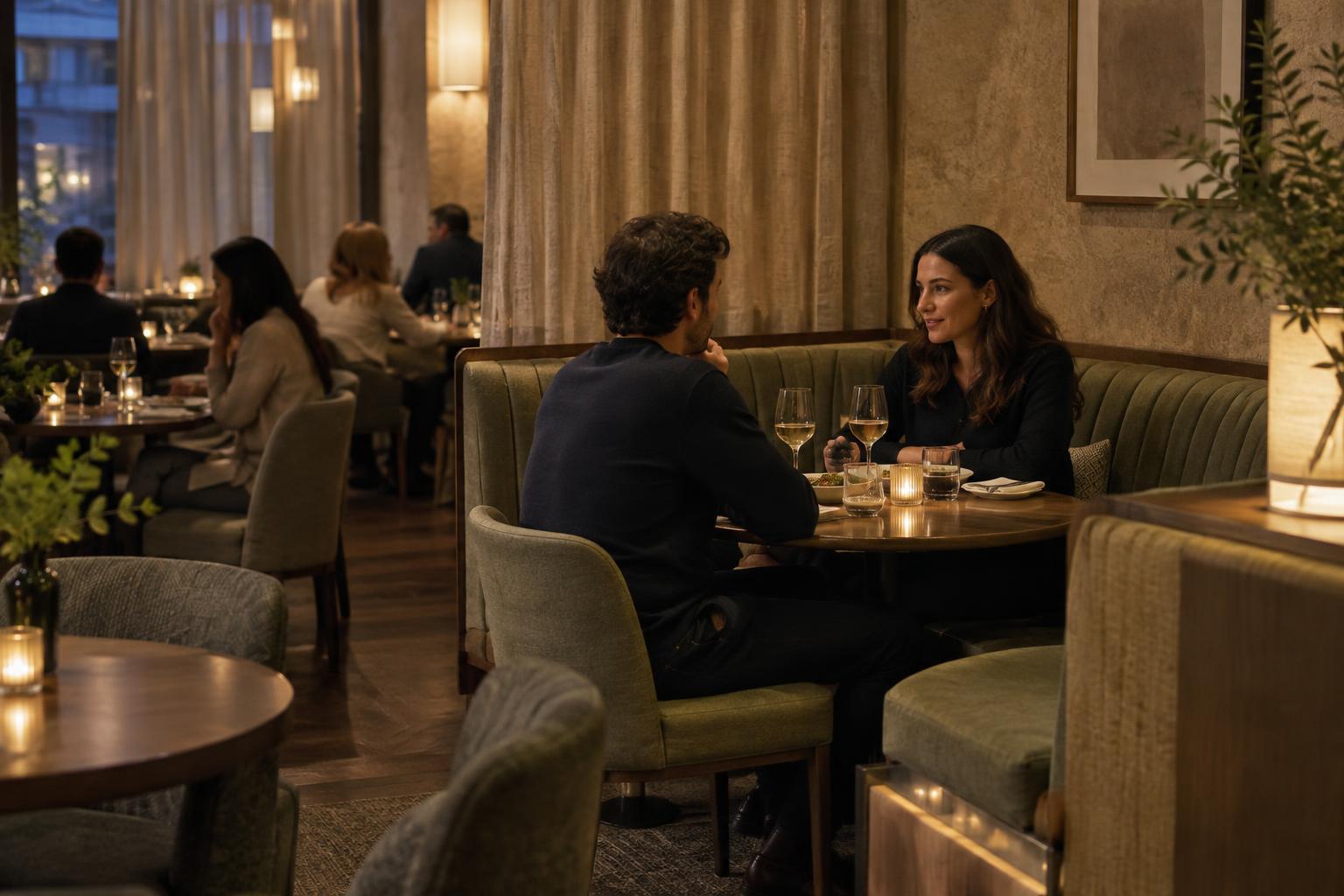
Hard surfaces give sound places to bounce. Large windows, bare floors, exposed ceilings and closely spaced tables can create an energetic room, but they may also carry voices farther than guests expect. Softer elements such as upholstered seating, curtains and rugs can reduce some of that reflection. Their effect depends on the room as a whole, so adding one soft detail does not automatically make a loud space comfortable.
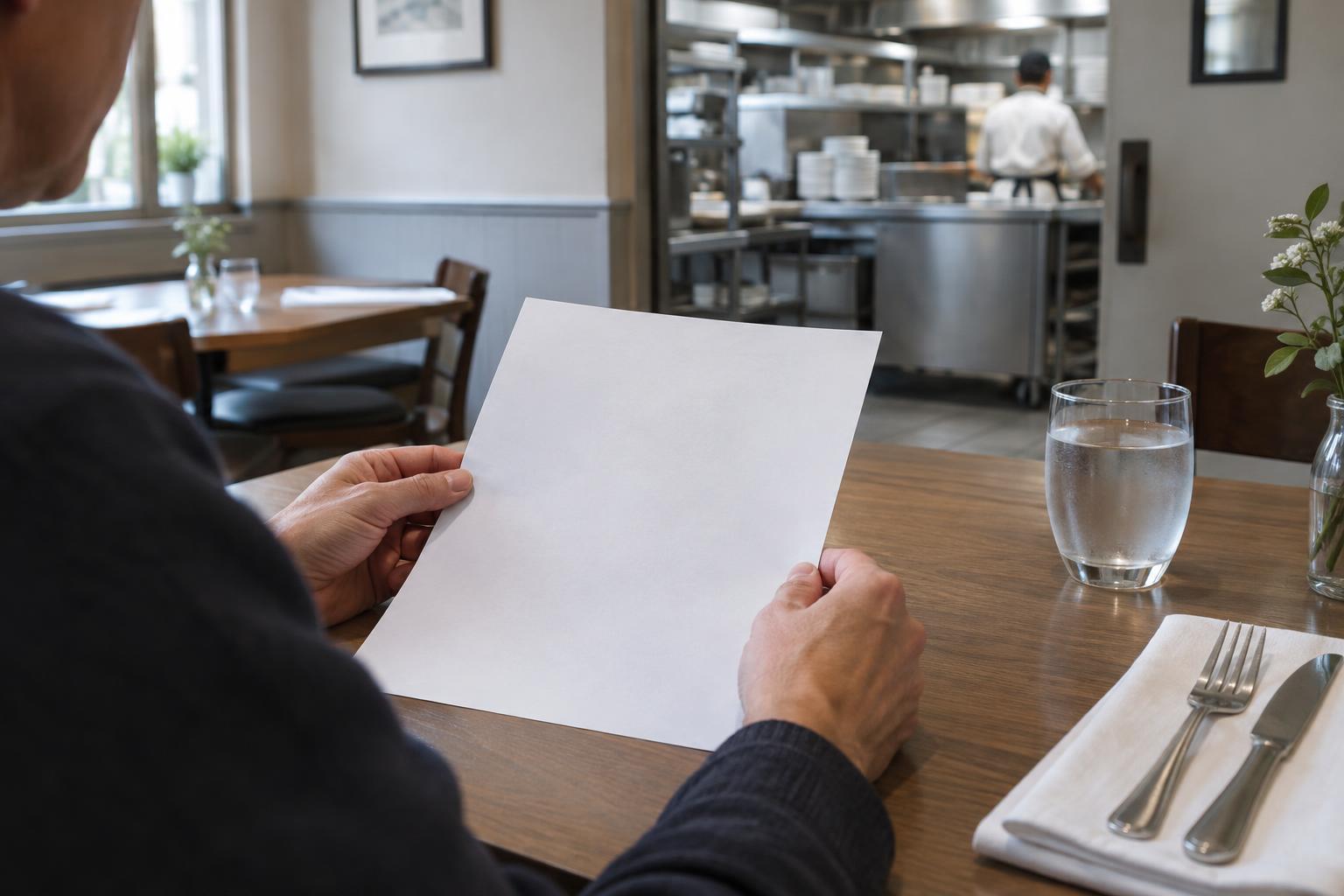
Layout matters alongside materials. A table beside the entrance hears arrivals and departures; one near a service station may hear stacked plates, drawers and staff conversations. Diners in a corner might feel sheltered, though a corner can also collect sound from nearby tables. Even an attractive open kitchen changes the soundtrack when its activity reaches the dining area. These sounds are not necessarily flaws. They become a problem when they make it hard for guests to follow the conversation they came to have.
The conversation spiral
Noise can build through a simple pattern: one table speaks a little louder to be heard, nearby tables do the same, and the room gradually feels more crowded with sound. Music adds another layer. A playlist that feels gentle in an empty dining room may be harder to talk over once every seat is occupied.
Volume is only part of the experience. A steady background hum can be easier to live with than abrupt peaks, such as a burst of sound from the bar or a chair scraping across the floor. Guests may also find voices especially distracting because speech from another table draws attention away from their own discussion. This helps explain why two rooms that seem equally busy can feel very different to sit in.
What thoughtful sound design can do
Restaurants have several ways to shape their sound without stripping away their character. Spacing tables more generously can give conversations breathing room. Chairs that move quietly, considered placement of service equipment and materials that soften reflections can make ordinary activity less intrusive. Music can be chosen and adjusted for the number of guests in the room rather than treated as a fixed setting.
The aim need not be to eliminate every kitchen sound or lively exchange. An audible room can signal warmth and shared occasion. Good acoustic choices preserve that energy while making it possible to talk at a comfortable level. Staff also contribute: a host who recognizes that a guest wants a quieter table can help match the seating to the occasion when space allows.
How to find a table that suits your evening
As a guest, you can look beyond the overall volume when deciding where to sit. Notice whether music speakers face a particular area, whether tables cluster near the bar and how much traffic passes between your chair and the kitchen. A table farther from those activity points may suit a catch-up meal, while a seat near the open kitchen may be part of the appeal if you enjoy its pace.
If hearing each other is important, it is reasonable to ask whether a quieter table is available. A restaurant may not be able to offer one, especially when it is full, but the request gives staff useful context. Paying attention to sound is not being fussy: it is recognizing that a meal is made from more than what arrives on the plate. The room helps people decide whether to linger, speak freely and feel at ease together.