The whole visit matters
An accessible entrance can make a restaurant possible to enter, but it does not necessarily make the meal comfortable. A guest still needs to reach a table, review the menu, order, use the facilities and leave without encountering a new obstacle at every stage. Thinking about accessibility as a complete visit, rather than a feature at the front door, reveals details that are easy to miss.
No single arrangement will suit everyone. Guests may have different mobility, vision, hearing, sensory or communication needs, and those needs may change from day to day. The useful question for a restaurant is not whether it has one perfect solution, but whether guests can understand their options, make requests without embarrassment and participate in the meal on reasonable terms.
Space should work when the room is in use
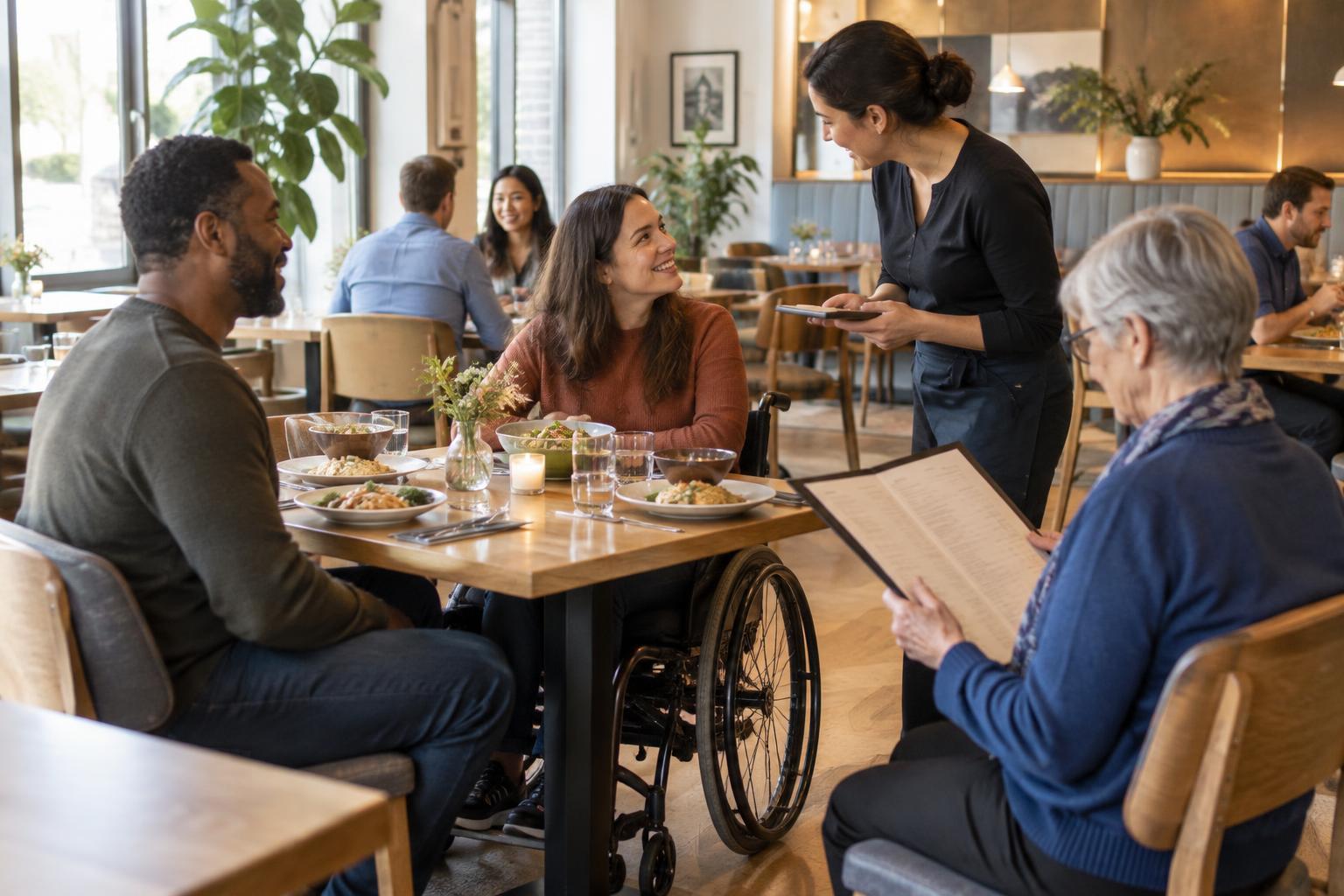
A route that looks clear before service may narrow once chairs are occupied, bags are placed beside tables and servers begin moving through the room. Practical circulation depends on more than a wide doorway: guests should be able to move between the entrance, their seats and the facilities without having to ask an entire row of diners to stand. Furniture arrangements, coat storage and the placement of temporary signs all affect that route.
Seating choice matters too. A fixed booth may be appealing to some guests but difficult for others to enter or leave. Tables with movable chairs can offer more flexibility, provided there is space to position them comfortably. If a restaurant has several seating areas, it helps to know which ones can accommodate different needs and to describe those choices plainly when guests ask. An accessible table is most useful when it feels like part of the dining room, not an afterthought.
Menus and ordering should be easy to navigate
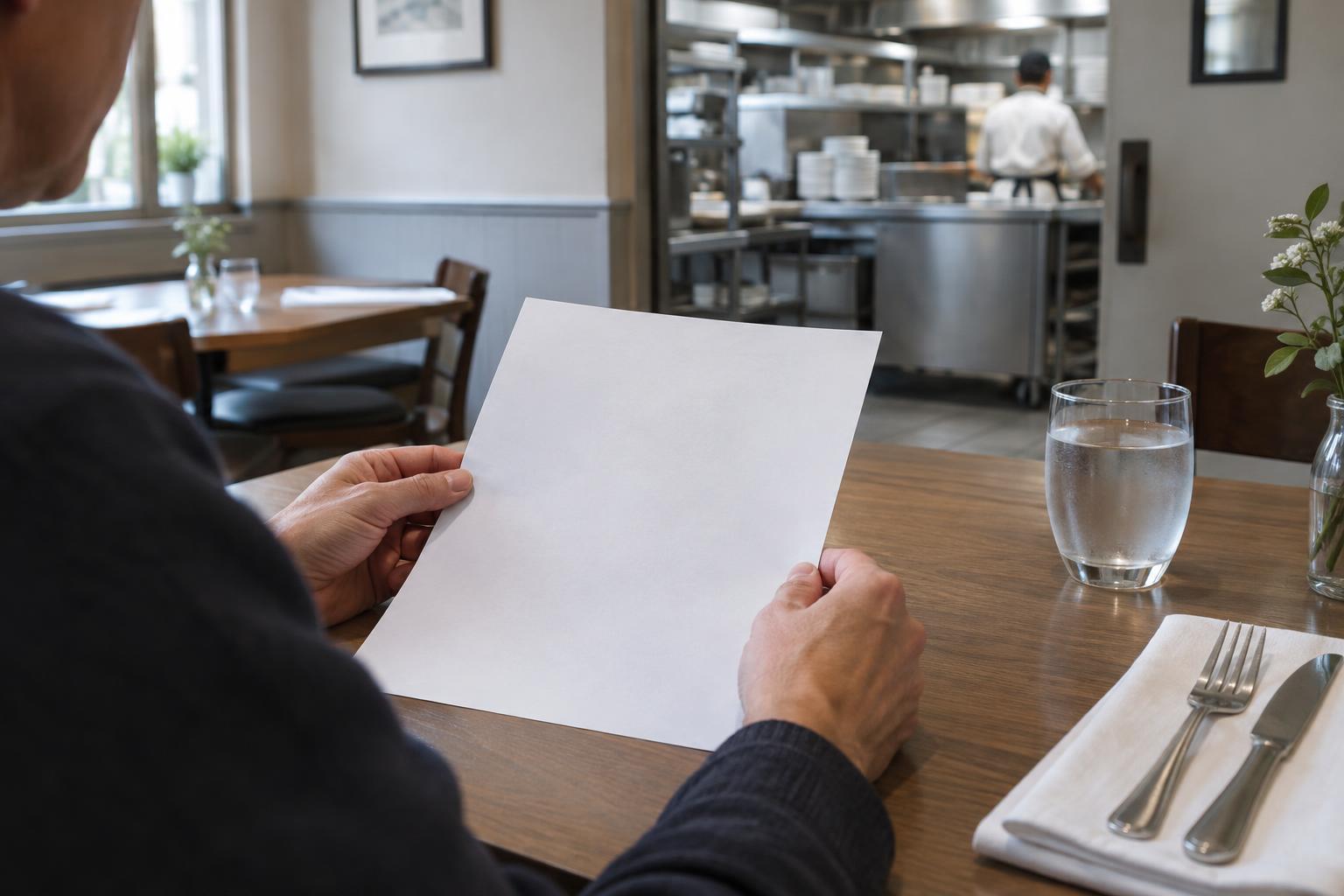
The menu is often a guest’s first substantial interaction with a restaurant. Small type, low contrast, glossy paper under dim lighting or a digital menu that is difficult to navigate can make ordering frustrating. Clear type, legible contrast and straightforward descriptions help many readers. Offering a menu in more than one usable format, where practical, gives guests a way to choose what works for them.
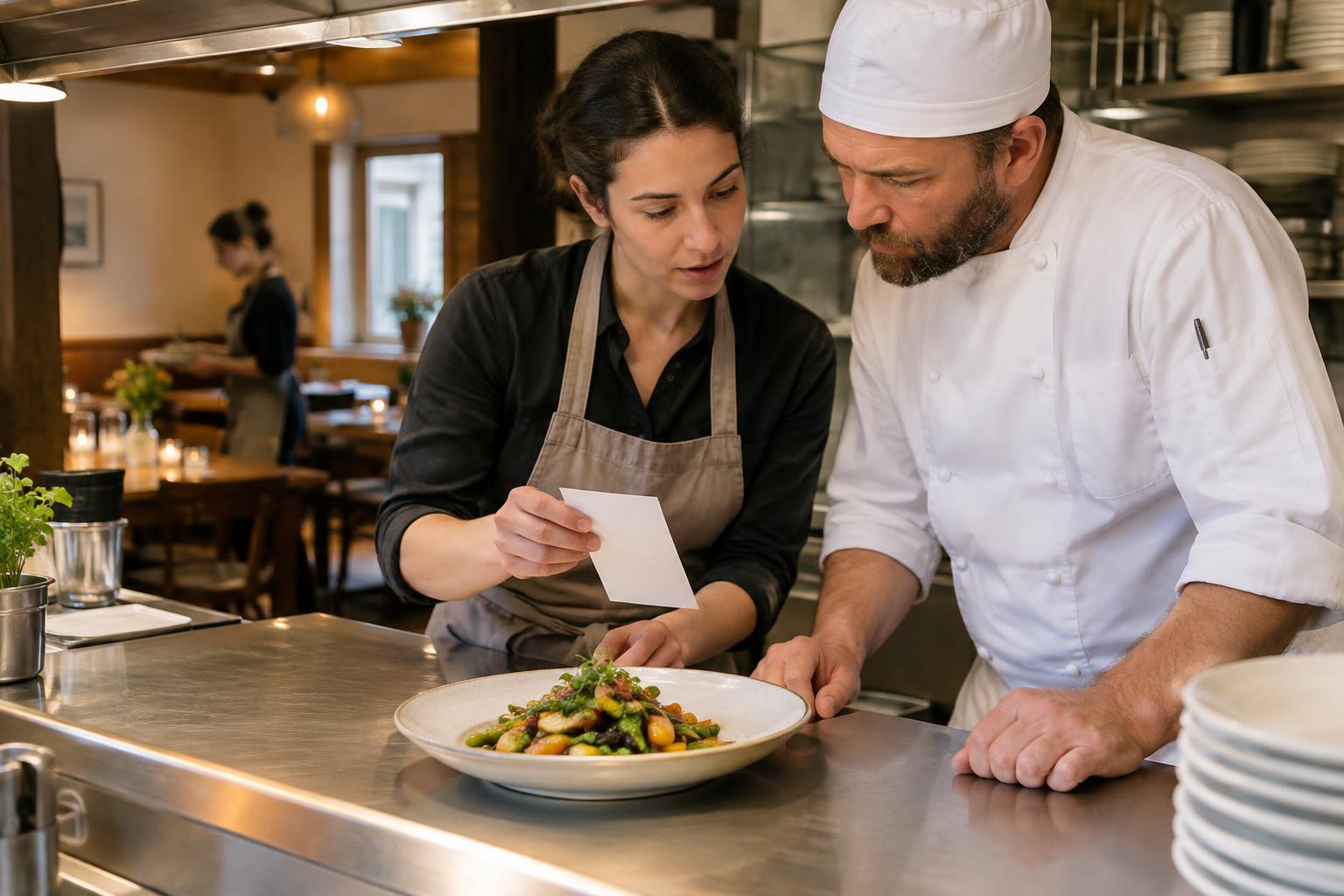
Clarity also applies to conversation. Staff can speak directly to the person ordering, allow time for a response and ask how they can help rather than assuming. Written information about ingredients and preparation can support guests who need to consider what is in a dish, while staff should be comfortable saying when they need to check a detail. A calm, accurate answer is more useful than a confident guess.
Comfort is shaped by sound, light and pace
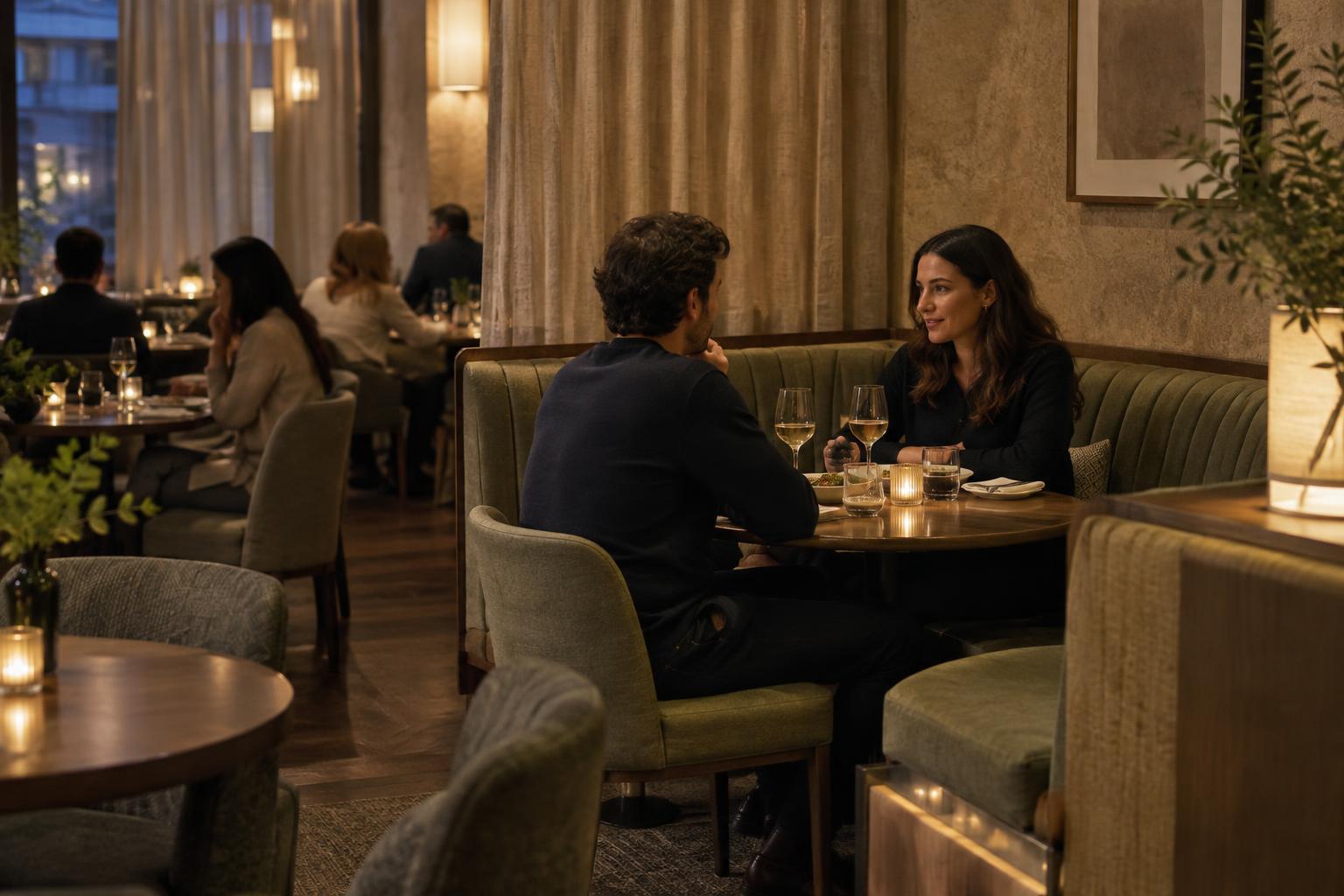
Restaurant atmosphere is often discussed in terms of energy, but that energy can affect whether guests can follow a conversation or feel at ease. Music, hard surfaces, crowded tables and a busy kitchen may combine into a difficult sound environment. Lighting presents a similar balance: a softly lit room can feel inviting while making a menu or a change in floor level harder to see.
Restaurants do not need to make every table identical to offer meaningful choice. If some areas are quieter or brighter than others, staff can identify them and let guests know what may be available. The pace of service can also be flexible. Giving someone time to read, order or move between courses is a small adjustment that can make the experience more comfortable without drawing attention to the guest.
Clear information and considerate service tie it together
Accessibility can begin before a guest arrives. Useful information might include whether there are steps, how to enter, what the seating is like and whether an accessible restroom is available. Specific descriptions are better than a broad claim that a space is “fully accessible,” which may mean different things to different people. If a feature is unavailable or temporarily blocked, telling guests clearly allows them to make their own plans.
During the meal, the best approach is attentive without being intrusive. Staff can explain options, listen to a request and avoid moving a mobility aid or other personal item without permission. Managers can also notice recurring difficulties: a table that repeatedly blocks a route, a menu guests struggle to read or a restroom used for storage. Addressing these details makes accessibility part of everyday hospitality. The goal is not to predict every guest’s needs; it is to make the restaurant easier to understand, enter and enjoy.