An allergy request is a conversation, not a menu note
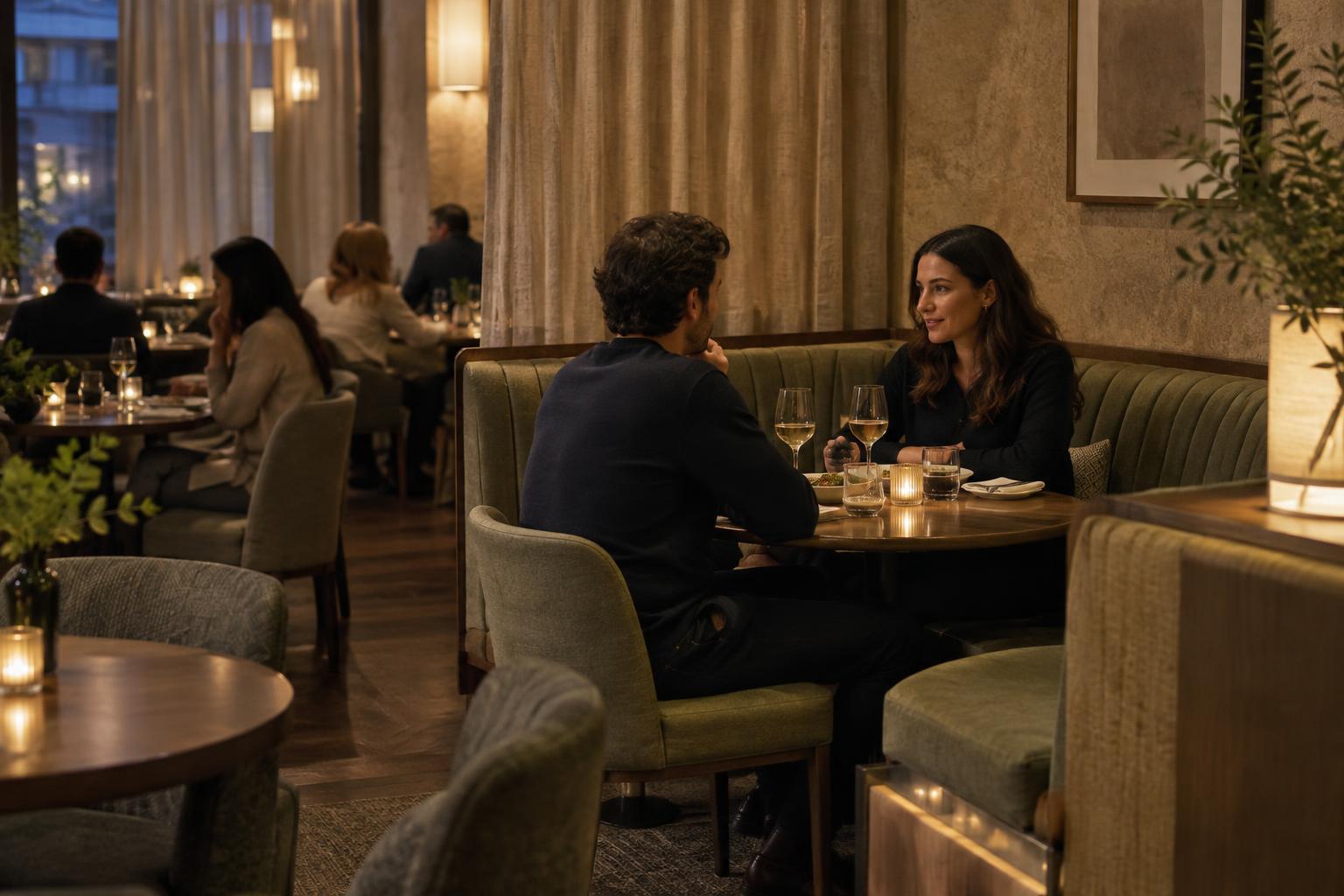
A restaurant menu describes dishes, but it rarely captures every detail of their preparation. A sauce may contain an ingredient that is not named in the dish description; a garnish may change; and a shared preparation area may matter as much as the recipe itself. That is why an allergy request needs a direct conversation. The goal is not for a server to guess whether a dish is safe, but to learn what the guest needs to avoid and pass that information to someone who can check the food and the process.
Clear language helps. A guest saying “I have an allergy to sesame” gives the team a different question to investigate than “Could you leave off the sesame seeds?” Restaurants also need room to ask follow-up questions without putting guests on the spot. The dining-room team can explain that it will check with the kitchen rather than offering reassurance based only on the printed menu.
The handoff from table to kitchen
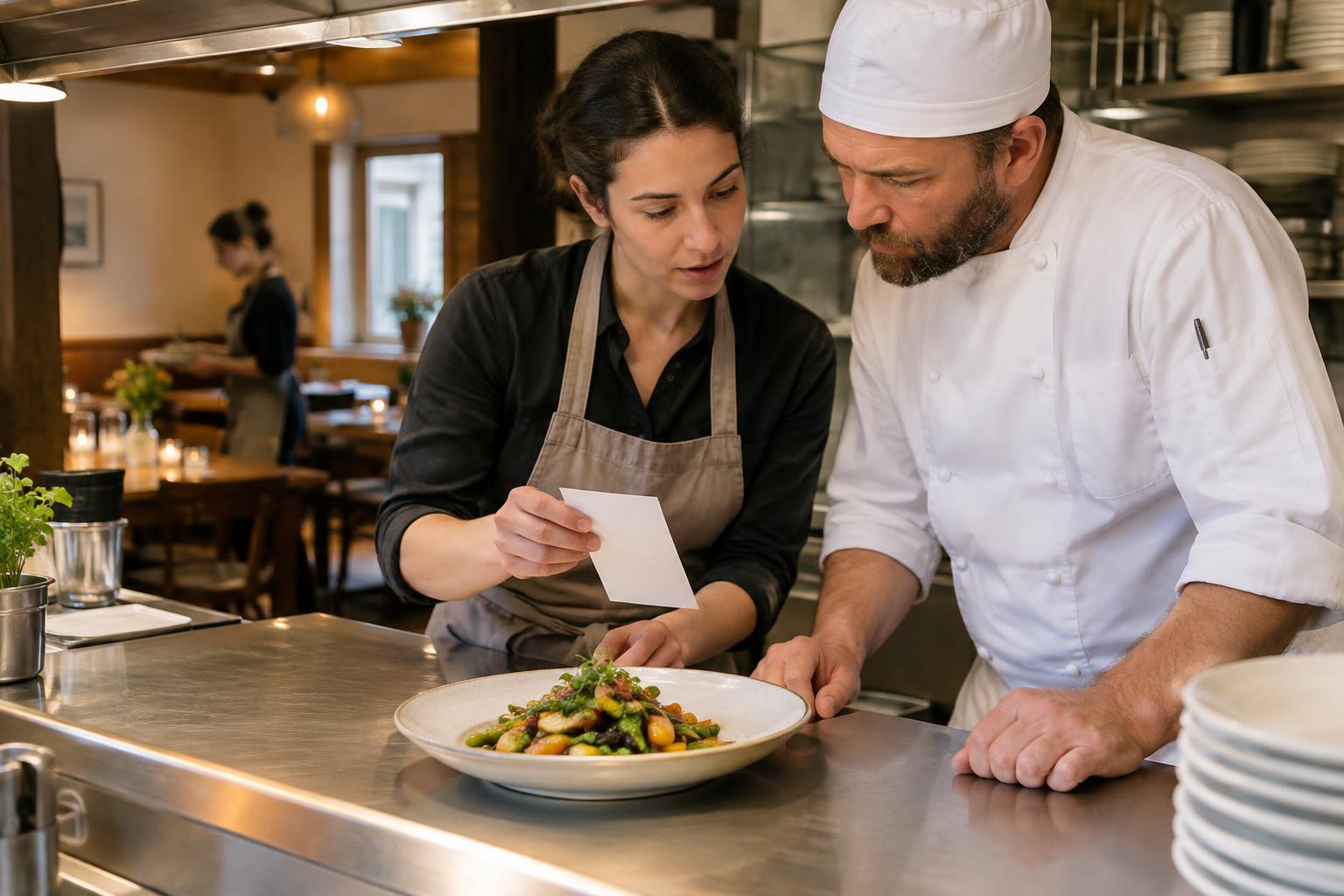
Once a server understands the request, the next challenge is making sure it reaches the people preparing the meal. A useful order note identifies the ingredient at issue, the affected diner and the dish being considered. Speaking directly with the kitchen may be especially important when a request involves a sauce, a shared cooking surface or a substitution. The details should remain attached to the order through preparation and service, rather than relying on someone to remember a conversation held earlier in a busy shift.
A good handoff also leaves room for an answer the guest may not want to hear. Kitchen staff may find that a prepared component contains the ingredient, that its contents cannot be confirmed, or that the available equipment cannot reasonably be separated for that order. The dining room then has to relay those limits plainly. Suggesting a different dish can be helpful, but only after its ingredients and preparation have been checked in the same way.
Why checking the recipe is only the beginning
Avoiding an ingredient in the written recipe does not necessarily prevent cross-contact. Ingredients can be transferred through shared utensils, cutting boards, fryers, grills, storage containers or hands. Even a seemingly simple modification, such as removing a topping before a plate leaves the kitchen, does not undo contact that has already happened. The practical question for the kitchen is therefore broader than “Does this dish contain the ingredient?” It is also “Can we prepare and serve this order without introducing it along the way?”
That question may lead to steps such as checking ingredient packaging, using clean tools and a separate workspace, and identifying the plate clearly at pickup. These steps depend on the dish and the kitchen’s layout; they are not a universal guarantee. Pre-made items and supplied ingredients deserve particular attention because their contents or handling may be harder for a restaurant team to verify. When there is uncertainty, an honest account of it is more useful than an unsupported promise.
Service continues after the dish is cooked
The final handoff matters too. Food can be confused at the pass, garnished out of habit or delivered to the wrong person at a shared table. A team may use its order system, a verbal check or both to keep the allergy request visible until the correct plate reaches the correct guest. If a plate’s identity or preparation becomes unclear, checking again is better than treating a familiar-looking dish as confirmation.
Restaurant culture often celebrates ease: a meal appears, plates move smoothly, and guests need not see every decision behind the scenes. Allergy communication calls for a different kind of hospitality. A short pause to verify a detail may interrupt the rhythm of service, but it gives staff a chance to correct a misunderstanding before serving the food. It also gives the guest a clearer basis for deciding whether to order.
Honest limits are part of hospitality
No single script or menu symbol can replace knowledge of a particular kitchen. Restaurants vary in ingredients, equipment, staffing and how much control they have over supplied foods. A team can build a consistent habit of listening, recording, checking and reporting back, while still recognizing that some requests may be beyond what it can accommodate. Saying so clearly respects the guest’s decision rather than shifting uncertainty onto them without explanation.
For diners, it helps to raise an allergy before ordering and to confirm that the answer reflects both ingredients and preparation. For restaurant teams, the central discipline is to keep the same request intact as it moves from table to kitchen and back again. The strongest exchange is neither a casual “it should be fine” nor a blanket assurance. It is a specific, candid conversation about what the team has checked, what it can do and what it cannot verify.