Cook for the season you actually have
The stretch between winter and spring can make dinner feel repetitive. You may be ready for crisp salads and tender vegetables, while the most dependable choices are still potatoes, cabbage, carrots and onions. Rather than forcing a spring menu, treat this as a season of its own: keep the substantial ingredients that make a meal satisfying, then change the way you prepare and finish them.
What is available depends on where you live and how food reaches your shops or markets. A useful approach is to choose one reliable base, such as beans, grains or stored vegetables, and add freshness where you find it. A handful of herbs, a few radishes or an early bunch of greens can have more impact as a finishing ingredient than as the entire meal.
Give storage vegetables a lighter treatment
Winter vegetables do not have to become another heavy roast. Shred cabbage thinly and dress it with lemon or vinegar, oil and a little salt; let it soften while you prepare the rest of dinner. Slice carrots into ribbons for a similar effect, or quickly sauté them so they retain some bite. Cook leeks slowly until tender, then spoon them over toast, grains or warm lentils.
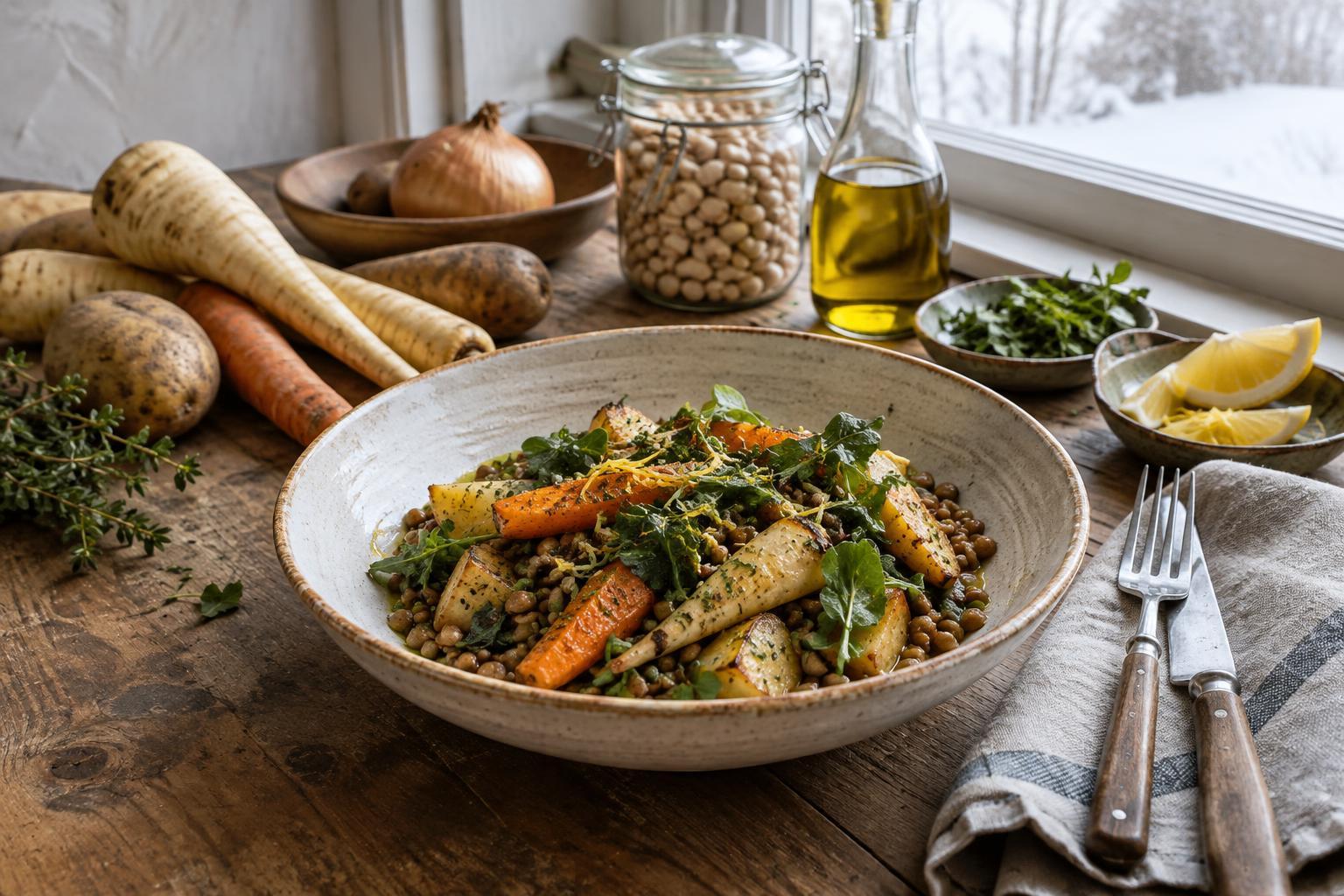
Potatoes can also take on a different character. Boil small pieces until tender, drain them well and toss them while warm with a sharp dressing and chopped herbs. If you are roasting roots, leave room on the tray so their edges brown, then serve them with yogurt, mustard or a bright vinaigrette rather than a rich sauce. These changes keep familiar ingredients useful while making the plate feel less wintry.
Let the pantry carry the meal
The seasonal gap is a good time to rely on ingredients that do not demand perfect produce. Beans, lentils, rice, pasta, eggs and tinned fish can turn a small amount of fresh food into dinner. Simmer white beans with garlic and stock or water, fold in greens near the end, and finish each bowl with olive oil and lemon. Toss pasta with sautéed cabbage and breadcrumbs for a meal built mostly from staples.
Think in combinations rather than fixed recipes. A cooked grain, a warm vegetable, something protein-rich and a lively dressing make a flexible bowl. Fried eggs can top potatoes and greens; chickpeas can fill out a carrot and herb salad. Keep dressings assertive enough to bring the ingredients together, tasting as you go rather than relying on a strict formula.
Use early greens without making them do all the work
When delicate greens or herbs begin to appear, they may be scarce or expensive. Use them where their flavor and texture are most noticeable. Stir tender leaves into soup just before serving, scatter herbs across a tray of roasted vegetables, or tuck a small handful of greens into a sandwich with a substantial filling. Cook tougher greens until their stems are tender; save delicate leaves for quick cooking or serving raw.
This is also a useful moment to check what you already have before shopping. A lemon, a spoonful of mustard, pickles or a little grated hard cheese can brighten a dish made from stored produce. Add one or two fresh ingredients with a clear purpose, rather than buying an assortment that may wilt before you use it.
Build a simple in-between menu
For a weeknight meal, start with lentil and carrot soup, adding cabbage or greens according to what is available. Serve it with toast and a sharp little salad of sliced radishes or dressed cabbage. On another night, make a tray of roasted potatoes and onions, then add eggs and a spoonful of herbed yogurt at the table. Both meals leave room for substitutions without losing their shape.
If you are cooking for others, a spread can make this modest season feel generous: warm beans, roasted roots, a crunchy slaw, good bread and one vivid sauce. Guests can assemble their plates to suit themselves, and nothing depends on finding a particular spring ingredient. The aim is not to disguise the gap between harvests. It is to make satisfying food from what is here, with just enough brightness to welcome what comes next.