Two ways to begin the same meal
A reservation and a walk-in are more than two ways to get a table. They create different expectations before anyone opens a menu. Booking ahead offers a plan: guests know when to arrive, and the restaurant has some idea of how many people to prepare for. Walking in keeps the evening open. It may lead to a quick seat, a wait, or a change of plans.
Neither approach is inherently more relaxed or more hospitable. A reservation can take the pressure off a celebration, but it can also make a leisurely afternoon feel scheduled. A walk-in can turn an ordinary outing into an appealing detour, but uncertainty is less welcome when someone has limited time. The better choice depends on the occasion, the size of the party, and how much flexibility everyone brings.
What a reservation changes
For guests, the main advantage of a reservation is predictability. It is easier to coordinate friends, arrange transport, or plan a meal before a performance when there is an agreed arrival time. Booking can be especially helpful for a larger group, since finding several seats together without notice may be difficult. Guests can also mention practical needs when they book, while understanding that a request is not always a guarantee.
For a restaurant, advance bookings provide a rough map of the service. Staff can plan how to use tables, anticipate group sizes, and spread arrivals where possible. That planning can support a steadier welcome and a smoother flow between courses. It cannot account for every variable: guests may arrive late, meals may take longer than expected, and a table may not be ready at the exact moment requested.
The trade-off is commitment. A reserved table is held for a particular party and time, which may limit options for people who decide to eat out on the spot. Guests also need to pay attention to any booking terms, such as a requested confirmation or a stated seating duration. If plans change, cancelling promptly gives the restaurant a better chance to offer the space to someone else.
What a walk-in brings to the room
Walk-ins give a dining room an element of openness. A person can stop for lunch after an errand, choose a place that looks inviting, or decide on dinner without turning it into an appointment. For solo diners and small parties, that freedom can be a central part of the pleasure. A short wait at the bar or nearby may even feel like a welcome pause, provided there is a comfortable way to spend it.
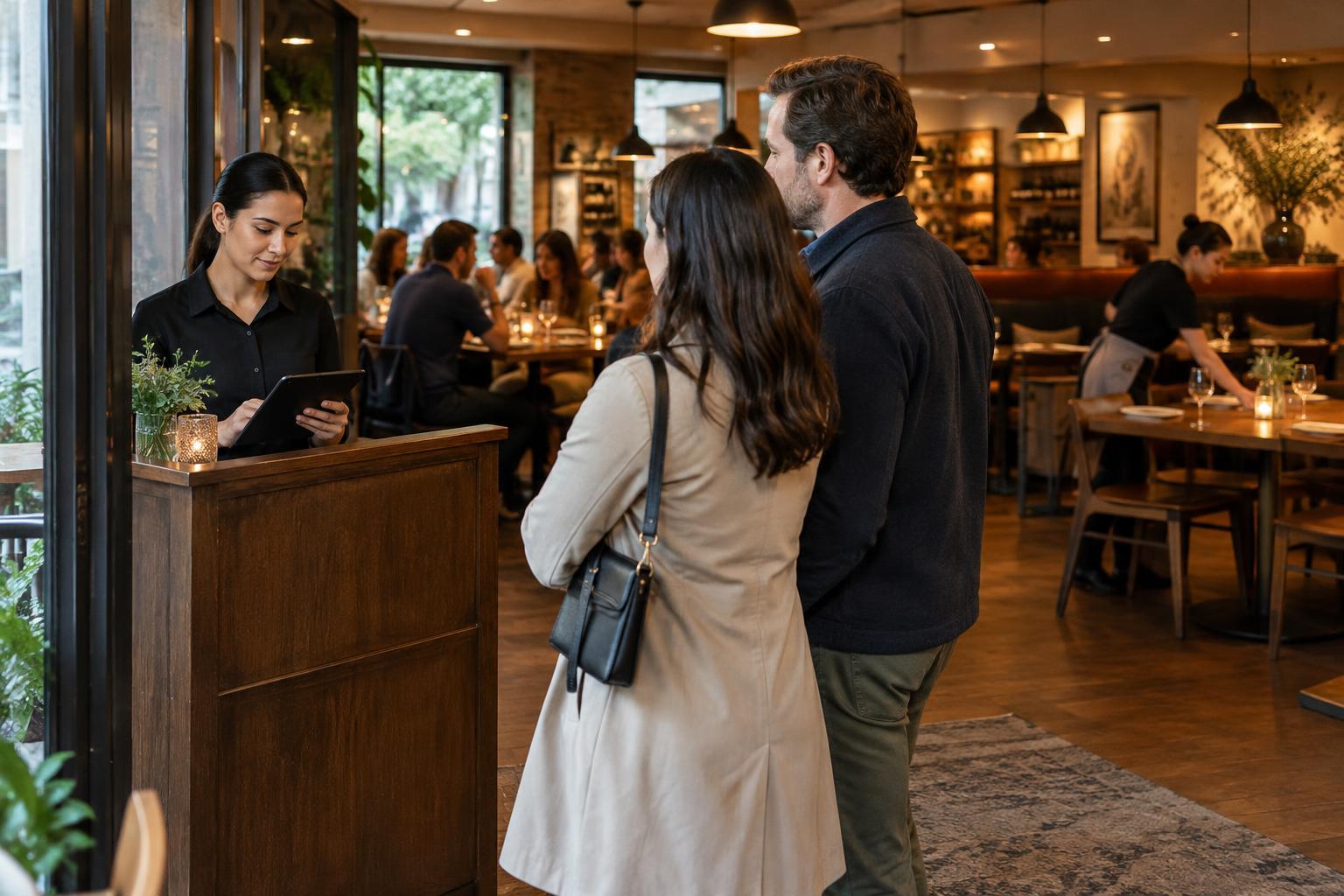
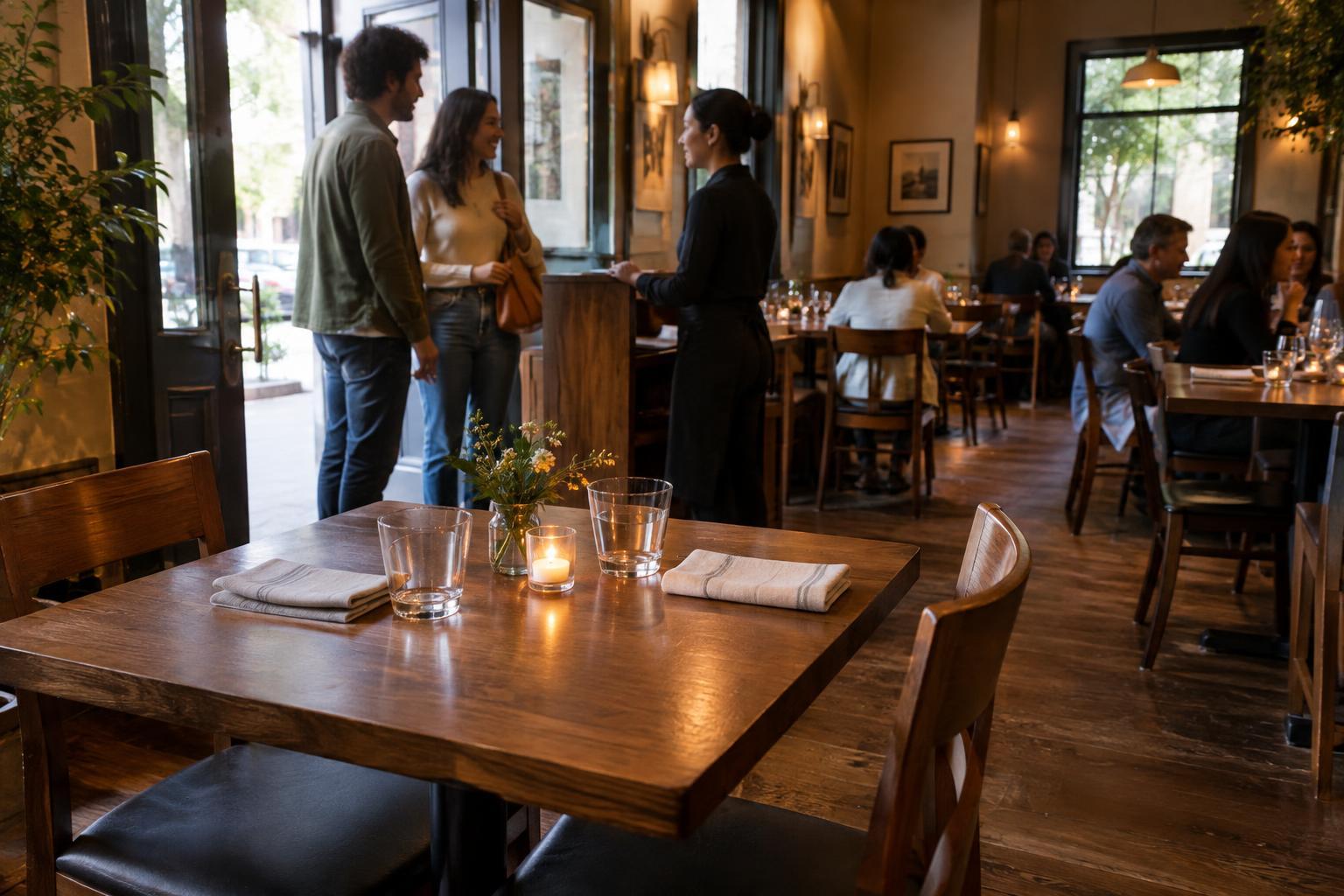
The uncertainty, however, is real. An empty table does not always mean an available table: it may be needed soon for a booking, require resetting, or be part of a section the team cannot serve well at that moment. The host may be balancing several arrivals at once. A wait estimate is useful, but it is still an estimate rather than a promise.
Restaurants that keep room for walk-ins can make spontaneous dining possible, while booking-only services may suit a different style of operation. Either model can be welcoming when expectations are clear. The experience becomes frustrating when guests cannot tell whether waiting is worthwhile or when the process for taking names feels uncertain.
Pacing matters as much as getting a seat
The way a table is secured can influence how the meal feels once it starts. Someone with a reservation may expect to sit close to the booked time, then want to linger. Someone who has waited as a walk-in may feel impatient even if service proceeds at a normal pace. In both cases, clear communication helps: knowing that the kitchen is busy or that a table has a later booking makes it easier to choose how to spend the time.
Pacing also depends on what the meal is for. A quick bite calls for different expectations than a birthday dinner or a long conversation over several courses. If time is tight, guests can say so early and ask whether a particular meal is feasible. If the aim is to linger, it is worth checking for any seating limit rather than assuming the table is available for the whole evening.
Choosing well without overplanning
Reserve when the time and place matter: a group gathering, a special occasion, or a meal squeezed between other commitments. Consider walking in when the schedule is loose and there are other places you would be happy to try. Checking a restaurant’s stated approach to bookings and walk-ins before leaving can prevent a needless journey, though availability may still change.
Whichever route you take, a little courtesy improves the experience on both sides of the host stand. Arrive close to a booked time, update the restaurant if your party size changes, and be candid about how long you can wait. If you walk in, ask what is realistically available rather than treating an estimate as a guarantee. The goal is not to master a system; it is to give the meal enough room to begin well.