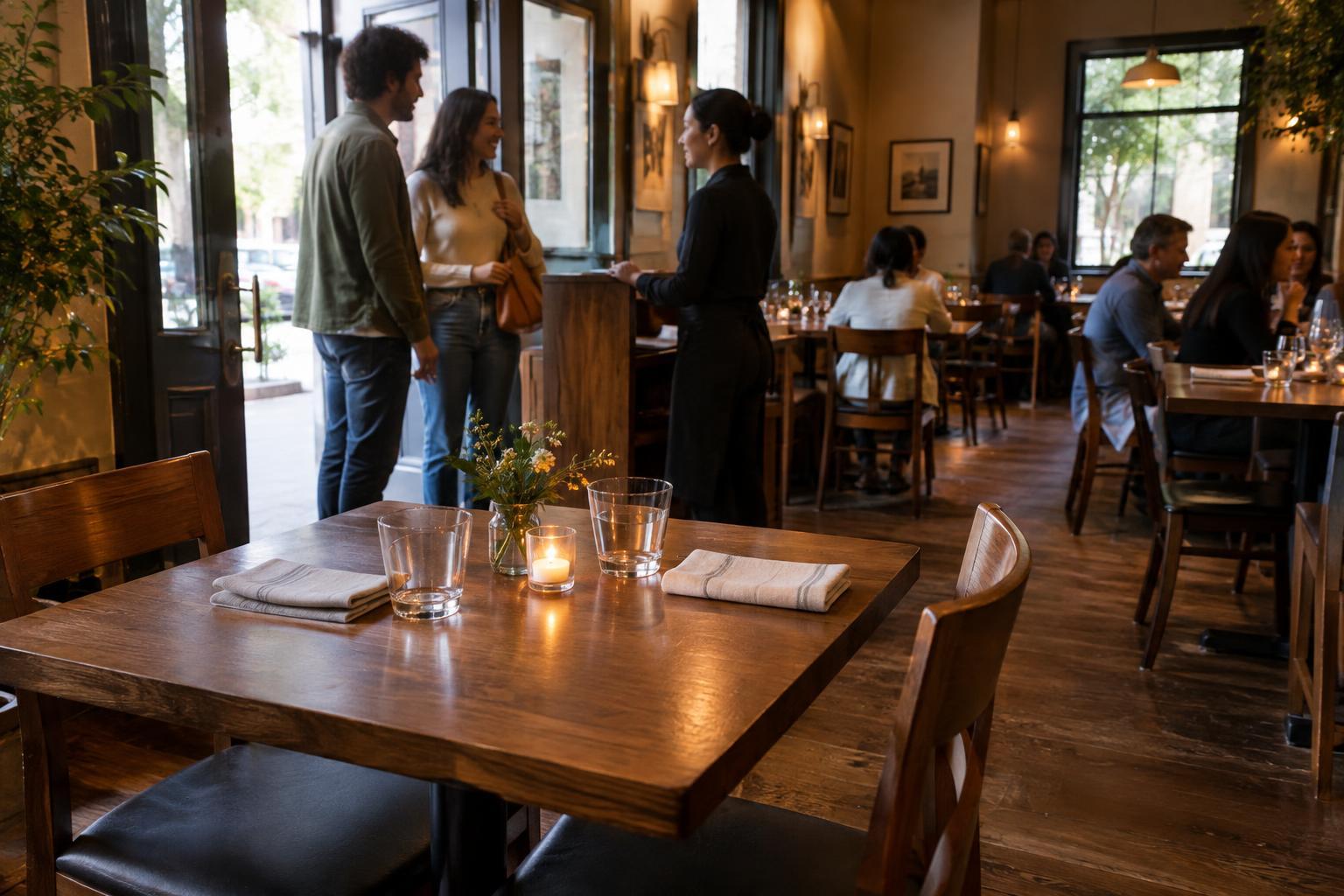
A waitlist is a plan, not a promise
When a restaurant cannot seat every arriving party immediately, the host may add guests to a waitlist. That list helps the team track who is waiting, party sizes, seating preferences and how to reach each group when a table opens. Unlike a reservation, a waitlist entry usually does not hold a table for a particular time. Some restaurants let guests join remotely, while others add names only after everyone arrives. The host can explain which approach applies.
A quoted wait is an estimate. It depends on diners finishing their meals, tables being cleared and reset, and the right kind of space becoming available. A restaurant may be able to seat two people at a small table while a larger party keeps waiting, even if that larger party arrived first. This can look like a skipped turn, but the host is often matching each group to a table that can accommodate it rather than filling seats in strict arrival order.
Why the estimate can change
Hosts often base a wait estimate on the dining room as it looks at that moment: how many parties are ahead, which tables may turn soon and which reservations are expected. None of those details is perfectly predictable. Guests may linger over dessert, a party may leave earlier than expected, or a table may need extra time before it is ready. A quoted 30 minutes is therefore best treated as a planning guide, not a countdown.
The room’s layout matters, too. A booth for six cannot always be divided into two tables for three, and a table that appears empty may be reserved for guests due soon. Seating also depends on keeping service manageable across the dining room. Filling every open chair at once can overwhelm the people taking orders, preparing food and delivering dishes. A short pause before seating may help the next guests receive more attentive service.
Joining the list and staying reachable
When you add your name, give an accurate party size and mention any seating needs that would affect where you can sit. If you need step-free access, room for a stroller or another specific accommodation, saying so at the start gives the host more time to identify a suitable table. If your group is still gathering, ask whether the restaurant requires the full party to be present before seating; policies vary.
Restaurants may call a name in person, send a text or use an app notification. Ask how you will be contacted and whether you need to remain nearby. Keep your phone available if the list relies on messages, but do not assume a text means a table can be held indefinitely. If you decide to eat elsewhere, let the host know or remove your name through the system provided. That small courtesy helps the team move on to guests who are ready.
What to do when your name is called
Return promptly and check in with the host rather than walking to a table you think is yours. The team may need a moment to finish resetting it or to confirm that everyone in your group is present. If you have stepped away and miss a call, speak with the host. Depending on the restaurant’s policy and the tables available, they may be able to seat you soon, move you to a later spot or ask you to rejoin the list.
Plans can change during a wait. If your party becomes smaller, tell the host; a different table might then work. If someone new joins you, mention that as well rather than assuming the original estimate still applies. You can also ask whether counter seats or another seating area are available, if those options suit you. Flexibility can open possibilities, but it cannot guarantee a shorter wait.
Keeping the exchange courteous
It is reasonable to ask for an updated estimate, especially if the original window has passed. A useful question is, “Has anything changed with the wait for our party size?” The host may be able to offer a clearer picture, though they still cannot predict exactly when diners will leave. Repeated check-ins are unlikely to make a table turn faster, and pressuring the host puts them in a difficult position.
A good waitlist experience rests on clear information in both directions. Guests can share their needs, stay reachable and be honest when plans change. Hosts can explain how their list works and flag meaningful delays when possible. The result may not be an immediate table, but it should leave guests better able to decide whether to wait, choose a different seating option or make other plans.