The kitchen as part of the room
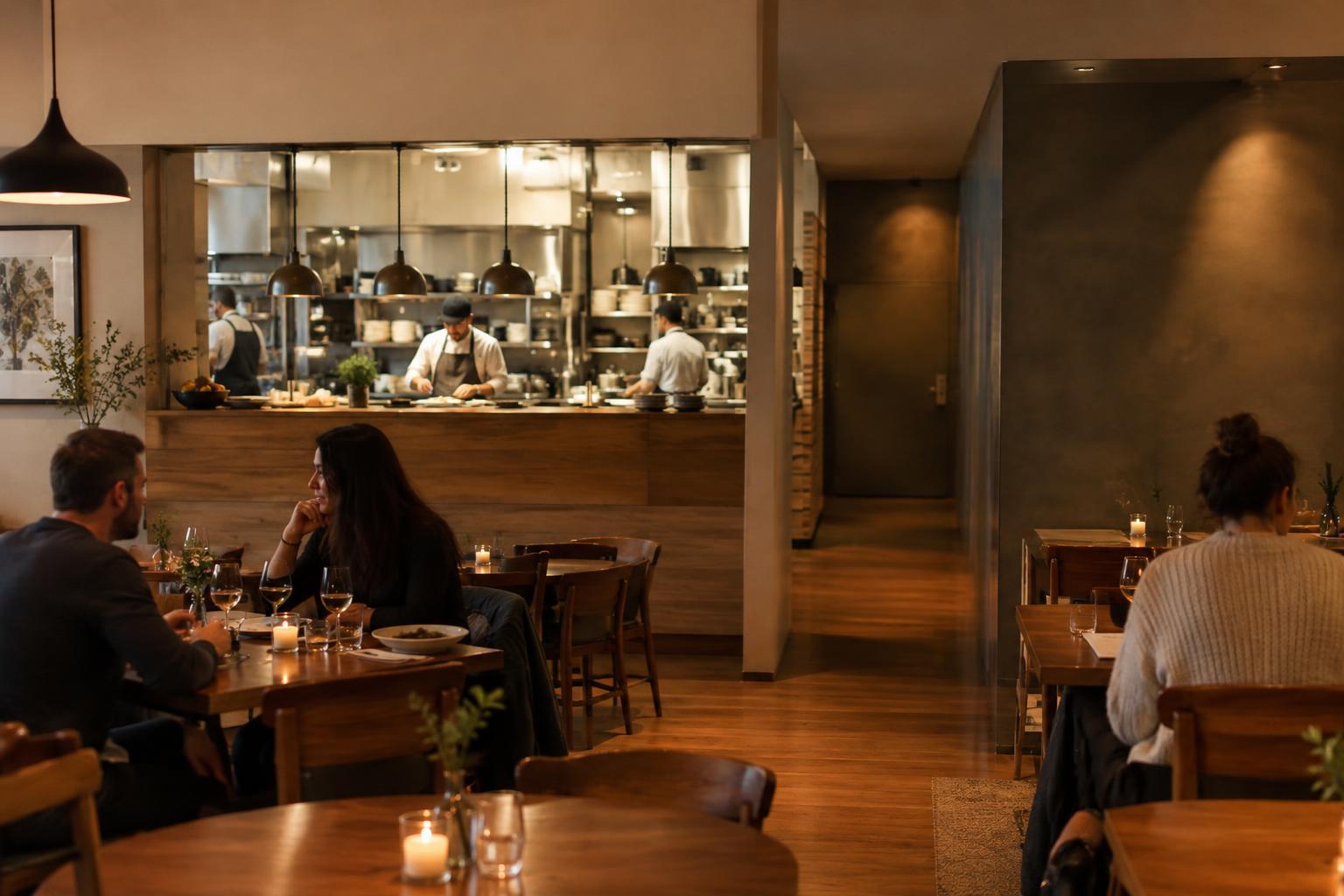
In an open-kitchen restaurant, the work of cooking becomes part of the dining room. Guests may see a cook finish a plate, hear pans at the stove, or watch dishes move from the pass to a server’s hands. A closed kitchen offers a different experience: the meal arrives from a space largely out of sight, leaving the table, the company, and the food itself at the center of attention.
Neither arrangement guarantees a better meal. Layout influences what diners notice and what staff must manage, but lighting, seating, ventilation, service, and the style of cooking matter just as much. The useful question is not whether a kitchen is visible, but what kind of evening the restaurant is trying to create.
What visibility adds to a meal
An open kitchen can give a room energy. The motion of cooks, the glow of a cooking station, and the arrival of finished plates provide a natural rhythm, especially when guests can see the work without feeling surrounded by it. Watching a dish come together may also make an unfamiliar menu feel more approachable. A diner can see that something is grilled, sliced to order, or assembled just before serving.
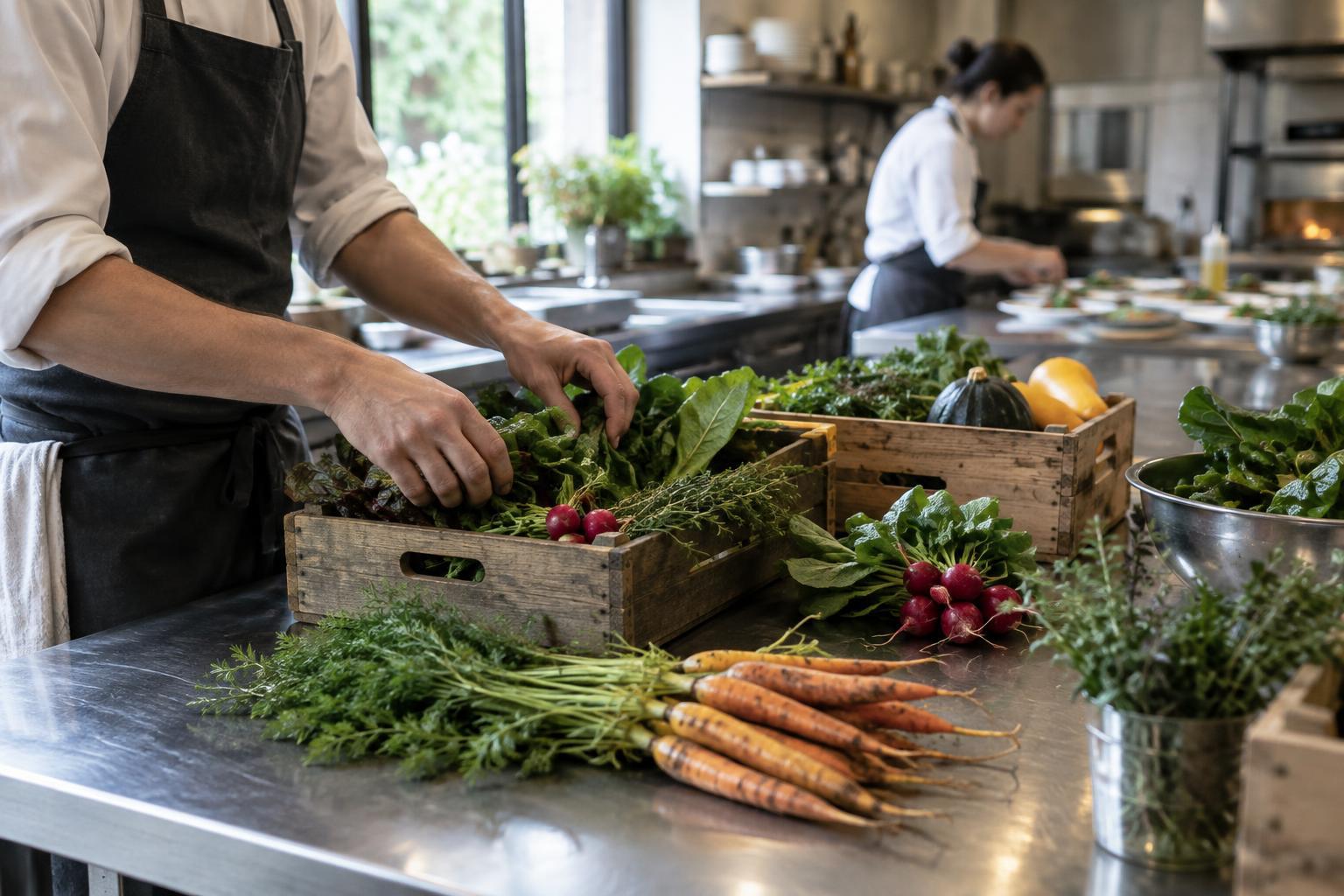
That view can create a sense of connection with the people preparing the food, though visibility should not be mistaken for a complete account of the work. Much of a meal happens before service, and some tasks remain out of sight even in a highly open space. A view of the final steps offers one perspective on the kitchen, not a promise that diners can observe everything.
What a closed kitchen protects
A closed kitchen gives cooks a more clearly separated workspace. Doors and walls can help contain clatter, strong cooking aromas, and the visual demands of a busy service. For diners, that separation may make conversation easier and allow a quiet meal to feel genuinely quiet. It can also preserve a sense of reveal: a dish appears at the table without the guest having watched its final assembly.
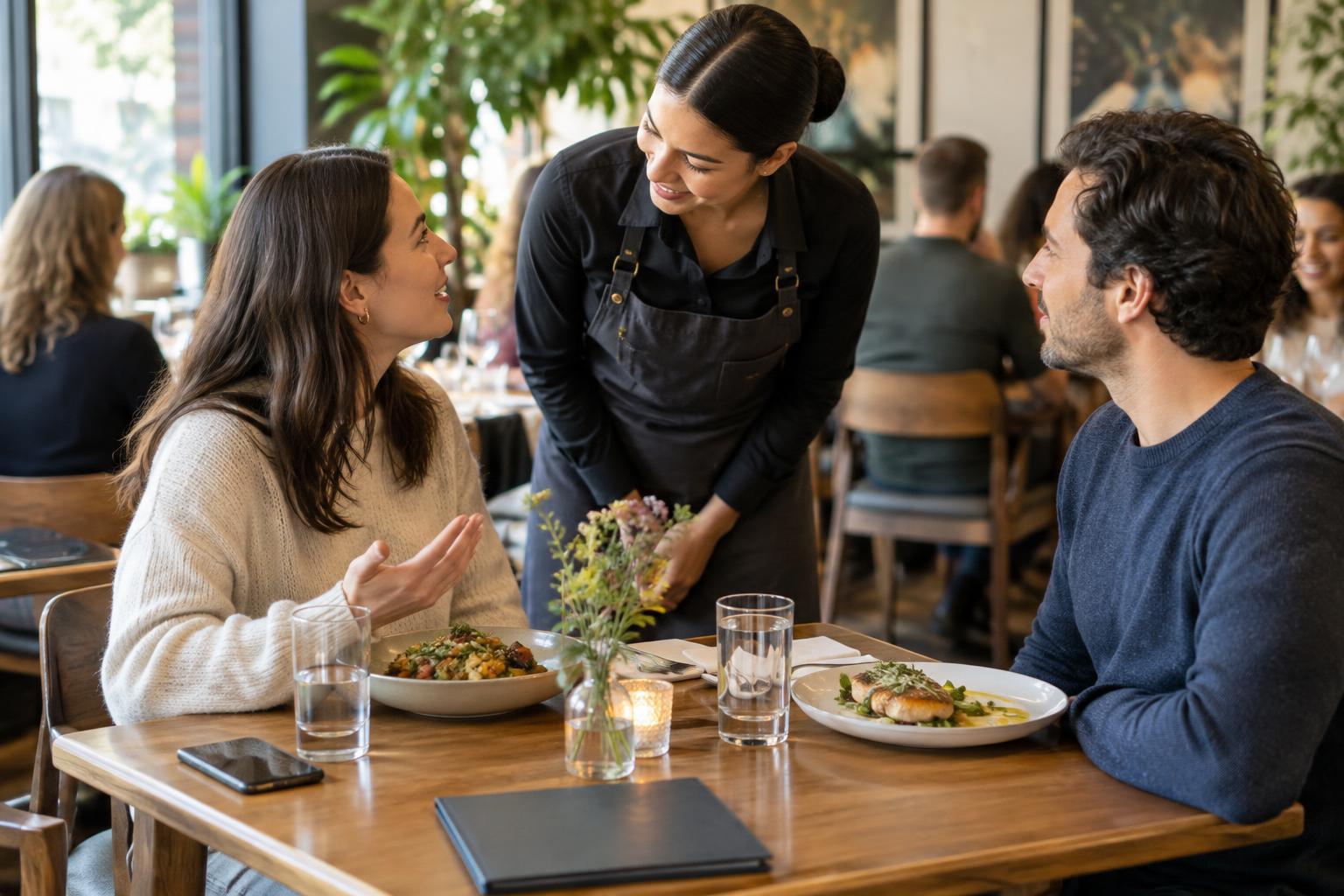
Separation does not mean disconnection. A server can explain a dish clearly, carry a question back to the kitchen, and help guests understand how a menu fits together. Good communication between the dining room and the kitchen matters in either layout. A closed kitchen simply puts more of that communication in the hands of the service team rather than making kitchen activity part of the room’s atmosphere.
The trade-offs behind the view
Open layouts ask a great deal of design. If cooking stations face tables, ventilation and heat control become part of the guest experience. Hard surfaces can carry sound across the room, while bright task lighting can compete with a softer dining-room mood. Seating distance matters, too: a lively view from several tables away may feel intrusive when a guest is sitting directly beside a busy pass.
Visibility affects staff as well as guests. An open kitchen puts parts of a demanding job on display, so the layout works best when it gives cooks enough room to move and communicate without turning every task into a performance. Meanwhile, a closed kitchen still needs an efficient route for plates and people. A poorly placed door or crowded pickup point can interrupt the flow of service even if diners never see the cause.
Choosing the experience you want
When choosing a restaurant, consider how you want to spend the meal. An open kitchen might suit an animated dinner where watching the room is part of the pleasure. A more enclosed kitchen might better suit a long conversation or a meal where you would rather focus on your companions. These are tendencies, not rules: an open room can be calm, and a closed-kitchen restaurant can be bustling.
The strongest layouts make their trade-offs feel intentional. A partial view, a counter facing the cooks, or a kitchen framed behind glass can offer some sense of activity while creating distance from its heat and noise. Whether the kitchen is a backdrop, a focal point, or entirely out of sight, the aim is the same: let the people preparing and serving the meal work well, and let guests settle into the experience they came for.