Treat the booking and arrival time as part of the meal
A reservation helps a restaurant plan its tables, staffing, and pace of service. One common mistake is treating the booked time as a rough suggestion, especially when a group plans to gather elsewhere first. Aim to arrive together and on time. If your plans change, let the restaurant know as soon as you reasonably can. The same courtesy applies if your party size changes or you can no longer come.
Once seated, remember that a table may be needed later, particularly in a busy dining room. There is no need to rush through dinner, but staying long after plates are cleared without ordering anything else can make service difficult. If you hope to linger, ask whether that works for the evening. A simple question leaves room for the staff to explain what is possible.
Ask useful questions without making ordering harder
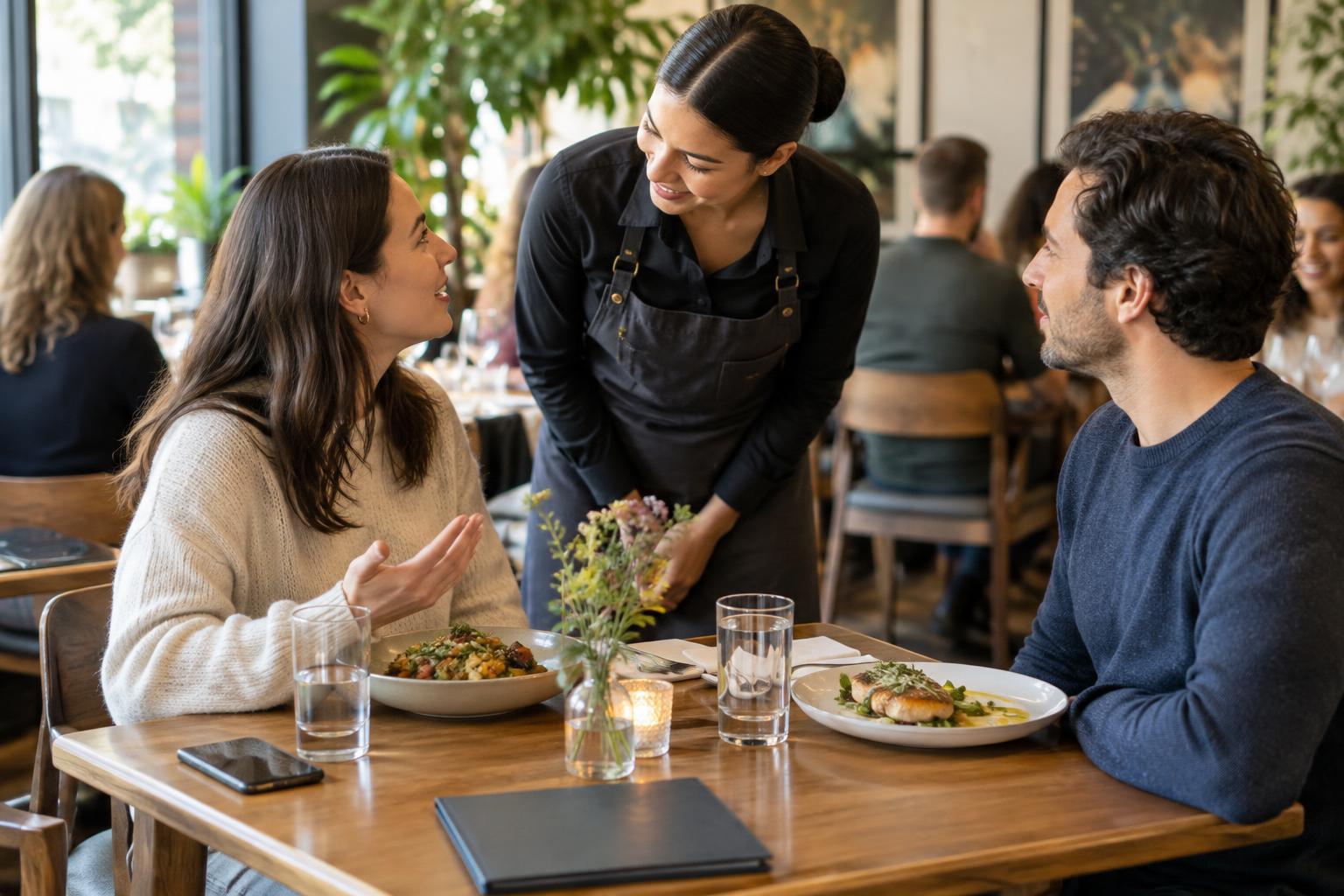
Menus invite questions, and servers can often clarify ingredients, portion sizes, or how a dish is prepared. The mistake is waiting until food arrives to mention a significant dietary restriction, then expecting an instant replacement. Raise allergies and other essential restrictions before ordering, and be clear about what you need. A restaurant may not be able to accommodate every request, so give the team a chance to tell you what is feasible.
Preferences deserve consideration too, but a dish with many substitutions may not work as intended. If you dislike several of its main components, choosing something else is usually easier for both you and the kitchen. For a large group, taking a moment to settle your choices before the server returns can also prevent repeated interruptions. Questions are welcome; clear decisions help the meal move along.
Share the dining room, not just your table
Restaurants are social places, so conversation and laughter belong there. Still, other guests should not have to participate in your evening. Speakerphone calls, videos played aloud, and conversations shouted across a table can overwhelm nearby diners. Put your phone on silent, use headphones only where appropriate, and step outside if you need to take a call. Before photographing a dish, consider whether a flash or prolonged rearranging will disturb anyone.
Physical space matters as well. Keep bags and coats out of walkways, and allow servers room to set down and clear plates. If dining with children, choose a setting that suits the group and help them respect shared space. These habits are not about enforcing a hushed atmosphere; they make it easier for guests and staff to move comfortably through the room.
Handle service problems directly and courteously
Even a well-run meal can have a delay or a dish that is not what you expected. Saying nothing until the end, then expressing frustration when little can be fixed, is often less useful than speaking up promptly. If an order is incorrect, a dish is missing, or you have a concern about preparation, tell your server plainly. Describe the issue rather than assigning blame, and explain what would help.
Courtesy does not mean accepting a problem that needs attention. It means giving the team a fair opportunity to respond. Likewise, it is reasonable to ask for water, another utensil, or the bill; try to catch a staff member’s attention with a glance or a brief request rather than calling across the room. Remember that the person helping you may need to coordinate with the kitchen or other colleagues before giving you an answer.
Make paying and leaving straightforward
The end of a meal can become awkward when a group decides only then how to divide the bill. If you need separate checks, ask early whether they are possible. When sharing costs, agree among yourselves before payment is due rather than asking staff to reconstruct who tasted each appetizer. Check the bill calmly, and point out any apparent error without assuming it was intentional.
Tipping customs and service charges vary by place and establishment, so pay attention to the bill and follow local expectations. After settling up, gather your belongings and check that you have not left a mess that requires unusual cleanup. The best etiquette rarely draws attention to itself: it gives the people at your table, the staff, and neighboring diners room to enjoy the same meal.