What toasting changes
A spoonful of toasted seeds can give a salad crunch; chopped toasted nuts can make a simple bowl of grains feel more complete. Gentle heat develops aroma and deepens flavor while drying the surface enough to make each bite feel crisper. The goal is not always a dark color. Many nuts and seeds taste pleasantly toasted while they still look fairly pale.
Start with nuts or seeds that smell fresh. Toasting can deepen their flavor, but it will not fix an unpleasant or stale taste. If an ingredient is already roasted, taste it before heating it again; it may need only a brief warming, or no further toasting at all. Keep different types separate when possible. Their sizes, shapes and moisture levels affect how quickly they heat, so a mixed batch can be difficult to finish evenly.
Choose a pan for small, attentive batches
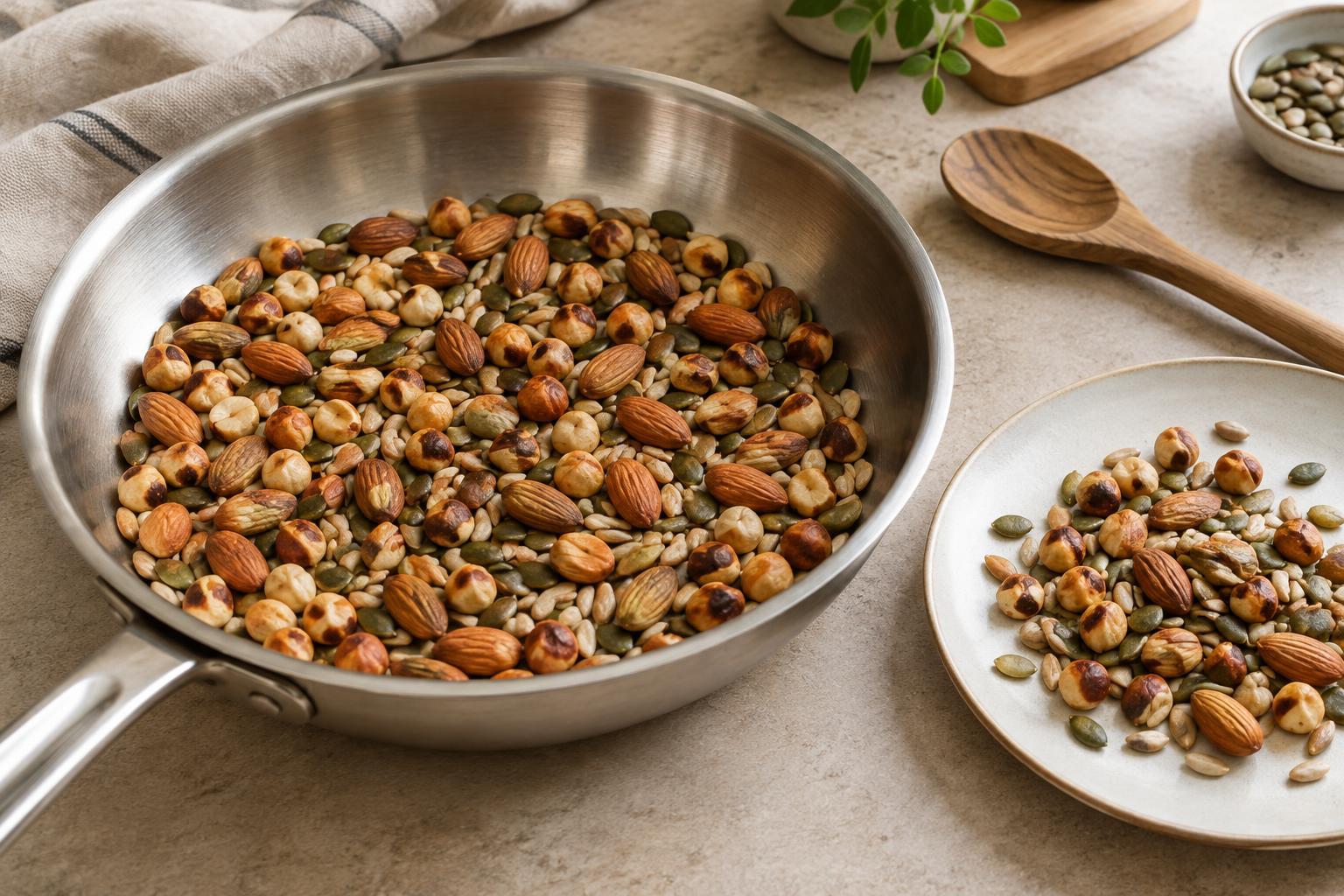
A dry skillet is useful when you need a small amount for a garnish or dressing. Spread the nuts or seeds in a single layer over moderate heat. Shake the pan or stir often, paying attention to pieces near the center and edges. If they begin coloring in patches before the rest of the batch smells fragrant, lower the heat rather than stirring faster. A crowded pan makes it harder to see what is happening and to move everything evenly.
Small seeds need particular attention because they can pass from toasted to scorched quickly. Watch for a change in aroma and, where visible, a subtle shift in color. Larger nuts may develop color first on their flat sides, so turn them as they cook. If you want chopped nuts in a finished dish, consider toasting them whole or in large pieces, then chopping after they cool. Tiny fragments can darken before larger pieces are ready.
As soon as the batch reaches the flavor and color you want, transfer it out of the skillet. A hot pan continues to heat its contents even after you turn off the burner. Tip the nuts or seeds onto a plate or tray and spread them out so they can cool.
Use the oven for a larger batch
The oven is convenient when you want enough toasted nuts for several dishes. Arrange them in one layer on a baking tray, leaving room to move them around. Use moderate heat and check regularly rather than relying on a fixed time: whole almonds, walnut pieces and delicate seeds will not finish at the same pace. Stir or turn the batch during cooking so exposed surfaces have a chance to toast evenly.
Check earlier than you think you need to, especially with thin pieces or a dark baking tray. The most useful cues are a warm, nutty smell and a modest color change. For nuts with skins, you may need to break or taste a cooled piece to judge the interior. Remove the tray when the batch is just where you want it, then transfer the contents to a cool surface. Leaving them on the hot tray can carry the toasting further.
Cool before chopping, mixing or storing
Give toasted nuts and seeds time to cool before sealing them in a container. Trapped warmth can create condensation, which works against the crisp texture you just developed. Cooling also makes nuts easier to chop cleanly. For a rough topping, use a knife and leave some larger pieces for contrast; for a finer coating, chop in stages so you can stop before the mixture becomes powdery.
Store a cooled batch in a closed container away from heat and light. If you will not use it soon, colder storage may help preserve its flavor, particularly for oil-rich nuts. Let a chilled portion come toward room temperature before judging its aroma. Whatever the storage method, taste before serving: a fresh garnish should add pleasant flavor, not merely crunch.
Add them where their texture counts
Toasted nuts and seeds work especially well as a last-minute addition to soft or creamy foods. Sprinkle them over soup just before serving, fold them into a grain salad after it has cooled, or add them to cooked vegetables once those vegetables are off the heat. Putting them in too early can soften their texture or hide their aroma beneath a long-cooked sauce.
Think about the size of the pieces as well as their flavor. Fine crumbs can cling to roasted vegetables or coat a piece of fruit; larger pieces make a more noticeable contrast with tender grains or greens. Start with a modest amount, taste the finished dish, and add more only if it needs it. A well-toasted topping should support the food underneath rather than overwhelm it.