Start with the path guests will take
Before arranging a dish, walk through the room as a guest would. Where will people enter, pick up a plate, choose food, and move away? A buffet works best when those steps form an obvious route that does not cut across the doorway, the kitchen entrance, or the main conversation area. Leave room for someone to pause at a dish while others pass behind them.
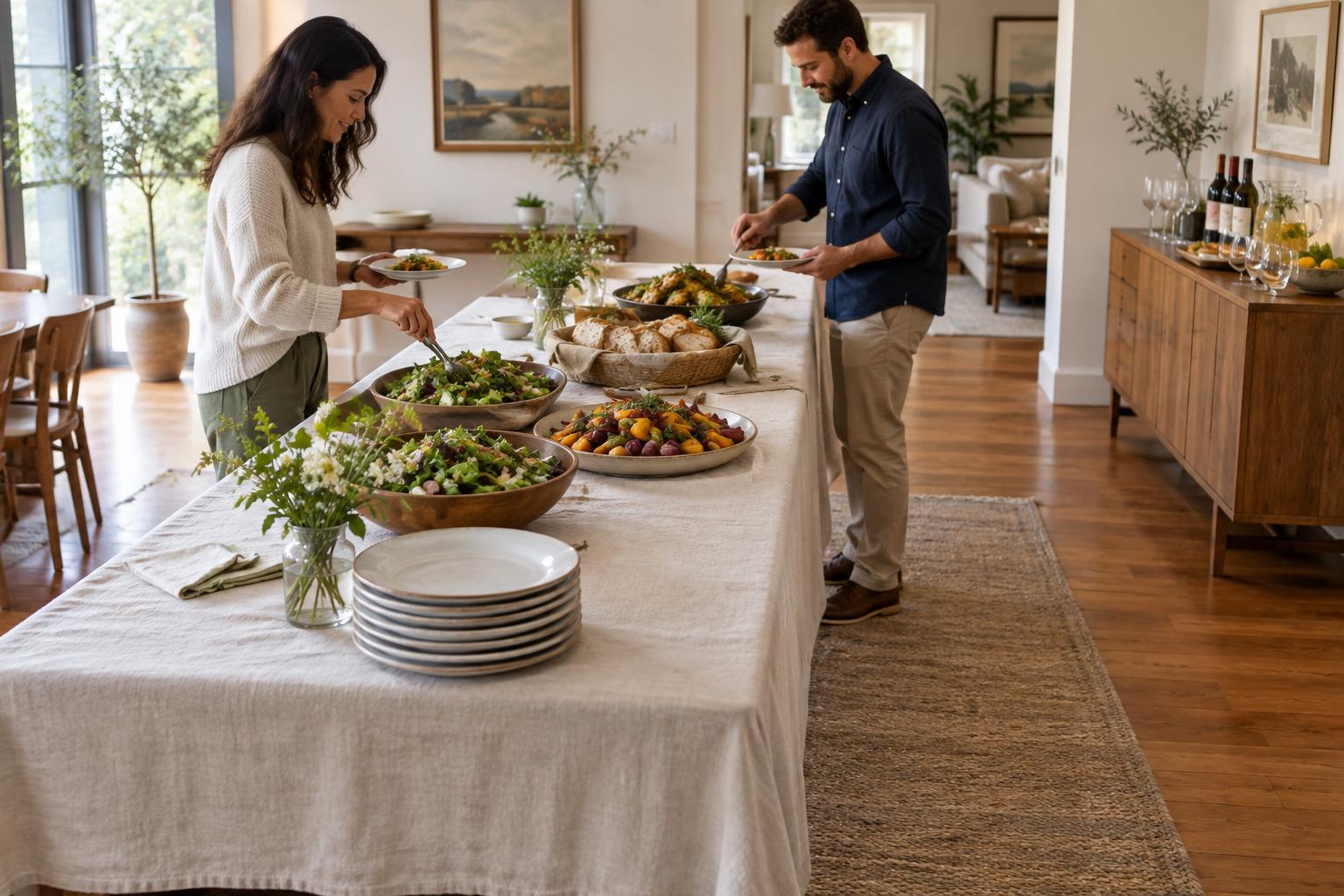
If the table sits against a wall, make the starting point easy to spot and keep the line moving in one direction. An island or freestanding table can allow access from both sides, but only if guests can reach the food without colliding at the ends. For a small gathering, the clearest layout is often better than the most elaborate one. Move a chair or side table if it interrupts the route.
Put plates first and decisions in a useful order
Place plates at the beginning of the food line, with enough space for guests to take one before reaching the first dish. Then arrange food in a sequence that suits how people build a plate: substantial dishes, vegetables and sides, followed by sauces or finishing touches. A dish that takes time to assemble is easier to manage near the end, where it will not hold up everyone choosing simpler items.
Keep serving utensils with their dishes and give each one a place to rest. A spoon laid across a neighboring platter can confuse guests and create a messy crossing point. Simple labels are helpful when dishes look alike or contain ingredients guests may want to know about. Put them where they can be read before someone reaches the serving spoon, not behind the food.
Move the slow stops away from the main line
Drinks tend to create their own queue: guests need time to choose a glass, pour, add ice, or look for a napkin. Set up a separate drinks station if the room allows, ideally somewhere people can visit without walking against the buffet line. Keep water and glasses together, and leave a clear surface for setting down a plate while pouring.
Treat condiments, bread, and dessert in the same way. If they require a choice or a little assembly, a nearby side surface can prevent the food line from stalling. This does not mean spreading everything across the room. Group related items so guests can find what they need without making a second trip through the main queue. Keep spare plates or a fresh stack of napkins close enough to replenish supplies without reaching over guests.
Make serving comfortable, not crowded
Avoid filling every inch of the table. Guests need space to set down a plate briefly and room to maneuver a serving spoon without brushing another dish. Use stable stands only where they improve reach and visibility; a low platter can be easier to serve from than a tall display. Put heavy or awkward items where they can be lifted or scooped without stretching across the table.
Think about guests who may prefer not to carry a plate and a drink at the same time, or who need more room to move. Keep the route as open as the space permits, and offer a place to set things down near the end of the buffet. Position cutlery and napkins there rather than at the beginning, so guests do not have to juggle them while serving themselves. If a dish is difficult to portion, pre-slicing or using smaller serving vessels can make the line feel calmer.
Test the layout before guests arrive
Set out empty platters and serving utensils, then make a practice trip with a plate in hand. Notice where you stop, which labels are hidden, and whether an open drawer or door would block the route. Check that guests leaving the buffet have a way back to their seats without crossing those still waiting. Small changes in position can make more difference than adding another table.
During the gathering, replenish from a clear side rather than working through the line when possible. Keep a place in mind for used dishes and empty glasses so they do not collect beside the food. A well-planned buffet need not move quickly at every moment; it should let guests browse, talk, and serve themselves without feeling that one pause has brought the whole room to a halt.