Plan for people, not just place settings
Start by looking at the room as a guest would. Where will someone put a coat? Can they reach a chair without asking another person to stand? Is there a clear route between the table, kitchen and bathroom? A table that technically fits six people may be more comfortable with four if the extra chairs block the room. Choose your guest count around easy movement and conversation rather than the maximum number of plates you can squeeze onto the table.
If possible, sit in each chair before guests arrive. Check whether elbows have space, chair legs can slide back and everyone can reach a drink without stretching over food. A bench against a wall can save floor space, though it works best when the people sitting there will not need to get up frequently. Move any furniture you do not need for the evening rather than expecting guests to navigate around it.
Give every part of the room a job
In a compact home, the dining table often has to serve as a preparation area, drinks station and place to eat. Clear it before guests arrive, then assign those other jobs elsewhere. A shelf, counter corner or sturdy side table can hold water, extra glasses and napkins. Put coats and bags somewhere away from the dining area so they do not end up on the backs of chairs.
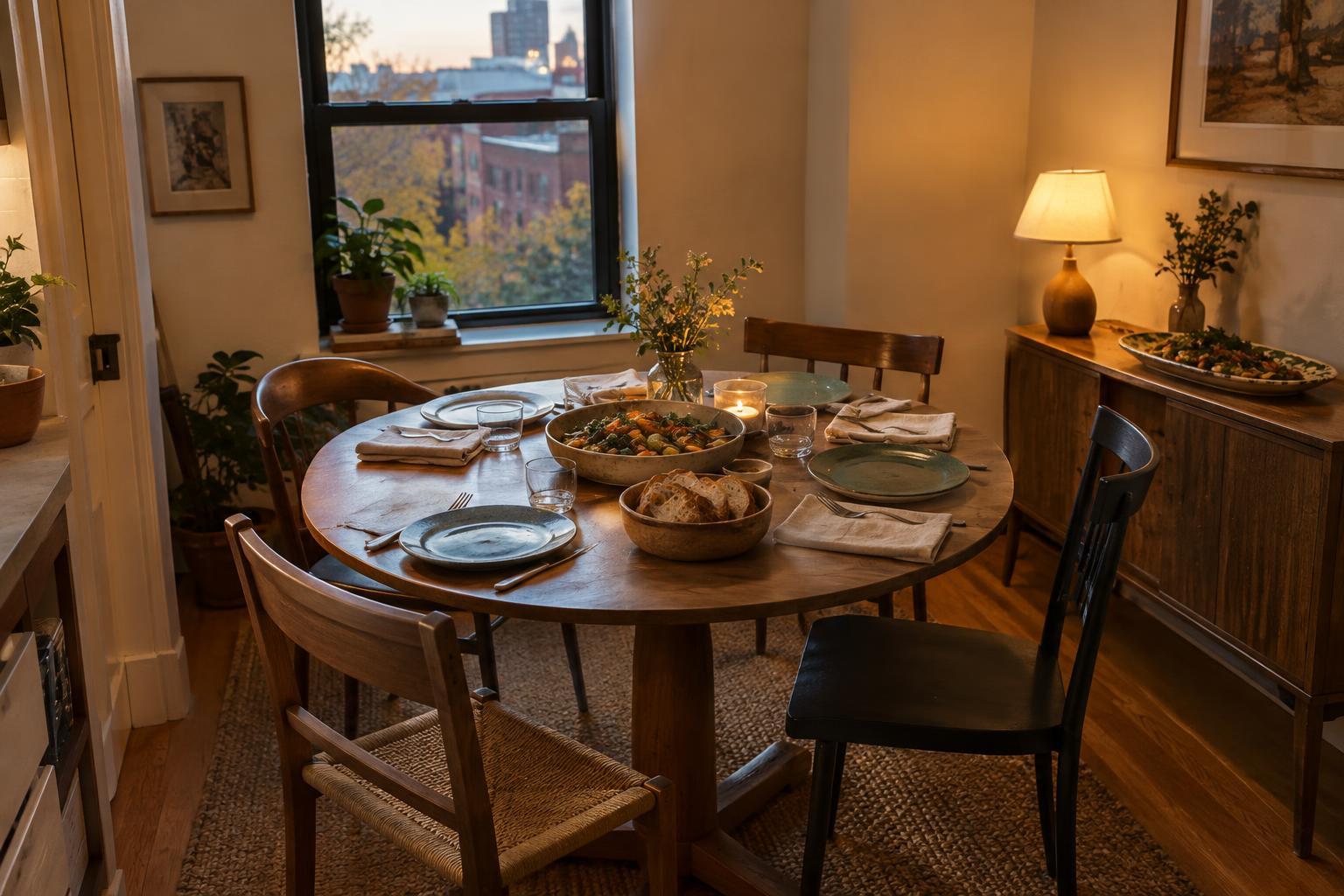
Keep the table itself simple. Set out only what guests need for the first course, then bring other dishes or utensils as the meal progresses. Low flowers, a small bowl of fruit or an unobtrusive candle can make the setting feel considered without obstructing sight lines. If you use candles, place them where sleeves and serving dishes will not pass over the flame. A washable cloth or individual placemats can define each seat while leaving enough open surface for food.
Choose a menu that leaves room to host
A small dining space often comes with limited counter space, so favour dishes that can be prepared mostly in advance. A room-temperature starter, a main dish that can rest briefly before serving and a simple dessert give you more time at the table. The goal is not to avoid cooking altogether; it is to avoid needing every burner, cutting board and serving platter at the moment guests arrive.
Think through how each dish will travel from kitchen to table. One large platter may be easier to serve than several bowls that compete for space. Alternatively, plate a course in the kitchen if there is nowhere comfortable to pass dishes around. Keep a clear spot for setting down hot cookware, and avoid making the dining table the default landing place for used pans. Before shopping, ask guests about dietary needs so you can plan a meal everyone can share or make a suitable alternative without a last-minute scramble.
Make serving and clearing feel unhurried
Decide how drinks will work before the first guest walks in. A filled water jug and accessible glasses let people help themselves, while a compact drinks area keeps bottles off the table. Offer a place to stand or sit on arrival, even if dinner will follow soon. In a small room, that brief transition can prevent everyone from gathering in the kitchen while you finish a task.
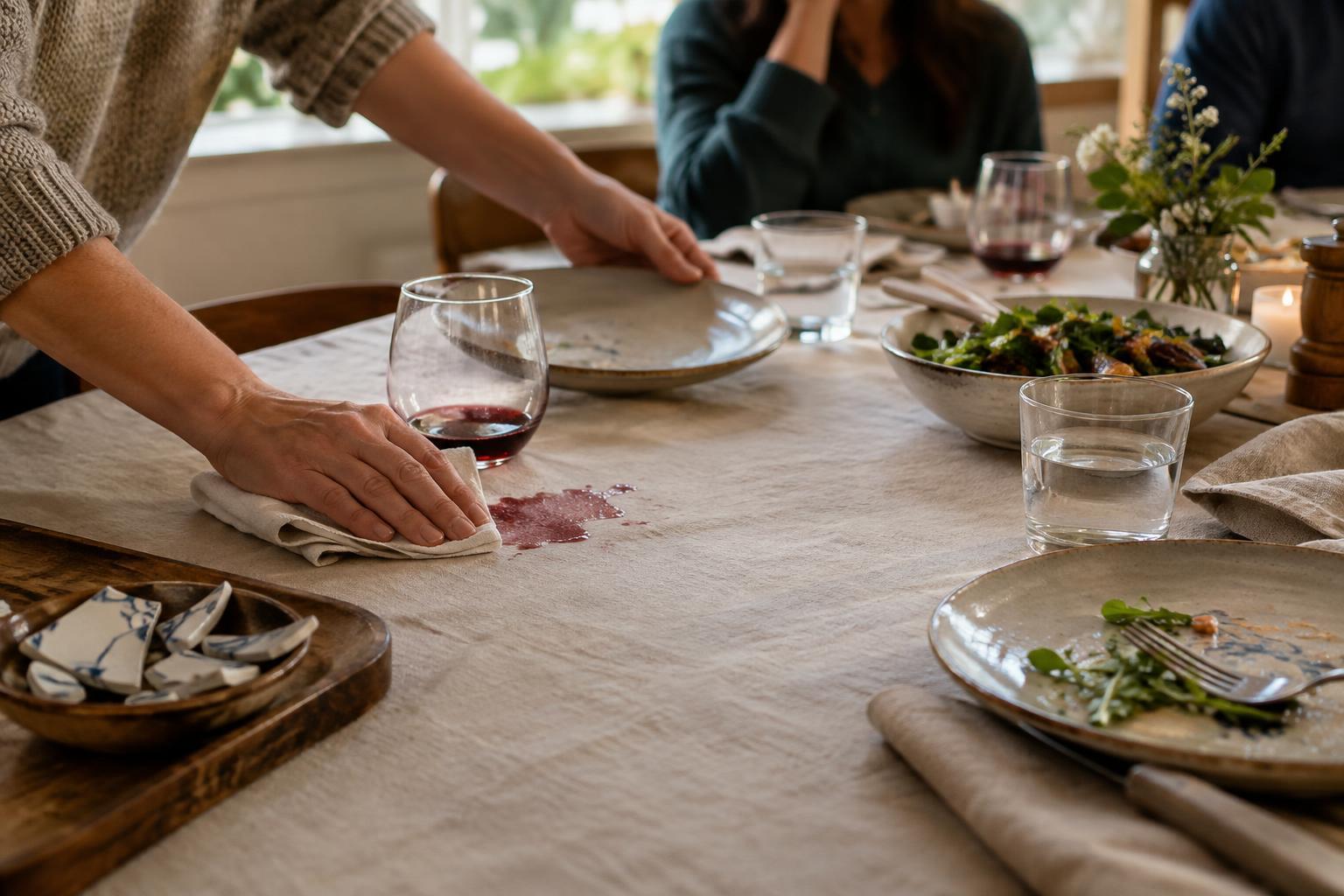
When it is time to eat, bring out one course at a time and clear only what you need to make space for the next. You do not have to wash up between courses. A designated spot out of view can hold used plates until later, provided they will not crowd your work area. If guests offer to help, a specific small task, such as carrying water or collecting glasses, is easier to manage than several people trying to fit into a narrow kitchen.
Let comfort set the atmosphere
Good lighting helps a small space feel warm without making it hard to see the food. Use a lamp or dimmable overhead light if you have one, and check that guests can read their plates comfortably. Keep music quiet enough for conversation; close seating makes raised voices tiring. Temperature matters, too. Cooking can warm a compact room quickly, so consider ventilation before guests arrive and leave a little time for the space to cool after using the oven.
Finally, give the evening a pace that suits the room. A short, well-planned menu can feel more generous than a crowded table of dishes. Leave room for people to talk, take seconds if they want them and linger after the plates are cleared. Thoughtful hosting in a small space is less about hiding its limits than making choices that help everyone feel at ease.