Start with contrast, not a single vegetable
A good root-vegetable meal begins with a small cast of ingredients that do different jobs. Carrots bring sweetness, parsnips become fragrant when roasted, beets offer an earthy flavor, and turnips or rutabagas can add a welcome savory edge. Potatoes are useful when you want a more substantial plate. You do not need all of them: choose two or three whose flavors and colors appeal to you.
Think about texture at the same time. Roasted carrots alongside mashed potatoes offer more variety than a tray of uniformly soft vegetables. Thinly sliced raw radish, if available, can bring crunch to a cooked dish. If you have only one kind of root, vary its preparation instead: roast some pieces until browned and simmer the rest until tender enough to mash.
Give each root a cooking method that suits it
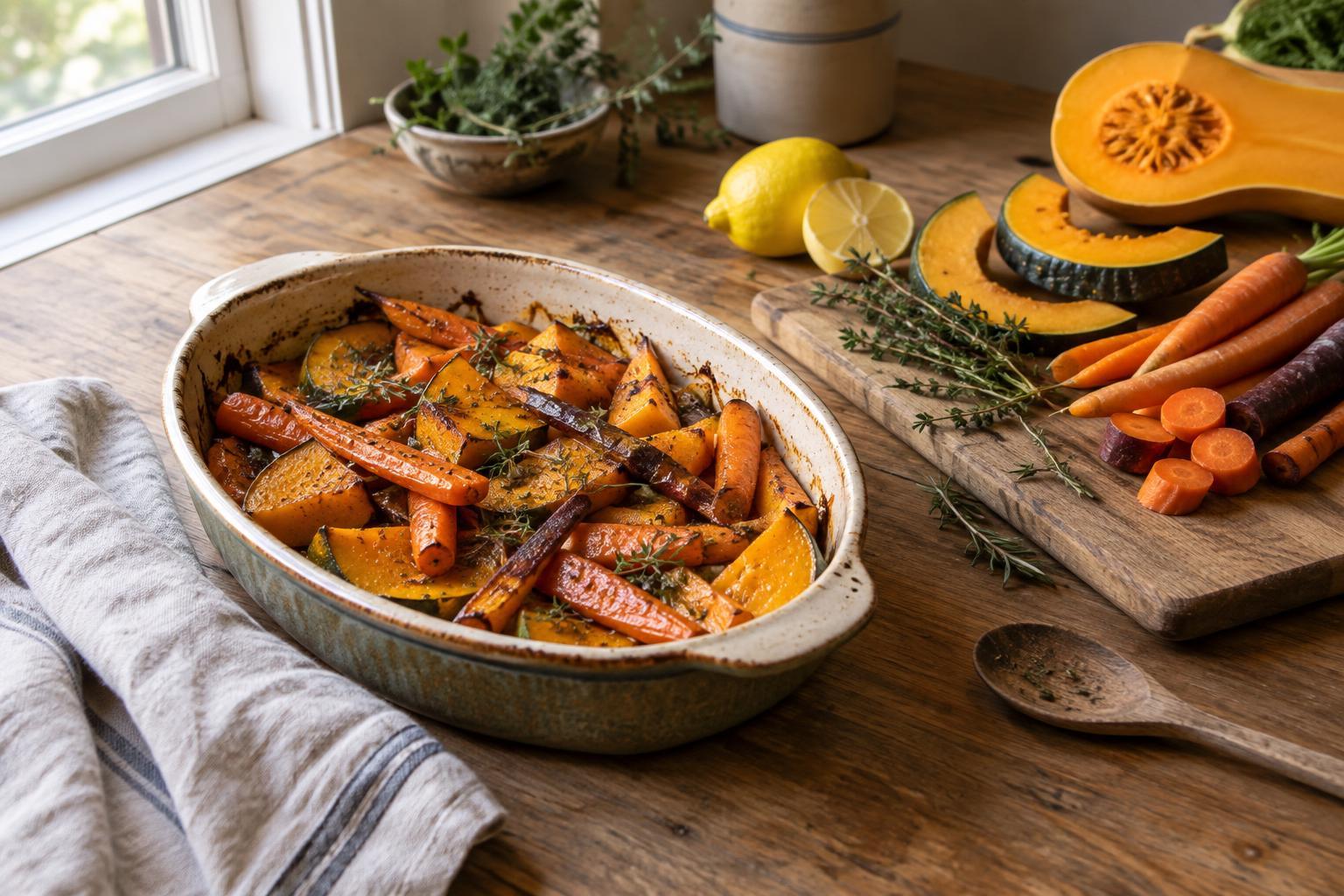
Roasting is an easy foundation for a winter meal because it concentrates flavor and creates browned edges. Cut vegetables into pieces of similar thickness, coat them lightly with oil, and spread them out on a baking tray so they roast rather than steam. Dense roots may need smaller pieces than tender ones. Check their progress with a knife instead of relying on one cooking time for every vegetable.
A softer preparation can balance that tray of roasted roots. Simmer potatoes, celeriac or parsnips until tender, then mash them with a little butter or olive oil and enough cooking liquid to reach the texture you like. A soup is another option: cook chopped roots with onion and broth or water, then blend or leave it chunky. Avoid cooking every component until it feels the same on the fork; the contrast makes a simple menu feel considered.
Add brightness to balance the sweetness
Many roots taste sweeter after cooking, especially when roasted. Acid and fresh herbs keep that sweetness from dominating the plate. A spoonful of yogurt mixed with lemon juice, a mustard vinaigrette, or a little vinegar tossed through warm vegetables can provide the lift they need. Add dressing gradually and taste as you go, particularly if the other parts of the meal are already seasoned.
For depth, try a restrained amount of garlic, toasted cumin or smoked paprika. For freshness, finish with parsley, dill or another herb you enjoy. Toasted nuts or seeds can add crunch, while a spoonful of pickles brings sharpness. These finishing touches are most effective when they have a purpose: a bright sauce for rich mash, for example, or crisp seeds over tender roasted beets.
Make the vegetables the center of a complete plate
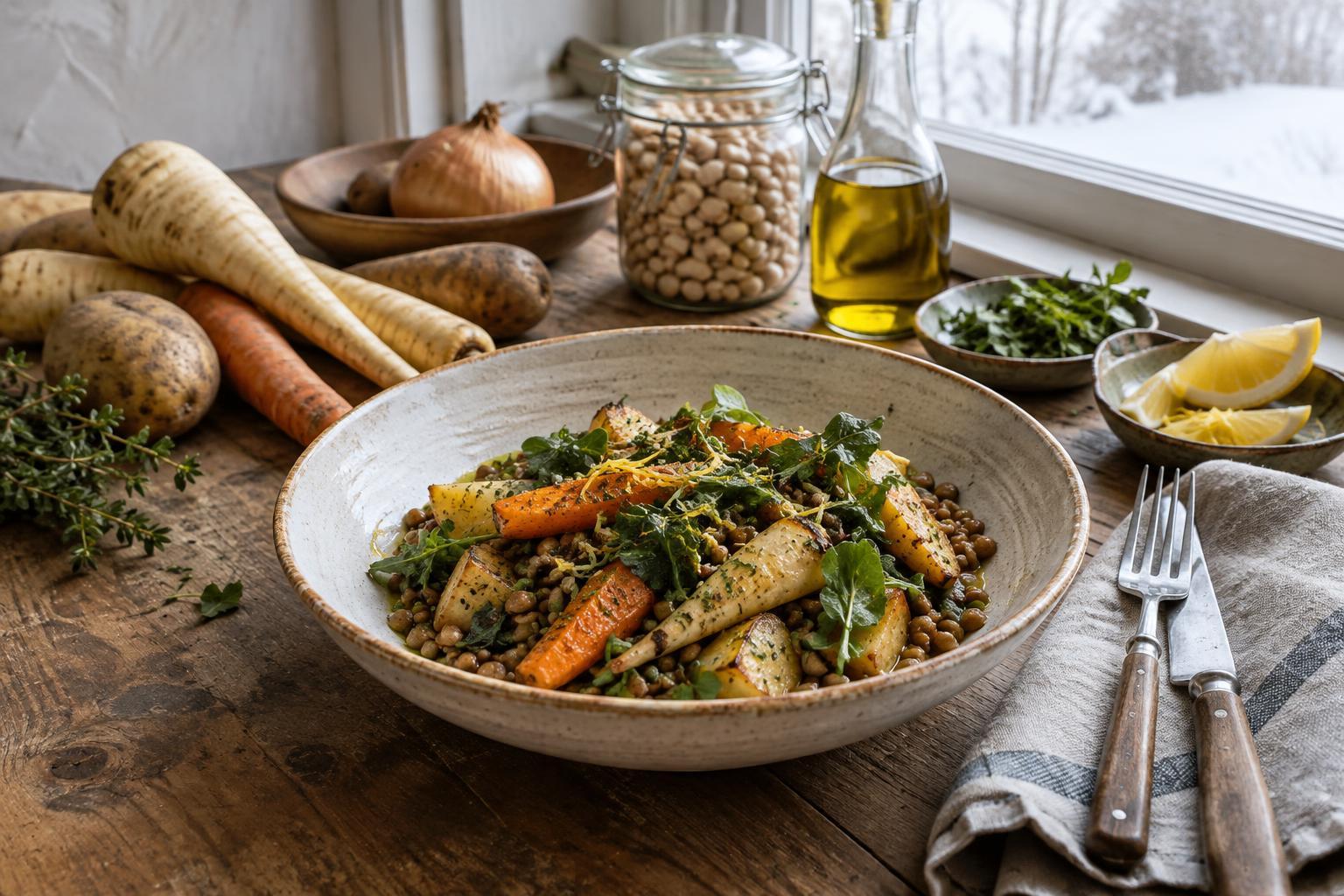
To build a meal rather than a collection of sides, give the roots something to sit beside and a sauce that connects the plate. Roasted carrots and parsnips work well with lentils and a lemony yogurt sauce. Mashed celeriac can anchor sautéed mushrooms and greens. Beets and potatoes can become a warm salad with beans, herbs and a mustard dressing. Each combination brings substance without asking the vegetables to imitate meat.
Choose one main cooking project and keep the rest straightforward. If you are roasting several roots, use canned beans or quickly cooked lentils and make a simple dressing while the tray is in the oven. If you are preparing a slow-simmered soup, serve it with bread and a crisp salad. This approach makes the meal manageable and gives every component a clear role.
Finish with a table-friendly serving plan
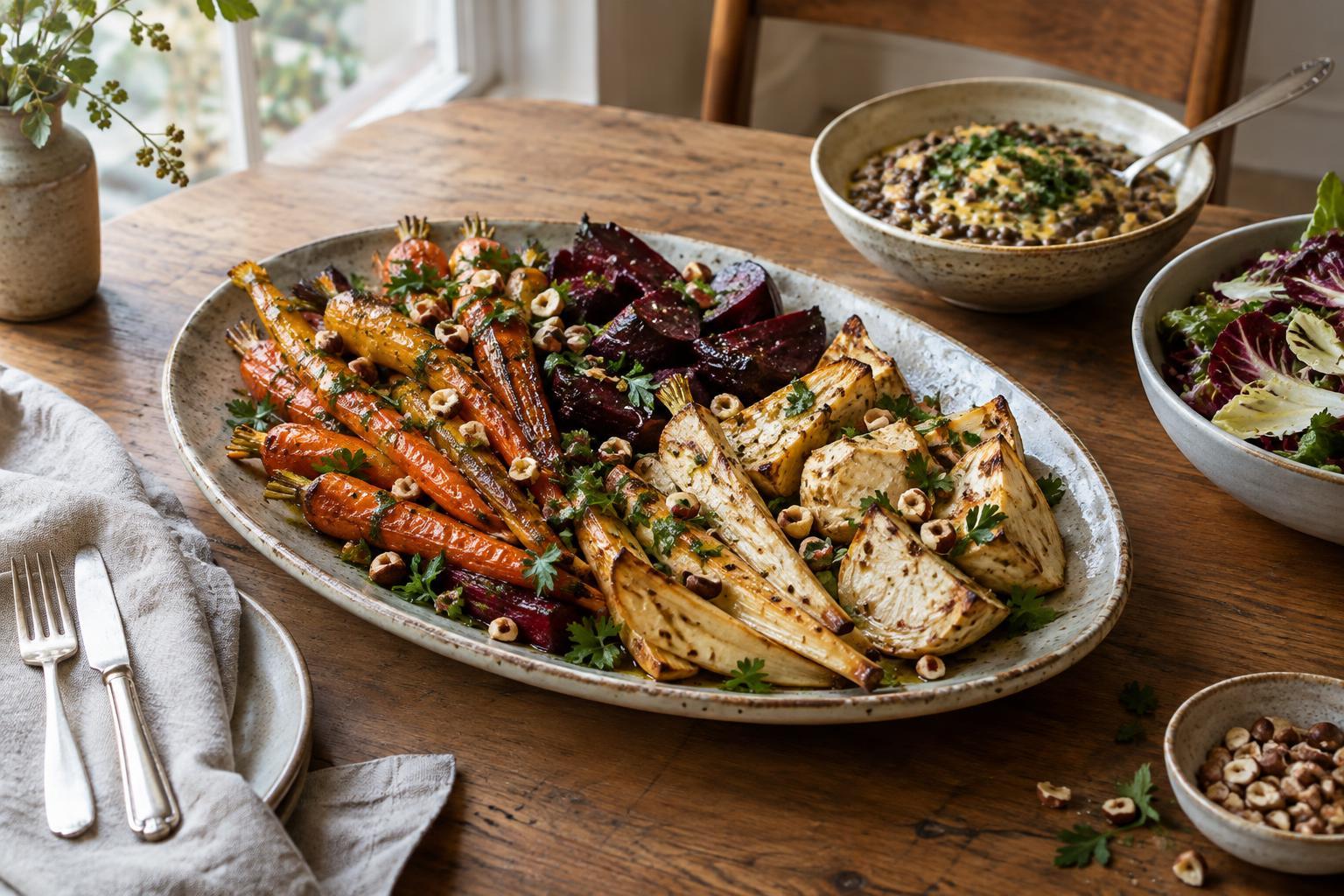
Root vegetables are well suited to serving on shared dishes. Set a generous platter of roasted vegetables in the middle of the table, put the sauce in a bowl nearby, and offer any herbs or crunchy toppings separately. Guests can then adjust each serving, and crisp toppings stay crisp. For a composed plate, place mash or grains down first, add the vegetables, then spoon sauce around rather than over everything.
If you are preparing ahead, wash and cut the vegetables in advance and keep them covered until cooking. Dress salads close to serving, and wait to add herbs and crunchy finishes. Leftover cooked roots can find a second use in a soup, a grain bowl or a skillet hash. The guiding idea is simple: let the roots provide warmth and substance, then use texture, acidity and a thoughtful accompaniment to make the meal feel complete.