The order starts before it reaches the kitchen
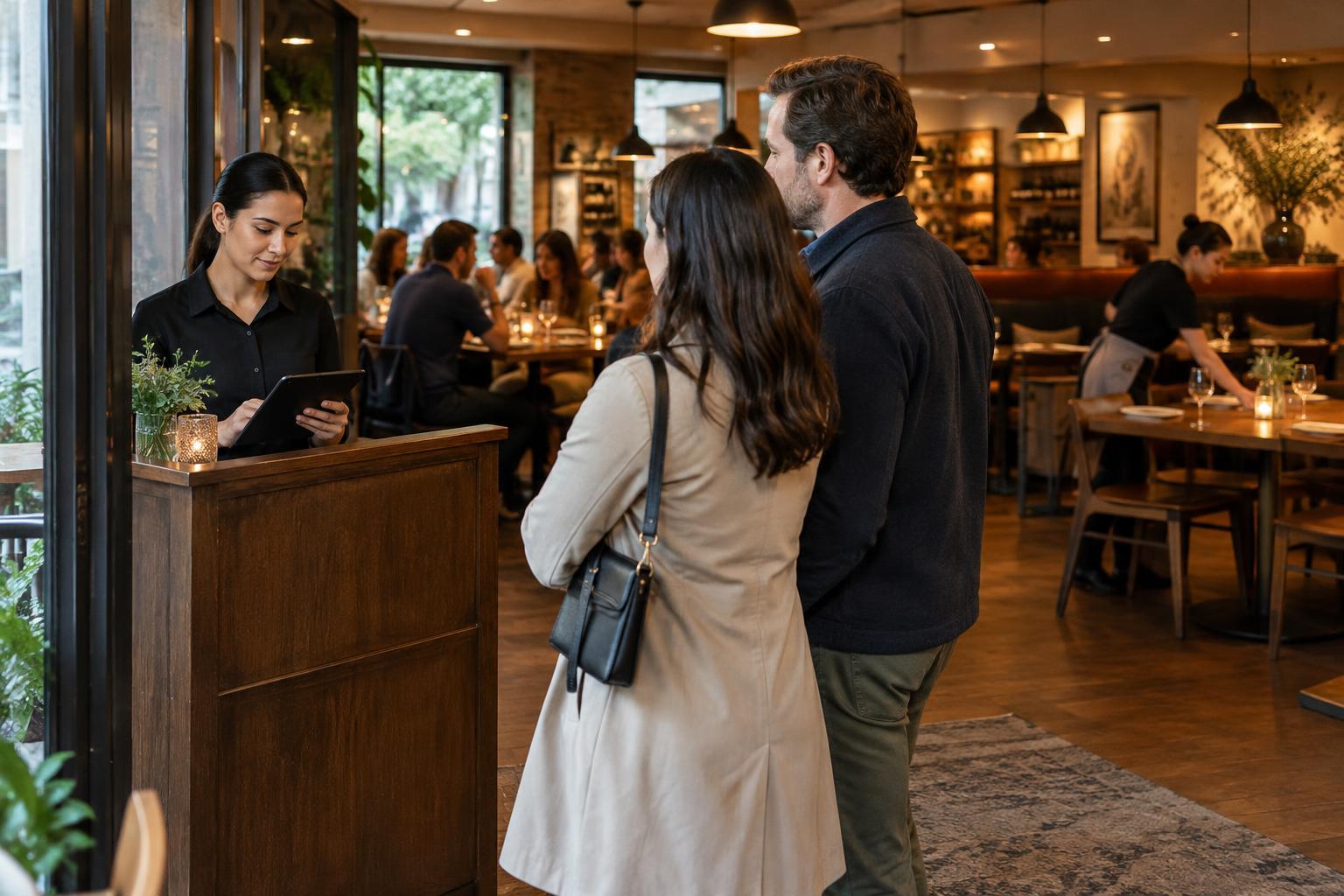
When a server takes an order, they are gathering instructions for several people at once. The kitchen needs to know what to prepare, in what sequence and with which changes. The server also needs to understand the table’s pace: whether guests are still considering drinks, sharing starters or ready for a full meal. A clear exchange at the table reduces the need for hurried questions later.
Before sending the order, the server can check details that are easy to misread under pressure: which guest requested a substitution, whether a sauce should be left off or served separately, and whether courses should arrive together or in stages. If a guest mentions an allergy, the server should follow the restaurant’s established procedure and communicate it explicitly rather than treating it as an ordinary preference. Kitchen staff, in turn, need an opportunity to confirm what they can prepare safely.
Tickets turn conversation into a work plan
An order ticket is the kitchen’s working version of the conversation at the table. Whether it appears on a screen or on paper, its value lies in being readable and unambiguous. A cook should not have to guess which dish a modification belongs to or whether a course is meant to be held. Consistent terminology helps: everyone on a team should understand the same shorthand for a preparation change, a shared plate or a course that has been sent but not yet requested.
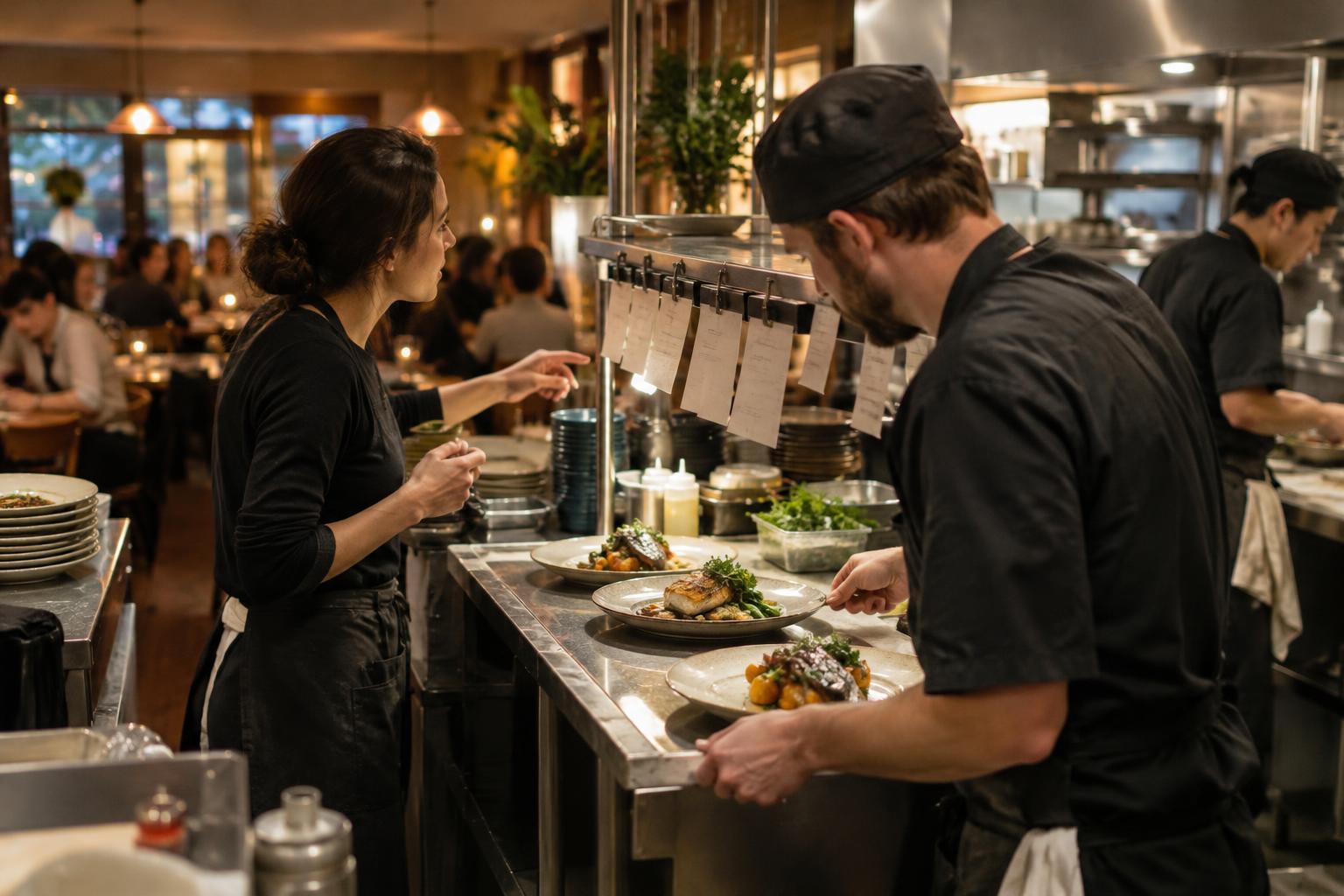
The ticket also helps divide work across stations. One cook may be preparing vegetables while another handles a longer-cooking main dish. Each station can see its part of the order, but someone must keep sight of the whole table. In many restaurants, that role belongs to an expediter, often called the expo, who watches the flow of tickets and checks that dishes are ready to leave together. The exact arrangement varies, but the aim is the same: individual tasks should add up to a coordinated meal.
Timing is a conversation, not just a clock
A busy service rarely moves at one speed. Some tables are ready for their next course quickly; others want time to talk. Servers are best placed to notice what is happening in the dining room, while cooks know how long a dish needs at their station. Good coordination brings those two views together. A server might tell the expo that a table has nearly finished its starters, then confirm when to begin the next course according to the restaurant’s system.
Timing matters especially when dishes have different preparation needs. A plate that takes only a few minutes should not sit while a slower item is still cooking. Nor should hot food wait unnecessarily for someone to collect it. Brief, specific updates are more useful than vague urgency: identifying the table, the course and what has changed gives colleagues something they can act on. During a rush, calm information usually travels further than repeated calls to hurry.
Changes and mistakes need a clear route
Even a well-run service includes late additions, unavailable items and orders that need correcting. The important question is how a change reaches everyone affected. If a guest changes a dish after the original ticket has been sent, a server should not assume that editing the order alone will catch a cook’s attention. Depending on the restaurant’s process, the change may need both an updated ticket and direct confirmation with the expo or relevant station.
When something goes wrong, identifying the next action is more helpful than searching for blame in the moment. The server can establish what the guest needs; the kitchen can say what is feasible and how long a replacement may take; the expo can coordinate the rest of the table’s food. Accurate information then lets the server give the table a straightforward update. Resolving the immediate problem comes first, while a fuller conversation about its cause can wait until service slows.
Shared habits make a rush easier to manage
Much of the coordination visible during service depends on preparation that guests never see. Before the first orders arrive, teams can review menu changes, dishes that may take extra time and any terminology that needs clarifying. Servers benefit from knowing how dishes are prepared and served; kitchen staff benefit from knowing what guests are likely to ask. A short check-in gives both sides a common starting point.
After service, recurring snags are worth noticing. Perhaps a modification was hard to read, courses were released before a table was ready, or finished plates repeatedly waited for collection. Treating these moments as information helps the team improve its routine. The goal is not a silent kitchen or a perfectly predictable dining room. It is a reliable way for people in different roles to share what they know, confirm what matters and keep each table’s order moving.