Start with a conversation, not a checklist
A comfortable dining setup is personal. One guest may want a chair with arms; another may find the arms restrictive. Someone who uses a mobility aid may prefer to keep it close, while someone else may be happy to leave it by the door. Before the gathering, ask a simple, open question: “Is there anything I can do to make getting in and sitting down more comfortable?” Give your guest room to name what matters without asking them to explain their health.
Share useful details about your home, especially if there are steps, a narrow entrance or a bathroom on another floor. This lets your guest decide what will work. If a suggested adjustment is possible, agree on it in advance; if it is not, say so plainly rather than promising an easy solution. The aim is not to create a perfect space, but to make thoughtful choices together.
Make the route to the table straightforward
Walk the route a guest will take from the entrance to the dining area and bathroom. Move spare chairs, bags and small tables out of the way. Check that rugs do not slide or curl at the edges, and keep electrical cords away from walking routes. Good lighting helps guests see changes in floor level, doorways and chair legs, especially when arriving or leaving after dark.
Think about the journey while carrying something, too. A clear path can become awkward once coats, serving dishes or other guests fill it. Set aside an easy-to-reach place for belongings, and avoid using the main route as a place to park extra furniture during the meal. If guests need to move between rooms, let them know where they are going rather than assuming they will follow a crowd.
Choose seating for ease, not symmetry
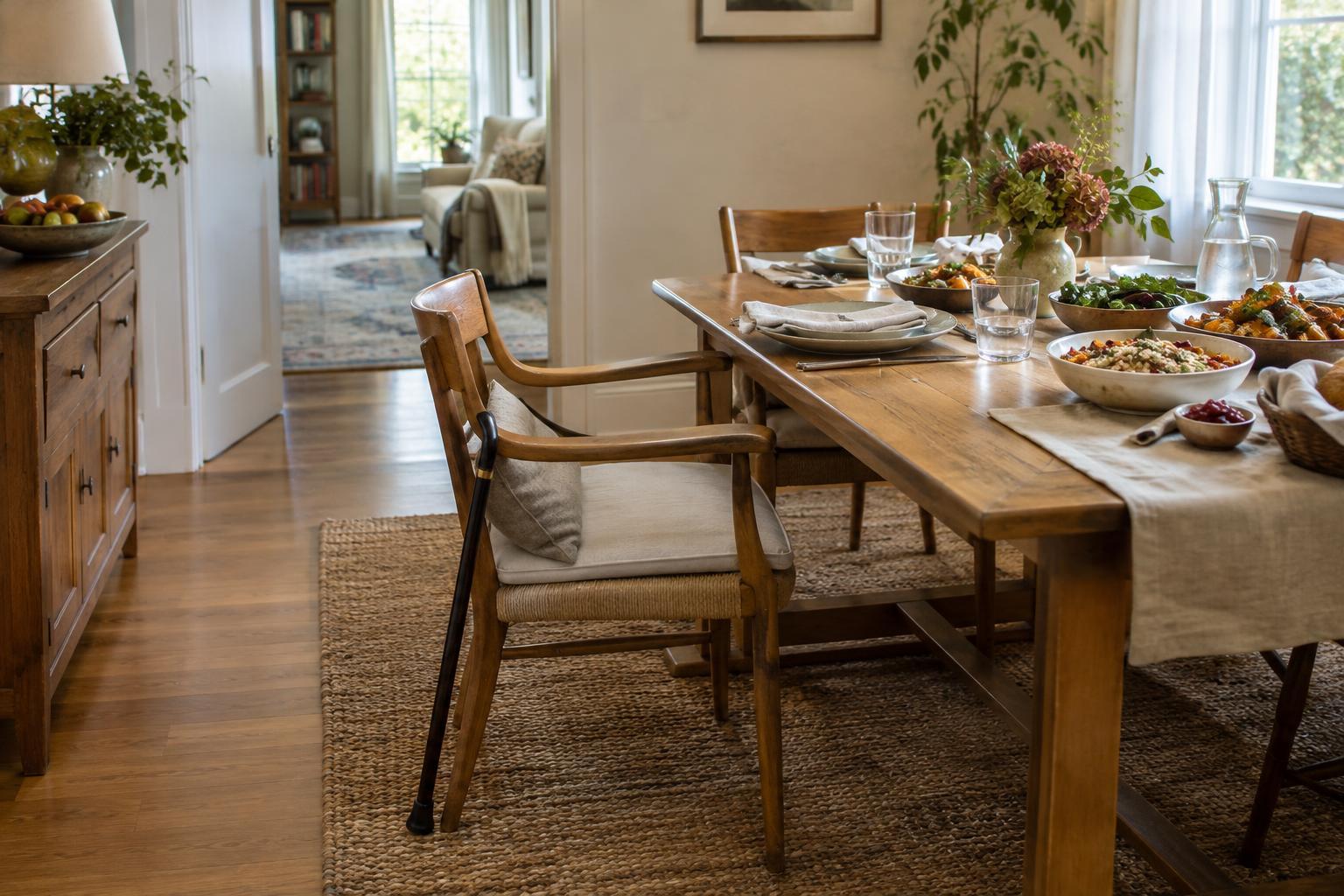
Matching chairs may look tidy, but the most useful seat is the one your guest can enter, use and leave comfortably. Offer a stable chair that does not roll or wobble, and check whether its height makes standing up manageable. Leave space beside it for a cane, walker or other aid without forcing the guest to block a shared walkway. If a guest uses a wheelchair, check that there is room to approach the table and sit in a natural position among everyone else.
Pay attention to the table as well as the chair. A large centerpiece, low-hanging tablecloth or crowded place setting can make it harder to reach a glass or set down a plate. Keep everyday items within comfortable reach and make room for elbows. Let guests choose their seats where practical; an apparently convenient spot near the door might be drafty, isolated or difficult to get out of once everyone is seated.
Serve the meal with flexibility
Consider how the food will reach the table. A buffet can be enjoyable, but it may require guests to stand in line, carry a plate and navigate around furniture. Placing shared dishes on the table, serving plates in the kitchen or offering to bring food to anyone who prefers it can make the meal easier without drawing attention to one person. Keep heavy serving pieces and frequently used drinks where someone can help with them.
Allow a little extra time between courses and avoid making guests feel rushed to clear a place or change rooms. If you plan to move from dinner to another seating area, mention it as an option rather than an expectation. Small choices—whether to stay at the table for coffee, take a break or have a plate brought over—can make hospitality feel relaxed instead of managed.
Keep the welcome natural
The best setup leaves room for a guest to direct their own experience. Ask before moving a mobility aid, pulling out a chair or offering physical help. A brief “Would you like a hand?” is more useful than stepping in without warning, and an answer of “No, thank you” should settle the matter. If something is not working, invite a change without making it a public discussion.
Comfort is also social. Include everyone in conversation, avoid turning practical adjustments into a performance and let the meal remain about the food and company. A clear route, a suitable seat and a flexible way to serve are quiet parts of good hosting: they help guests spend less energy navigating the room and more time enjoying the table.